
Vision Test at Home: How to Check Your Eyesight Yourself
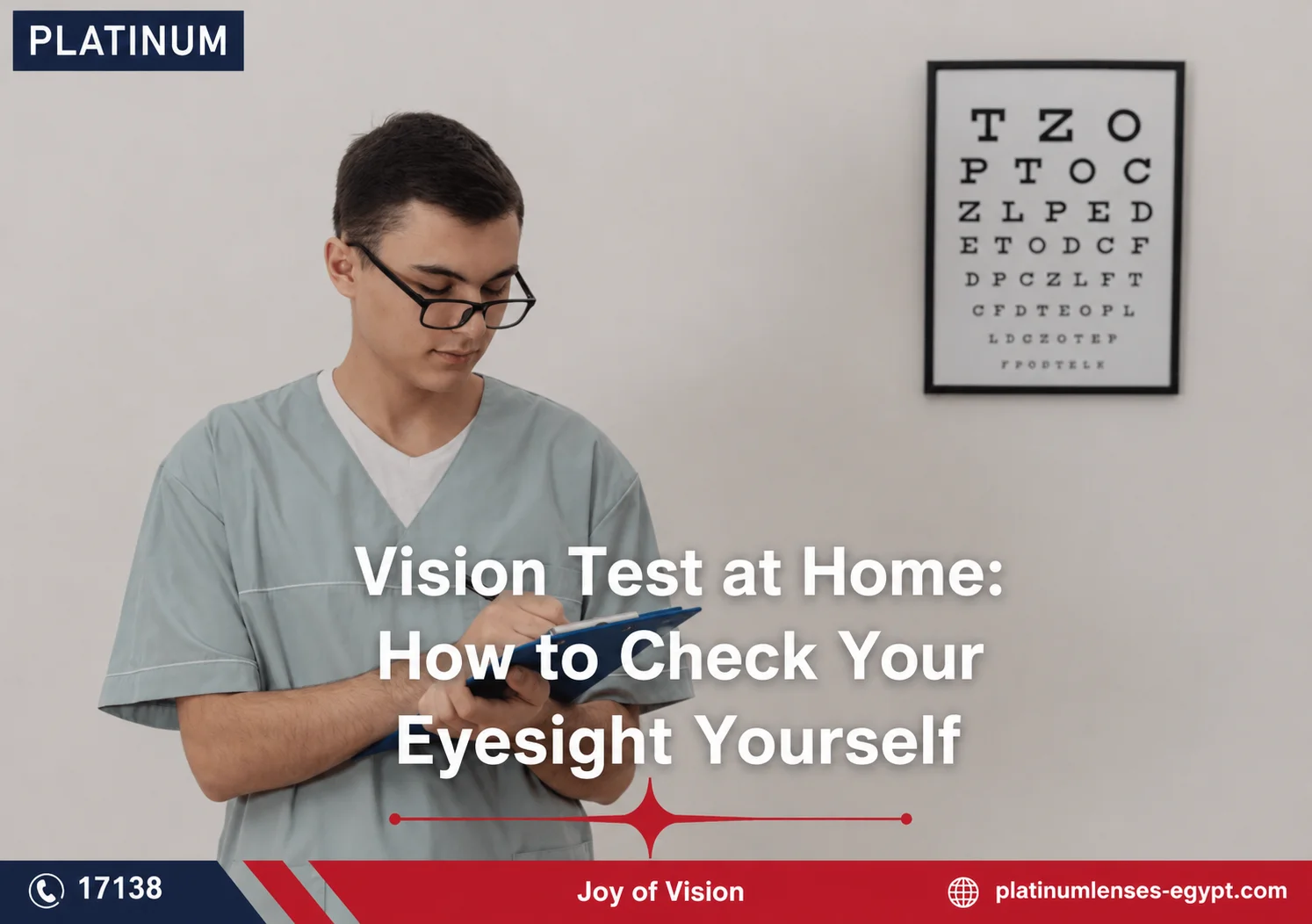
Do you feel that your eyes have started to become tired and want to check your vision quickly before booking an appointment with a doctor? You can perform an initial vision test at home using simple tools, either with a letter chart placed on the wall or through a mobile vision test Here is how to test your eyesight step by step, understand the result, and recognise when it may indicate that you need a professional examination Keep in mind that this is only a quick initial test and can never replace an examination by an optometrist.
Quick Summary
- You can test your vision at home using a Snellen chart or a mobile eye-testing application, but this is only an initial screening.
- Normal vision is 6/6, meaning that you can see from 6 metres what a person with healthy vision can see from the same distance.
- Applications provide an approximate indication, but they are less accurate than a clinical examination that can detect hidden problems affecting the eye pressure or cornea.
- Symptoms that require an immediate visit to a doctor include recurring headaches, eye strain, blurred vision, or holding objects closer to see them.
- After determining your prescription, selecting the correct medical lens is what provides clear and comfortable vision.
Eye health should never be neglected because good vision is essential for everyday life With busy schedules and limited time, testing your vision at home has become a practical option that helps you gain an initial understanding of your eyesight before visiting an eye doctor The following sections explain the methods step by step, answer the most common questions about eye examinations in Egypt, and clarify the role of reliable medical lenses in correcting vision.
How Do I Perform a Vision Test at Home Step by Step?
You can test your eyesight using simple examinations prepared at home The most common method is the Snellen chart, the familiar sheet containing letters that gradually become smaller toward the bottom.
To perform the test correctly, follow these steps:
- Print a standard-size Snellen chart and attach it to a wall at eye level.
- Stand approximately 6 metres away from the chart, or 3 metres away when using a half-size chart, with suitable lighting.
- Cover one eye with your hand or a sheet of paper without pressing against it.
- Read the letters from the top downward until you reach the last row you can see clearly.
- Repeat the process with the other eye and record the result of each eye separately.
When you find it difficult to read the lower rows, you may have a vision problem Remember that this test does not replace a doctor’s examination, but it provides a useful initial indication of your vision For a deeper understanding of professional examination procedures and equipment, see our complete guide to eye tests and how they are performed.
Are all home applications and tests as accurate as a medical examination? Some may provide an initial indication, but they cannot replace a professional examination To check your prescription and select the right lens, you can contact the Platinum experts through WhatsApp or try the vision-testing tool for a quick indication.
Can You Test Your Vision with a Mobile Phone, and How Accurate Is It?
Yes, there are smart applications designed to test visual acuity, the eye’s response to colours, and the focusing ability of both eyes They provide an initial indication and are convenient for anyone who wants a quick idea before booking an appointment.
However, you should understand their limitations Mobile vision tests are affected by screen size, brightness, viewing distance, and other factors, so they cannot provide results as accurate as a clinical examination When you suspect a visual problem, arrange a professional examination with an optometrist.
Snellen Chart vs Mobile Applications vs Clinical Examination
| Method | Accuracy | What It Detects | Most Suitable For |
|---|---|---|---|
| Home Snellen chart | Moderate | Approximate visual acuity such as 6/6 | A quick initial home test |
| Mobile eye-testing applications | Approximate | Visual acuity, colour recognition, and focusing ability | An initial indication before visiting a doctor |
| Clinical examination by an optometrist or ophthalmologist | High and accurate | Exact prescription, eye pressure, corneal health, and hidden conditions | Diagnosis and writing an eyeglass prescription |
The practical rule is to use a home test or application for initial screening, then depend on a clinic for diagnosis and accurate measurements.
How Can I Tell Whether My Vision Is 6/6?
Vision of 6/6 means that a person can see objects clearly from a distance of 6 metres, which is considered normal vision A Snellen chart can help you determine whether your vision is 6/6 When you can clearly read the row marked 6/6 near the bottom of the chart from a distance of 6 metres, your eyesight is within the normal range.
When you find it difficult to read or need to move closer to the chart, you may need to consult an eye doctor to determine your prescription accurately After identifying the correct measurement, a suitable medical lens can help you see more clearly and comfortably For more details about this measurement, see our article explaining how to know whether your vision is 6/6.
How Can I Find Out My Eyesight Measurement at Home?
An accurate vision measurement depends on a detailed examination using specialised equipment, but you can obtain an initial idea at home In addition to the Snellen chart, you can use smartphone applications designed for vision testing.
These applications include tests for visual acuity, colour response, and the focusing ability of both eyes Although they are useful as an indication, they cannot provide completely accurate results like a clinical examination Therefore, when you feel that you have a visual problem, arrange a professional examination to determine your actual prescription.
How Can I Tell Whether My Eyes Are Healthy?
Healthy eyes allow you to see clearly without strain or difficulty distinguishing colours and shapes Signs of healthy eyes include:
- The ability to see objects clearly at near and far distances.
- No pain or eye fatigue after reading or using screens for extended periods.
- No persistent redness or excessive sensitivity to light.
- The ability to distinguish colours accurately.
When you notice any change in your vision or experience unusual symptoms, consult an eye doctor without delay.
At What Point Does Weak Eyesight Begin?
Weak eyesight begins when visual acuity falls below 6/6, meaning that the person cannot see objects from 6 metres as clearly as someone with normal vision.
Visual impairment varies in degree:
- Mild: Requires low-powered lenses to improve vision.
- Moderate: Requires stronger lenses and regular follow-up.
- Severe: Requires powerful lenses and may need additional medical monitoring.
It is important to monitor symptoms such as headaches, visual fatigue, and difficulty focusing because they may indicate the beginning of reduced vision When your prescription changes from time to time, there are recognised reasons explained in our article about why eyeglass prescription numbers change Consult an optometrist or ophthalmologist before making any medical decision.
Does Using a Mobile Phone Weaken Your Eyesight?
Using a mobile phone for extended periods may cause digital eye strain because prolonged screen viewing reduces blinking, leading to dryness and discomfort.
Blue light emitted by screens may also affect sleep quality and increase visual strain To reduce these problems, follow the 20-20-20 rule by looking at something approximately 20 feet away for 20 seconds every 20 minutes, take regular breaks, and consider lenses that provide blue-light protection, such as Platinum lenses.
An important point is that mobile phone use causes temporary strain, and there is no conclusive evidence that it causes permanent deterioration of eyesight However, your eye comfort still deserves proper care.
What Is the Normal Vision Measurement?
Normal vision is measured as 6/6, meaning that the person can see details clearly from a distance of 6 metres Any result below 6/6 indicates reduced visual acuity, whether it is caused by myopia or hyperopia.
Some people have vision better than 6/6, such as 6/5, which is described as sharp vision You may also encounter another measurement written as 10/10 To understand the difference between the two formats and whether they are equivalent, read our guide to vision measurements out of 10.
How Do I Read an Eye Test Chart and Vision Prescription?
An eye test chart such as the Snellen chart contains letters in gradually decreasing sizes Vision is measured according to the smallest row you can see clearly When you can read the final row from a distance of 6 metres, your vision is normal at 6/6 When you stop at a larger row, visual acuity is determined according to that row.
A clinical eye examination report is often written using values such as 6/6 or -2.50 The first measurement, written as a Snellen fraction, describes visual acuity, while the numbers in an eyeglass prescription describe the required lens power:
- SPH or Sphere: The power required to correct myopia, shown with a minus sign, or hyperopia, shown with a plus sign.
- CYL or Cylinder: The amount of astigmatism when present.
- AXIS: The angle of the astigmatism axis between 1 and 180 degrees.
For example, a measurement of -2.00 indicates myopia that requires lenses to correct vision It is always better to ask an optometrist or ophthalmologist to explain your examination report so that you understand your condition accurately.
Read More: Eye Prescription Symbols: How to Understand Test Codes?
When Should You Visit a Doctor Immediately?
A home test is useful for initial screening, but visit an eye doctor without delay when you experience any of the following signs:
- Sudden blurred vision or a rapid decline in clarity.
- Recurring headaches, eye strain, or pain after reading or using screens.
- Flashes of light, floaters in front of the eye, or double vision.
- Persistent redness, severe light sensitivity, or pain.
- Difficulty reading, holding objects closer, or frequent eye rubbing in children.
A professional examination can detect problems that do not appear during a home test, including increased eye pressure and corneal problems, making specialist consultation essential.
After Finding Your Prescription: How Do You Choose the Right Medical Lens?
After determining your prescription, the most important step is choosing the correct lens that improves your vision and maintains eye comfort Platinum medical lenses use advanced Japanese technology to provide clear vision with minimal distortion They are resistant to scratches and wear, which extends their lifespan, and they are lightweight and comfortable for everyday use.
They are also available with different coating options for various needs, including protection from ultraviolet radiation and blue light, making them suitable for people who spend many hours using screens To view the available options and confirm current prices, contact your nearest branch through the Platinum branches page.
Remember that lenses correct vision but do not treat or cure refractive errors Proper eye care begins with regular professional examinations and selecting the correct lens Start with an initial home test using the vision-testing tool and explore the other guides in the home vision testing section for a deeper understanding of your eyesight.
Frequently Asked Questions
How Do I Perform a Vision Test at Home?
Attach a Snellen chart to a wall at eye level and stand approximately 6 metres away Cover one eye and read the letters from the top downward, then repeat the test with the other eye This is only an initial examination and does not replace an eye doctor’s assessment.
Can You Test Your Vision with a Mobile Phone?
Yes, there are smart applications that measure visual acuity, colour response, and the focusing ability of both eyes, providing an initial indication However, they are not as accurate as clinical examinations, so consult an optometrist when you notice a problem.
How Can I Tell Whether My Vision Is 6/6?
Vision of 6/6 means seeing objects clearly from a distance of 6 metres When you can read the final row of a Snellen chart from this distance, your vision is normal When you need to move closer, you may need a professional examination to determine your prescription accurately.
At What Point Does Weak Eyesight Begin?
Weak eyesight begins when visual acuity falls below 6/6 It ranges from mild impairment requiring low-powered lenses to moderate or severe impairment requiring stronger lenses Monitor symptoms such as headaches, eye strain, and difficulty focusing, and consult a specialist.
Does Using a Mobile Phone Weaken Your Eyesight?
Using a mobile phone for extended periods causes digital eye strain and dryness because of reduced blinking, while blue light may affect sleep Take regular breaks and consider lenses that provide blue-light protection.
Learning how to test your vision at home and determine your eyesight requires a careful decision that begins with an eye examination and understanding how you use your glasses, followed by selecting a lens or frame that supports this use Do not allow price or brand name alone to guide your decision because comfort, clarity, and stable measurements are more important in the long term.
When you experience persistent symptoms such as headaches, blurred vision, or discomfort after wearing glasses, consult an optometrist or ophthalmologist For a practical recommendation that suits your condition, visit your nearest Platinum branch to learn about the available options according to your prescription and budget.
Read More
Eye Measurement Chart Explained: How to Read Vision Numbers
Related Articles
View all articles →
How to Choose the Best Prescription Glasses: A Complete Guide
Choosing prescription glasses is not only about finding a frame that looks good, The lenses must match your prescription, daily […]
Read more ->
Best Medical Glasses Designs for 2025
The leading medical glasses designs include round frames transparent frames oversized styles patterned frames and thin metal designs in bold […]
Read more ->
Best Glasses for a Round Face: How to Choose the Right Frame
The best glasses for a round face are usually square rectangular cat eye or geometric frames because their straight lines […]
Read more ->
What Are the Best Japanese Prescription Lenses?
Japanese prescription lenses are valued for precise manufacturing advanced optical design and reliable daily comfort but their origin alone does […]
Read more ->
Best Prescription Lenses for Poor Eyesight
Prescription lenses are one of the most effective ways to correct blurred vision caused by myopia hyperopia astigmatism or presbyopia, […]
Read more ->
Best Eyeglasses Store in Cairo: How to Get Real Value for Money
The best eyeglasses store in Cairo is not simply the shop with the lowest price or the most attractive display, […]
Read more ->