Best Prescription Lenses for Poor Eyesight
Prescription lenses are one of the most effective ways to correct blurred vision caused by myopia hyperopia astigmatism or presbyopia, the best lens is not simply the thinnest or most expensive option because the right choice depends on the prescription strength the visual problem the frame design and the way the glasses will be used throughout the day.
This guide explains the main lens types used for poor eyesight how they differ in material and optical design which features improve comfort and protection and how to choose a lens that provides clear stable vision without paying for specifications that do not match your actual needs.
What Are Prescription Lenses
Prescription lenses are optical surfaces placed inside an eyeglass frame to redirect light so that it focuses more accurately on the retina, they are manufactured according to the measurements recorded during an eye examination and may correct distance vision near vision or several viewing ranges in the same pair of glasses.
Modern prescription lenses are usually made from plastic based materials rather than traditional glass because they are lighter more resistant to impact and available with a wider range of protective coatings, the material thickness and optical design vary according to the strength and type of the prescription.
Which Vision Problems Can Prescription Lenses Correct
Prescription lenses may be used to correct several refractive errors and the required design depends on how the eye focuses light.
- Myopia causes distant objects to appear blurred and is usually corrected with negative spherical power.
- Hyperopia can make near tasks more difficult and is usually corrected with positive spherical power.
- Astigmatism causes blurred or distorted vision and requires cylindrical power with an accurate axis measurement.
- Presbyopia affects near focus with age and may require reading bifocal progressive or office lenses.
- Differences between the two eyes may require separate powers and careful optical centration.
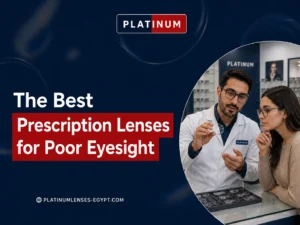
The Best Prescription Lenses for Poor Eyesight
The best prescription lens depends on the visual correction that must be provided rather than on one universal design, some wearers only need one viewing distance while others need a smooth transition between distance computer and reading zones.
Single Vision Lenses
Single vision lenses contain one main prescription across the lens and are commonly used for myopia hyperopia astigmatism or reading, they are practical for children adults and anyone who does not need multiple viewing distances in the same pair.
Bifocal Lenses
Bifocal lenses combine a distance zone with a separate near segment that is usually visible, they can be useful for people who need clear distance and reading vision but prefer a distinct separation between the two areas.
Progressive Lenses
Progressive lenses provide distance intermediate and near vision without a visible line, the design allows the wearer to move between road signs computer screens and reading material in one pair of glasses but accurate measurements and an appropriate frame are essential for comfortable adaptation.
Office and Occupational Lenses
Office lenses are designed mainly for near and intermediate distances and may improve comfort for reading desk work and prolonged computer use, they are not usually intended for normal distance driving unless the design includes a suitable distance zone.
For a broader comparison of optical designs materials and cost factors read Prescription Eyeglass Lens Types and Their Prices before selecting the final lens and frame.
How Lens Material Affects Comfort and Thickness
Lens material influences weight thickness impact resistance and optical clarity, the best option should match both the prescription and the frame rather than being chosen by price alone.
Standard Plastic Lenses
Standard plastic lenses are lightweight affordable and suitable for many mild and moderate prescriptions, they are widely used for everyday glasses and can be combined with anti reflective scratch resistant and ultraviolet protective treatments.
Polycarbonate Lenses
Polycarbonate lenses are light and highly resistant to impact which makes them useful for children active users sports frames and safety related applications, they also provide ultraviolet protection although the full performance depends on the complete lens and coating package.
Trivex Lenses
Trivex combines low weight impact resistance and good optical clarity, it can be a strong choice for active wearers and for some rimless frames where durability around the drill points is important.
High Index Lenses
High index lenses bend light more efficiently so stronger prescriptions can be made thinner and lighter than standard plastic, they are especially useful when the prescription would otherwise create thick edges or a heavy appearance.
Read more: High Index Lenses and How to Choose the Right Index .
Spherical and Aspheric Lens Designs
Spherical lenses use a traditional curved surface and may provide reliable correction for many prescriptions, aspheric lenses use a flatter more refined profile that can reduce magnification or minification and improve the appearance of stronger prescriptions.
The choice between spherical and aspheric designs should be based on the prescription frame size and desired appearance because a better designed lens can improve peripheral clarity and produce a more natural look behind the glasses.
Concave and Convex Lenses
Concave lenses are thinner in the centre and thicker at the edges and are used to correct myopia, convex lenses are thicker in the centre and thinner at the edges and are used to correct hyperopia or some near vision needs.
The final thickness depends on the prescription power lens diameter material index and frame shape which is why a smaller well centred frame can often improve the appearance of strong prescriptions.
Photochromic and Tinted Prescription Lenses
Photochromic lenses darken when exposed to ultraviolet light outdoors and become clearer indoors which can provide convenience for people who move frequently between different lighting environments, tinted prescription lenses may be used for sun protection style or specialised visual comfort.
These options should still provide reliable ultraviolet protection and must be selected according to the wearer’s daily activities because not every tint or photochromic material behaves the same inside vehicles or under artificial light.
How to Choose the Best Lens for Your Eyesight
The correct choice begins with an accurate professional eye examination and should then consider the prescription strength visual distances lifestyle and frame design.
- Confirm that the prescription is current and includes the measurements required for accurate manufacturing.
- Choose single vision bifocal progressive or office design according to the distances you need to see clearly.
- Select the lens material according to prescription strength impact risk and desired thickness.
- Consider a high index or aspheric design when the prescription is strong.
- Choose coatings based on real daily needs such as night driving screen use outdoor exposure or frequent cleaning.
- Make sure the optical centres and fitting heights are measured professionally.
Protective Coatings That Improve Lens Performance
Protective coatings do not replace the prescription but they can improve clarity durability and daily comfort, the most useful coating package depends on the way the glasses are used.
Anti Reflective Coating
Anti reflective treatment reduces distracting reflections from indoor lighting computer screens and vehicle headlights while allowing more light to pass through the lens, it can improve clarity and make the eyes more visible behind the glasses.
Scratch Resistant Coating
Scratch resistant treatment strengthens the lens surface against normal cleaning and daily handling but it does not make the lens completely scratch proof, careful cleaning and protective storage remain important.
Ultraviolet Protection
Ultraviolet protection helps reduce exposure to harmful UV radiation and is useful for people who spend time outdoors, the level of protection should be confirmed when selecting clear tinted or photochromic lenses.
Blue Light Filtering Options
Blue light filtering options may improve visual comfort for some people who spend long periods using digital screens when they are combined with a correct prescription suitable lighting regular breaks and good screen habits..
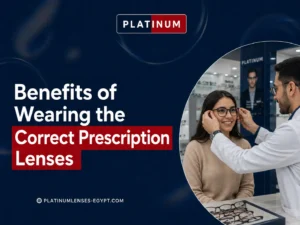
Benefits of Wearing the Correct Prescription Lenses
- Clearer distance or near vision according to the prescription.
- Reduced visual effort during reading driving and digital device use.
- Improved comfort during work study and everyday movement.
- Better performance in tasks that require accurate focus and detail.
- More stable vision when the lens design and fitting measurements are correct.
- Improved appearance and confidence when the frame and lens thickness are well matched.
Common Mistakes When Choosing Prescription Lenses
- Choosing a lens only because it is the cheapest or most expensive option.
- Using an old prescription that no longer matches the current eyesight.
- Ignoring frame size when the prescription is strong.
- Selecting every available coating without considering actual daily needs.
- Ordering progressive lenses without accurate fitting height and pupillary distance.
- Assuming that lens material alone determines the final quality.
How to Care for Prescription Lenses
- Rinse loose dust from the lenses before wiping whenever possible.
- Use a clean microfiber cloth and a cleaner made for optical lenses.
- Avoid paper tissues clothing and household chemicals that may damage the coatings.
- Store the glasses inside a protective case with the lenses facing upward.
- Do not leave the glasses on a hot car dashboard or near direct heat.
- Visit an optical professional if the frame becomes loose tilted or uncomfortable.
Frequently Asked Questions
Which prescription lens is best for myopia
Myopia is usually corrected with negative concave lenses and the most suitable material depends on the prescription strength frame size and desired thickness, high index lenses may be useful for stronger degrees.
Are plastic lenses better than glass lenses
Plastic lenses are lighter and more impact resistant which makes them the preferred option for many wearers, glass can provide good optical clarity but its weight and risk of breakage make it less common for everyday use.
Do stronger prescriptions always need high index lenses
Not always but high index materials can reduce thickness and weight when the prescription is strong, the final recommendation should also consider frame size lens shape and budget.
How often should prescription lenses be replaced
They should be replaced when the prescription changes the lenses become damaged the coating deteriorates or the frame can no longer hold them securely, regular eye examinations help confirm whether the current correction remains accurate.
The best prescription lenses for poor eyesight combine an accurate eye examination with the right optical design material and coating package, single vision bifocal progressive and office lenses each serve different viewing needs while standard plastic polycarbonate Trivex and high index materials provide different balances of weight thickness durability and clarity, professional measurements and careful frame selection remain essential for comfortable vision.
For help choosing a lens that matches your prescription and daily routine contact Platinum Lenses or visit the nearest branch for professional measurements and lens guidance.
Read More
How to Choose the Best Prescription Glasses
Polycarbonate vs Trivex Lenses
Best Lenses for High Prescriptions
Related Articles
View all articles →
How to Choose the Best Prescription Glasses: A Complete Guide
Choosing prescription glasses is not only about finding a frame that looks good, The lenses must match your prescription, daily […]
Read more ->
Best Medical Glasses Designs for 2025
The leading medical glasses designs include round frames transparent frames oversized styles patterned frames and thin metal designs in bold […]
Read more ->
Best Glasses for a Round Face: How to Choose the Right Frame
The best glasses for a round face are usually square rectangular cat eye or geometric frames because their straight lines […]
Read more ->
What Are the Best Japanese Prescription Lenses?
Japanese prescription lenses are valued for precise manufacturing advanced optical design and reliable daily comfort but their origin alone does […]
Read more ->
Best Eyeglasses Store in Cairo: How to Get Real Value for Money
The best eyeglasses store in Cairo is not simply the shop with the lowest price or the most attractive display, […]
Read more ->
A Compleing Vision Impairment Levels and Eye Prescription Numbers
Many people want to understand vision impairment levels and the numbers that appear in eye examination results, especially because poor […]
Read more ->