
Ideal Reading Glasses Size for Comfort and Clear Vision
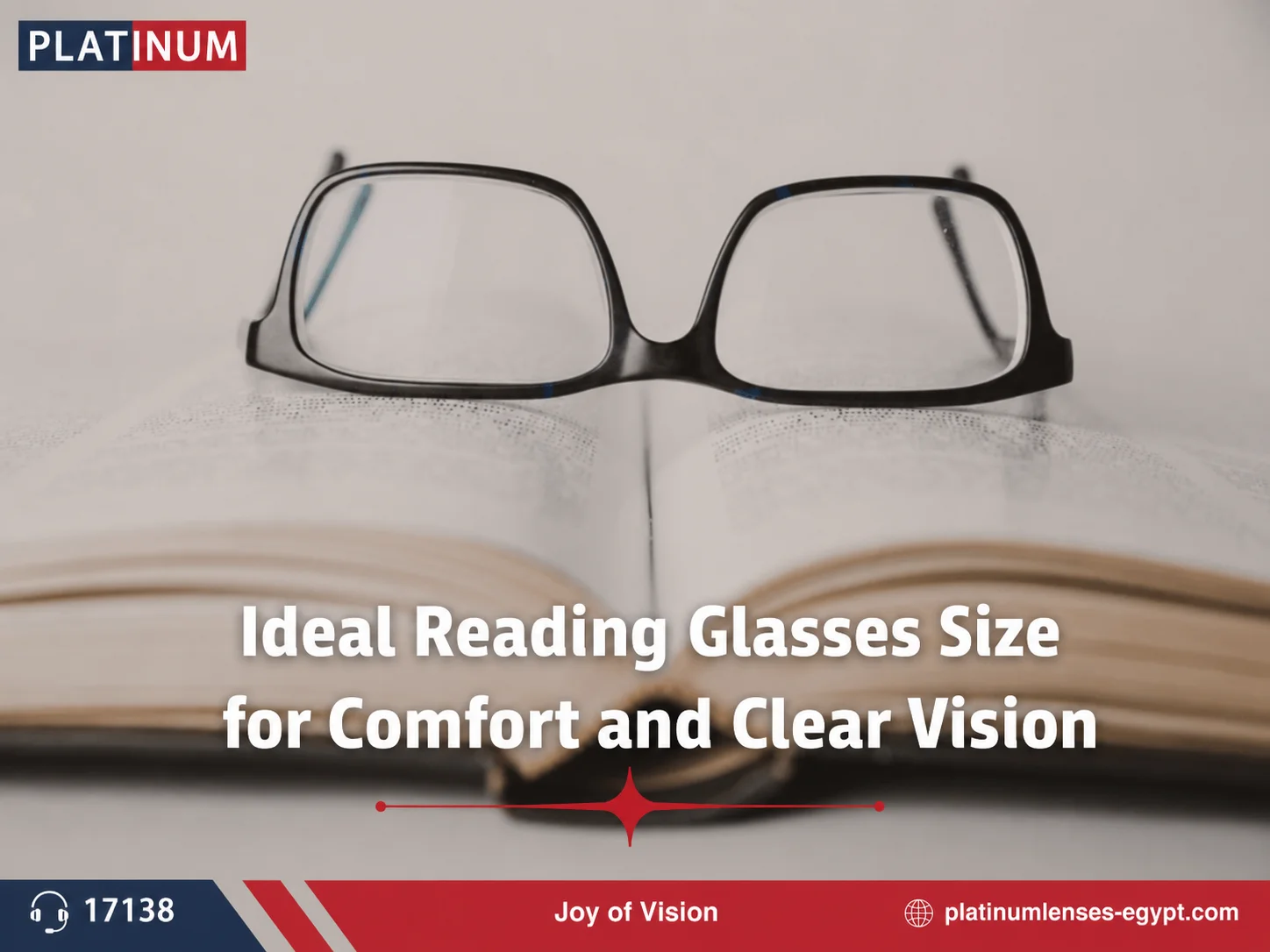
Reading Glasses Size is the first measurement to check when ready made glasses press on your nose or words become clear only when you hold the page too close The wrong size can cause discomfort even when the lens power is correct This guide explains PD frame width lens height temple length and the numbers printed inside the frame It also gives a general idea about reading lens power by age although the diopter power should always be selected through a professional eye examination.
Quick Summary
- PD or pupillary distance is the most important measurement because it helps place the optical centre of each lens directly in front of the pupil.
- Frame width lens height and temple length determine whether the Reading Glasses Size stays stable and comfortable on your face.
- Reading lens power such as +1.00 to +3.00 is determined through an eye examination and should not be guessed from age alone.
- Frame measurements are usually printed inside the temple in the form of lens width bridge width and temple length such as 52 18 140.
- When there is any doubt about power or comfort you should consult an optical professional because accurate measurement can prevent eye strain and headaches.
Reading glasses are one of the main solutions used to improve clarity during reading and other close work Choosing the correct Reading Glasses Size is an essential step because comfort and visual quality depend on accurate frame measurements and correct lens positioning This guide explains how to determine the right size how to read the numbers printed on the frame the difference between frame size and lens power and when a professional eye examination is necessary.
Why Choosing the Correct Reading Glasses Size Is Important
Choosing the correct Reading Glasses Size is not only about appearance because it directly affects eye comfort and the stability of the glasses A frame that does not fit correctly may cause visual strain headaches pressure around the nose or temples and a feeling that the glasses move while you read.
When you choose an ideal Reading Glasses Size the optical centre of the lens stays directly in front of the pupil which supports clearer near vision and greater comfort during long reading sessions Reading glasses correct near vision and do not treat the refractive condition itself The need for near correction commonly develops with presbyopia and the purpose of accurate sizing is to provide the best possible correction with the least visual strain.
The Difference Between Frame Size and Reading Lens Power
Many people confuse two completely different measurements when they ask about Reading Glasses Size.
- Frame size describes the physical dimensions of the glasses in millimetres including lens width bridge width and temple length. These numbers determine whether the glasses suit your face and remain stable and comfortable.
- Lens power or Add is measured in diopters such as +1.50 and describes the amount of near correction required by the eyes. This is a medical value that must be selected through an examination and it is not related to the physical frame dimensions.
In simple terms the frame must fit your face and the lens power must fit your eyes Both are required to create a comfortable and effective pair of reading glasses.
Factors That Determine Reading Glasses Size
Several essential factors should be considered when determining Reading Glasses Size.
Pupillary Distance or PD
Pupillary distance is one of the most important measurements and it should be determined accurately When the lenses do not match this distance the result may be blurred vision and eye strain.
Frame Width
The total frame width should suit the width of your face A frame that is too wide may feel unstable and slide down while a narrow frame may press on the temples and nose and cause discomfort.
Temple Length
The temples help keep the glasses comfortably in place behind the ears An unsuitable temple length can cause the glasses to slide or place pressure around the ears.
Lens Height
Lens height affects the clarity of vision when looking downward during reading The lens should be high enough to cover the complete near vision area which becomes especially important when considering reading or progressive lens designs.
Lens Power
Reading lens power is determined through accurate clinical measurements of near vision The more accurate and suitable the power is the more effective the glasses will be for close work which is why an optical professional should select it instead of relying on estimation.
How to Read the Frame Size Numbers
When you look at the inner side of the temple you will usually find three printed numbers that describe the Reading Glasses Size Understanding these numbers helps you choose a new frame with measurements close to a current pair that already feels comfortable.
| Number on the Frame | Meaning | Common Adult Range |
|---|---|---|
| First number | Width of one lens in millimetres | 48 to 58 mm |
| Middle number | Bridge width between the lenses above the nose | 16 to 21 mm |
| Last number | Temple length from the hinge to the end | 135 to 150 mm |
For example a frame marked 52 18 140 has a lens width of 52 mm a bridge width of 18 mm and a temple length of 140 mm When your current glasses are comfortable you can look for a new frame with similar numbers These figures describe the physical Reading Glasses Size only and do not indicate the lens power required by your eyes.
How to Determine Reading Glasses Size at Home
You can estimate Reading Glasses Size at home by following several practical steps although the final lens power should still be confirmed professionally.
Measure Pupillary Distance or PD
Stand in front of a mirror and use a millimetre ruler to measure the distance between the centre of the right pupil and the centre of the left pupil When you already wear prescription glasses this value may be written on your prescription card.
Read the Numbers on Your Current Frame
When you already own a comfortable pair use the numbers printed inside the temple as a starting point for selecting a new frame with a similar Reading Glasses Size.
Test the Frame Width on Your Face
Make sure the lenses sit directly in front of your eyes and that the outer edges of the frame do not extend too far beyond your face or press against the temples Try several sizes before deciding which one fits best.
Consult an Optical Professional for Lens Power
A professional visit is necessary to determine the correct reading lens power because near vision should be examined carefully Home measurement can help with the frame but lens power remains a clinical decision.
Try the Glasses Before Purchase
When buying from an optical store try the glasses and confirm that they are comfortable and provide clear near vision When buying online make sure you know your Reading Glasses Size accurately before placing the order.
The Importance of Pupillary Distance or PD
Pupillary distance is an essential measurement because it places the lenses correctly in front of the eyes When this measurement is inaccurate the optical centre of the lens may not align with the pupil which can cause blurred vision eye strain headaches or dizziness during use.
PD varies between adults and children and the general adult range is often around 54 to 74 mm as a broad optical reference Professional measurement is preferred because it provides greater accuracy and supports the correct Reading Glasses Size and lens alignment.
Read More: Why Do You Feel Dizzy When Removing Your Prescription Glasses
Does Reading Glasses Size Change with Age
Many people search for Reading Glasses Size by age but age affects lens power rather than the physical frame size As a person gets older the natural lens inside the eye gradually loses flexibility which creates presbyopia and increases the amount of near correction needed for reading.
The following table provides a general guide to how reading power may increase with age These figures are approximate only and they are not a substitute for a professional eye examination.
| Approximate Age Group | General Reading Power Range | Note |
|---|---|---|
| Before age 40 | Usually no additional reading power unless prescribed | Depends on the condition of the eyes |
| Age 40 to 45 | +0.75 to +1.25 approximately | Early near vision symptoms may begin |
| Age 45 to 55 | +1.25 to +2.00 approximately | The need usually increases gradually |
| After age 55 | +2.00 to +3.00 approximately | The requirement may become more stable later |
Important note These values are broad approximate references and individual needs can vary considerably The correct power must be determined through an eye examination and age alone should never be used to select reading glasses.
Ready Made Reading Glasses or Custom Prescription Glasses
Ready made reading glasses normally use the same power for both eyes and often use a fixed PD of about 62 mm They may suit some people for occasional use but they do not account for a difference between the right and left eye and they may not match the actual Reading Glasses Size or PD of the wearer.
| Comparison Point | Ready Made Glasses | Custom Prescription Glasses |
|---|---|---|
| Power in Both Eyes | The same power in both eyes | Adjusted separately for each eye |
| Pupillary Distance | A fixed approximate value | Measured for the individual wearer |
| Long Daily Use | Limited suitability | Suitable when correctly prescribed |
| Correction Accuracy | Approximate | High accuracy |
When you use reading glasses for long periods every day or the two eyes require different powers custom prescription glasses are usually more accurate and comfortable The correct Reading Glasses Size and individually measured PD can also improve stability and visual alignment.
Scratch Resistant Lenses for Reading Glasses
Scratch resistant lenses are an excellent option for maintaining clarity for a longer period Protective coatings reduce the effects of everyday friction and help prevent marks that can interfere with vision Platinum prescription lenses provide scratch resistance through advanced Japanese optical technologies which makes them suitable for reading glasses used every day.
How to Choose Comfortable Prescription Lenses for Reading
Several points should be considered when selecting lenses that work well with the correct Reading Glasses Size.

Lens Material
High quality plastic and polycarbonate lenses are widely used because they are lightweight and more resistant to breakage.
Additional Coatings
Scratch resistant anti reflective and blue light filtering coatings can improve lens performance and make daily reading more comfortable.
Design Based on Daily Use
The most suitable lens design depends on how you use your glasses including reading books working on a computer or switching between different near tasks.
Protection from Harmful Radiation
Lenses with ultraviolet protection and blue light filtering can be useful for people who spend long hours under artificial lighting and digital screens.
Persistent blurred vision after receiving new reading glasses may be related to the Reading Glasses Size lens power optical alignment or the normal adaptation period Continued discomfort should be reviewed by an optical professional.
Benefits of Platinum Prescription Lenses for Reading Glasses
Platinum prescription lenses provide several advantages that support comfortable reading and work with different Reading Glasses Size requirements.
Advanced Technology
Platinum lenses use Japanese optical technologies designed to provide clear and comfortable vision in different conditions.
Scratch Resistance
Protective coatings help the lenses last longer and maintain their clarity during everyday use.
Protection from Harmful Radiation
Platinum lenses can provide protection from ultraviolet radiation and blue light according to the selected coating.
Lightweight and Comfortable Design
The lightweight construction supports comfortable daily use without adding unnecessary pressure to the frame or face.
High Optical Clarity
The lenses provide clear vision that makes reading and close work easier when the power and Reading Glasses Size are measured correctly.
Where to Measure Reading Glasses Size in Egypt
Home measurement provides a useful estimate but the final adjustment of PD lens height and reading power requires an optical professional and accurate tools Based on practical customer experience many complaints about uncomfortable glasses are caused by an unsuitable frame size or incorrect PD and both can usually be corrected through professional measurement.
You can visit the nearest Platinum branch to measure Reading Glasses Size accurately and try different frames before purchase A professional can also determine whether the change in near vision is a normal part of ageing or whether it requires further examination and follow up.
Frequently Asked Questions
How Can I Determine Reading Glasses Size by Myself
Start by measuring the distance between the centres of your pupils with a millimetre ruler while standing in front of a mirror Then check whether the frame width suits your face and whether the lens height covers your near vision area An eye care professional should determine the correct reading lens power.
What Is Pupillary Distance and Why Is It Important
PD is the distance between the centres of the pupils and it is an essential measurement for positioning the lenses correctly in front of the eyes An inaccurate PD may cause blurred vision and eye strain and professional measurement is preferred for the best result.
What Factors Determine Reading Glasses Size
The main factors are pupillary distance frame width temple length lens height and the reading lens power selected through an accurate near vision examination.
Can Scratch Resistant Lenses Be Used with Reading Glasses
Yes scratch resistant lenses are an excellent option because they help preserve clear vision for a longer period Platinum lenses provide this feature through advanced Japanese optical technologies.
Knowing the correct Reading Glasses Size means adjusting two elements together The first is the frame measurement that suits your face including lens width bridge width temple length and PD The second is the reading lens power that suits your eyes and must be determined through an examination Home measurement helps with frame selection but final power comfort and optical alignment should be confirmed by an optical professional High quality lenses and suitable protective coatings can provide clear comfortable reading for a longer period and any continuing discomfort should be checked professionally.
Read More
How to Read Eye Prescription Symbols
Related Articles
View all articles →
Eyeglasses Store Cairo: How to Get Real Value for Money
Eyeglasses Store Cairo is not simply the shop with the lowest price or the most attractive display but the place […]
Read more ->
Eye Prescription Symbols: How to Read Your Results
Eye Prescription Symbols may seem confusing when you receive an eye prescription from an optometrist or ophthalmologist especially terms such […]
Read more ->
How to Choose the Best Prescription Glasses: A Complete Guide
Choosing prescription glasses is not only about finding a frame that looks good, The lenses must match your prescription, daily […]
Read more ->
Best Prescription Lenses for Poor Eyesight
Prescription lenses are one of the most effective ways to correct blurred vision caused by myopia hyperopia astigmatism or presbyopia, […]
Read more ->
Glasses Removal Dizziness: Why Does It Happen?
Glasses Removal Dizziness can happen when your eyes and brain suddenly move from corrected vision to an unclear image after […]
Read more ->
Platinum Japanese Lenses: Technology and Expertise
Platinum Japanese Lenses combine advanced European optical technology with established Japanese manufacturing expertise and are produced locally in Egypt under […]
Read more ->