Eye Prescription Symbols: How to Read Your Results
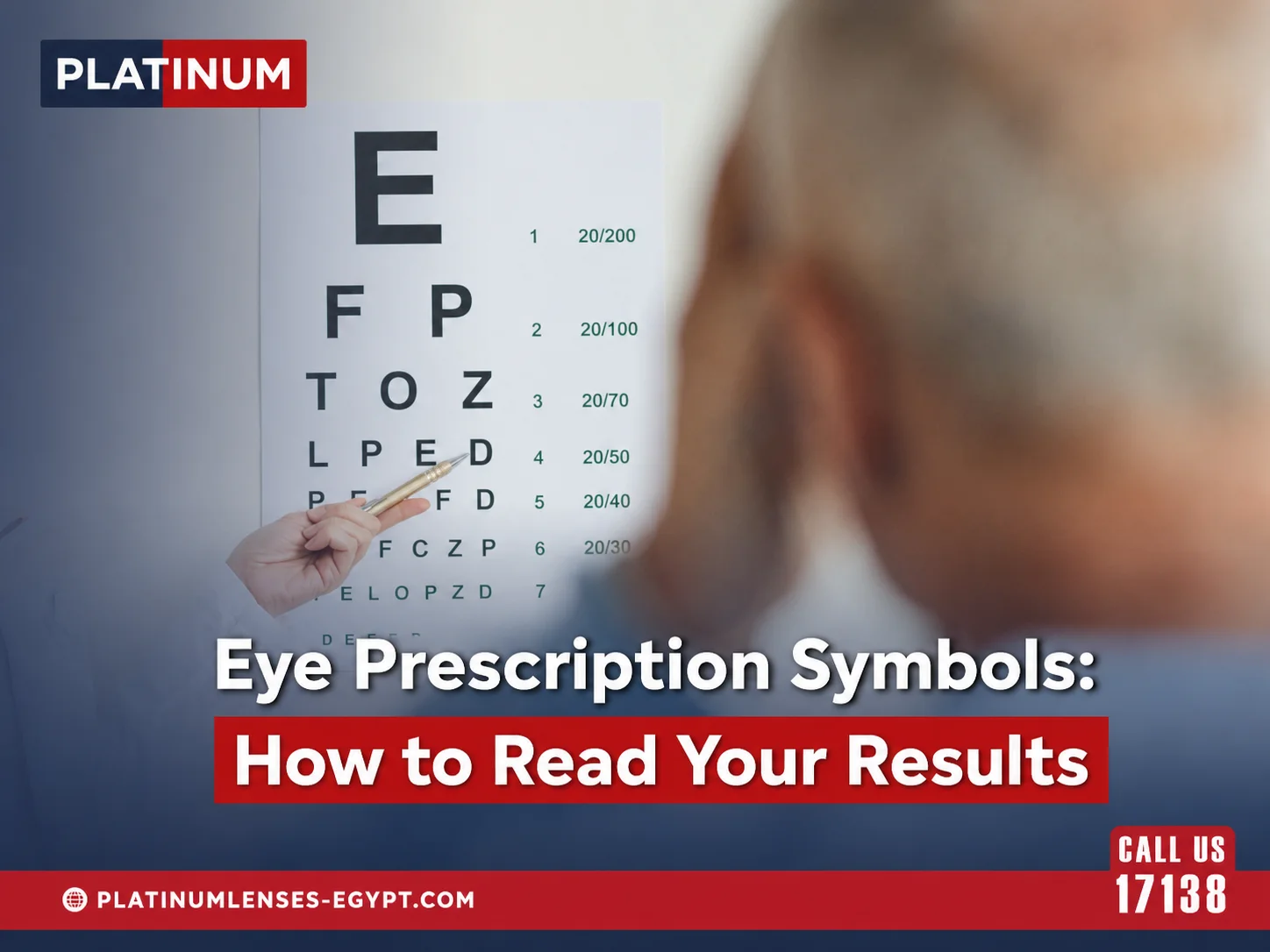
When you receive an eye prescription from an optometrist or ophthalmologist, the numbers and abbreviations may seem confusing, especially terms such as SPH, CYL, AXIS, and visual acuity results like 6/6. Each measurement has a specific purpose and helps describe your vision, identify refractive errors, and determine the most suitable prescription lenses. This guide explains the most common eye test symbols, prescription values, visual acuity measurements, myopia, hyperopia, and astigmatism in clear language, helping you understand your results and discuss them confidently with your eye care professional at your appointment.
How Can I Tell Whether My Vision Is Actually 6/6?
A visual acuity result of 6/6 indicates normal distance vision and is equivalent to 20/20 vision. It means you can see clearly from 6 metres what a person with normal vision can see from the same distance.
This result is usually measured with a Snellen or Landolt C chart during a professional eye examination. Although online tests may provide an initial indication, they cannot assess overall eye health or replace a complete examination.

What Do SPH, CYL, and AXIS Mean on an Eye Prescription?
Most eyeglass prescriptions include three key measurements: SPH, CYL, and AXIS, which describe the optical correction needed to focus light correctly inside the eye.
SPH
SPH stands for Sphere and shows the lens power needed to correct myopia or hyperopia where a negative value indicates myopia while a positive value indicates hyperopia and the farther the number is from zero the stronger the required correction.
CYL
CYL stands for Cylinder and shows the lens power needed to correct astigmatism which occurs when the cornea or the natural lens has an irregular curvature causing light to focus unevenly on the retina and leading to blurred or distorted vision while the CYL value may appear with a positive or negative sign depending on the notation system used by the eye care professional.
AXIS
AXIS identifies the orientation of the astigmatism correction and is expressed as a number between 0 and 180 degrees to show the exact angle at which the cylindrical power should be positioned inside the lens while it does not measure the strength of astigmatism but only determines the direction needed for accurate correction.
What Is the Difference Between Positive and Negative SPH?
The sign before the SPH value shows whether the prescription corrects hyperopia or myopia where a positive value usually indicates hyperopia which may cause difficulty focusing on nearby objects along with headaches or eye strain during close work while a negative value indicates myopia which causes distant objects to appear blurred and the farther the number is from zero the stronger the refractive error generally is for example -4.00 represents stronger myopia than -1.00 while +3.00 represents stronger hyperopia than +1.00 and although these symbols may appear in digital vision tests such tools do not replace a professional eye examination.
How Can I Find Out the Degree of My Vision Problem?
The SPH value gives a general indication of the degree of myopia or hyperopia where values from about -0.25 to -1.00 may be considered mild myopia and values from about -1.25 to -4.00 may be considered moderate while prescriptions of -6.00 or stronger may indicate high myopia although classifications can vary and the SPH number alone is not enough to assess overall vision because CYL values visual acuity retinal health corneal shape age and symptoms must also be considered and only a professional eye examination can provide accurate prescription measurements.
Stop Guessing and Let Platinum Experts Explain Your Prescription
Receive a clear and simple explanation of your eye prescription and discover which lens type may best suit your visual needs by contacting Platinum for a free consultation with a team specialising in optical technology to help you enjoy clearer vision and lenses designed around your daily requirements.
What Does AXIS Mean in an Eye Examination?
The AXIS measurement is used when astigmatism is present and appears as a number between 0 and 180 degrees to identify the direction in which the cylindrical correction must be positioned while the CYL value shows the strength of the correction and an accurate AXIS value helps align it correctly with the astigmatism to provide clearer and more comfortable vision.
When Is Eyesight Considered Weak?
Vision may be considered reduced when visual acuity falls below the normal standard such as a result of 6/12 which means you must stand 6 metres away to see what a person with normal vision can see from 12 metres while SPH or CYL values further from zero may indicate a stronger refractive error and common signs include headaches blurred vision difficulty seeing distant objects eye strain squinting tired eyes problems with night driving and difficulty changing focus between near and far objects and persistent symptoms should be assessed by an ophthalmologist or qualified eye care professional.
Which Prescription Numbers Indicate Astigmatism?
Astigmatism is recorded in the CYL section of an eye prescription where any numerical value indicates that cylindrical correction is required while the CYL value shows the amount of correction and the AXIS value shows its direction and although a value of about 0.75 dioptres or more may be noticeable for many people even lower values can cause symptoms depending on visual sensitivity axis position and the presence of myopia or hyperopia while uncorrected astigmatism may cause blurred or distorted vision headaches squinting difficulty focusing and eye fatigue and stronger values are more likely to require accurately positioned prescription lenses.
Read More: Understanding CYL in Eye Exams: A Beginner’s Guide
How to Read an Eye Prescription Step by Step
An eye prescription becomes much easier to understand when you read each measurement separately.

1. Identify the Right and Left Eye
OD refers to the right eye while OS refers to the left eye and some prescriptions may use RE and LE instead and each eye should be read separately because the prescription strength can differ between them.
2. Read the SPH Value
The SPH value shows whether you have myopia or hyperopia and indicates the spherical lens power required where a minus sign represents myopia a plus sign represents hyperopia and Plano PL or 0.00 means that no spherical correction is needed for that eye.
4. Read the AXIS Measurement
If a CYL value is present an AXIS number should normally appear beside it where the AXIS is measured between 0 and 180 degrees and shows how the cylindrical correction must be positioned inside the lens while an AXIS value has no meaning without a corresponding CYL value.
5. Look for the ADD Value
ADD refers to the additional magnifying power needed for near vision and is commonly included in prescriptions for people with presbyopia while this value may be used to manufacture reading glasses bifocal lenses progressive lenses or occupational lenses.
6. Check the PD Measurement
PD stands for Pupillary Distance and measures the distance between the centres of the pupils in millimetres to help position the optical centre of each lens correctly while an inaccurate measurement may cause visual discomfort eye strain headaches or difficulty adapting to new glasses.
What Does 6/12 Vision Mean?
A visual acuity result of 6/12 means that you can see from 6 metres what a person with normal vision can see from 12 metres which indicates reduced distance vision compared with 6/6 and may affect driving recognizing faces reading signs and viewing distant screens while glasses or contact lenses may be needed depending on the cause and a professional eye examination is required to determine whether the reduction is related to myopia hyperopia astigmatism cataracts retinal changes or another eye condition.
Is 6/4.5 Vision Considered Excellent?
A visual acuity result of 6/4.5 is better than the standard 6/6 level because it means you can see from 6 metres what a person with standard vision would need to approach to 4.5 metres to see with the same clarity although visual acuity is only one part of a complete eye assessment and other aspects such as contrast sensitivity peripheral vision colour perception eye coordination and general eye health may still require evaluation.
What Is the Difference Between 6/60 and 6/6 Vision?
There is a significant difference between 6/6 and 6/60 visual acuity where 6/6 represents standard distance vision while 6/60 means that a person can see from 6 metres what someone with normal vision can see from 60 metres and this level of reduced vision may greatly affect mobility recognizing faces reading signs driving and other daily activities while a detailed professional assessment is needed to identify the cause and determine whether vision can be improved with glasses contact lenses medical treatment surgery or low vision support.
How Is Vision Measured Out of 10?
Some countries use a decimal or ten point system to record visual acuity where 10/10 represents standard vision and is broadly equivalent to 6/6 or 20/20 while a lower score such as 5/10 indicates reduced visual acuity although the result should always be interpreted with a complete eye examination because visual acuity alone does not identify the exact cause of blurred vision.
Does a Prescription of +1.50 Mean That My Eyesight Is Weak?
An SPH value of +1.50 usually indicates mild hyperopia which may make nearby objects more difficult to see clearly during reading writing sewing or mobile phone use although the effect varies with age and focusing ability while younger people may compensate temporarily but still experience headaches or eye strain and older adults may notice the prescription more as natural focusing ability decreases while the suitable correction may include reading glasses single vision lenses occupational lenses bifocals or progressive lenses depending on age symptoms and daily visual needs.
What Is the Difference Between Spherical and Cylindrical Lenses?
A spherical lens is used to correct myopia or hyperopia by applying equal optical power across the lens where negative power corrects myopia and positive power corrects hyperopia while a cylindrical lens corrects astigmatism by applying power in a specific direction determined by the AXIS measurement and many people require both types of correction in the same lens with SPH correcting myopia or hyperopia and CYL and AXIS correcting astigmatism according to the results of the eye examination.
Frequently Asked Questions
What Does SPH Mean on an Eye Prescription?
SPH means Sphere and shows the lens power needed to correct myopia or hyperopia where negative values indicate myopia and positive values indicate hyperopia.
What Does CYL Mean in an Eye Examination?
CYL means Cylinder and shows the amount of correction needed for astigmatism which occurs when light does not focus evenly on the retina.
How Can I Tell Whether My Vision Is 6/6?
A result of 6/6 means you can see from 6 metres what a person with normal vision can see from the same distance and this should be confirmed during a professional eye examination.
What Does AXIS Mean on an Eyeglass Prescription?
AXIS shows the direction of the cylindrical correction for astigmatism and is measured between 0 and 180 degrees while it should always be read with the CYL value.
Does a +1.50 Prescription Indicate Poor Eyesight?
A +1.50 prescription usually indicates mild hyperopia and may affect near vision although the need for glasses depends on age symptoms and daily visual needs.
Understanding your eye prescription can help you choose suitable lenses but these measurements should not be used for self diagnosis because a complete eye examination is still needed to assess vision and eye health accurately.
Read More
What Is SPH in an Eye Prescription and How to Read It
Related Articles
View all articles →
How to Choose the Best Prescription Glasses: A Complete Guide
Choosing prescription glasses is not only about finding a frame that looks good, The lenses must match your prescription, daily […]
Read more ->
Best Medical Glasses Designs for 2025
The leading medical glasses designs include round frames transparent frames oversized styles patterned frames and thin metal designs in bold […]
Read more ->
Best Glasses for a Round Face: How to Choose the Right Frame
The best glasses for a round face are usually square rectangular cat eye or geometric frames because their straight lines […]
Read more ->
What Are the Best Japanese Prescription Lenses?
Japanese prescription lenses are valued for precise manufacturing advanced optical design and reliable daily comfort but their origin alone does […]
Read more ->
Best Prescription Lenses for Poor Eyesight
Prescription lenses are one of the most effective ways to correct blurred vision caused by myopia hyperopia astigmatism or presbyopia, […]
Read more ->
Best Eyeglasses Store in Cairo: How to Get Real Value for Money
The best eyeglasses store in Cairo is not simply the shop with the lowest price or the most attractive display, […]
Read more ->