
A Compleing Vision Impairment Levels and Eye Prescription Numbers
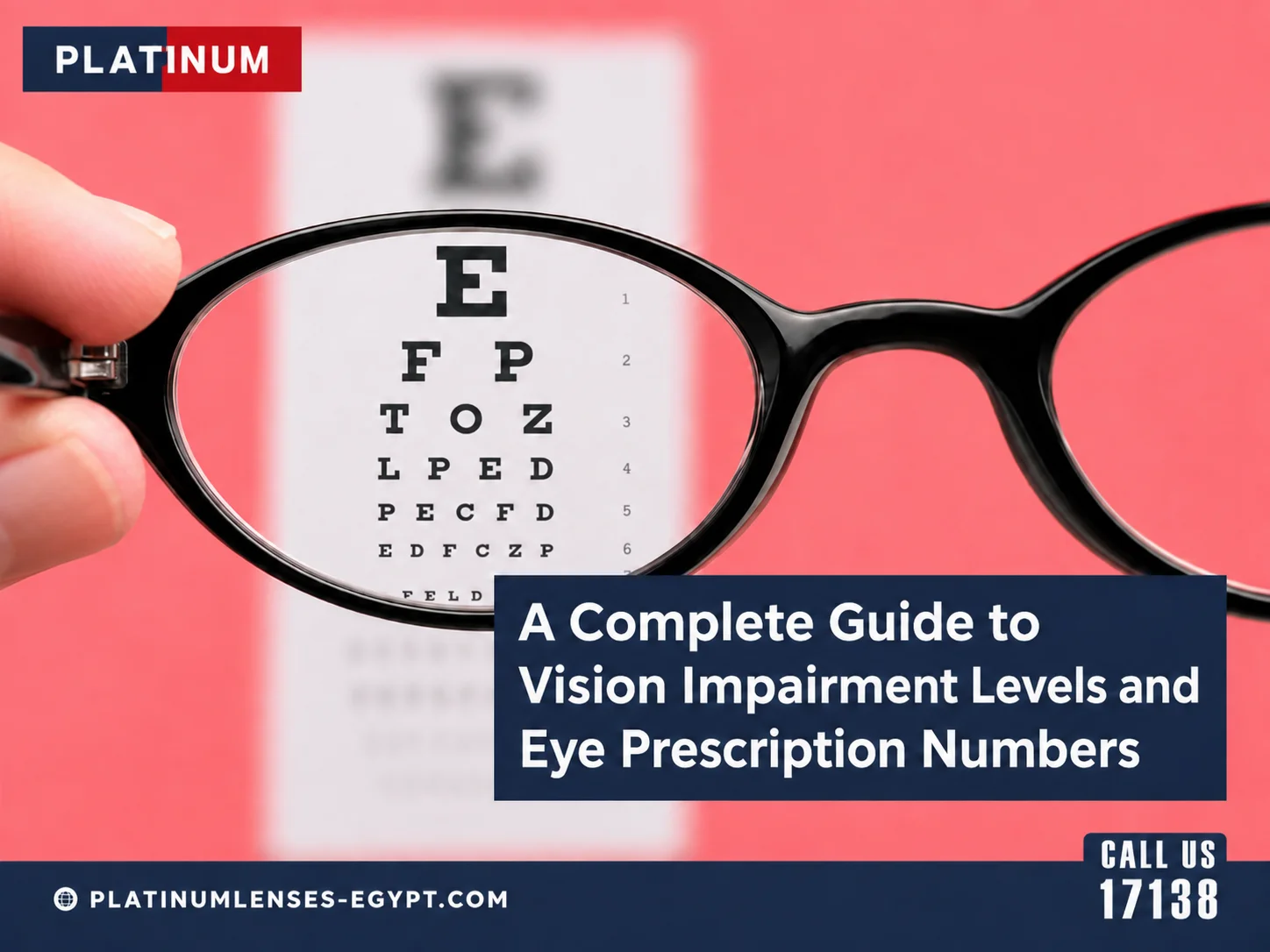
Many people want to understand vision impairment levels and the numbers that appear in eye examination results, especially because poor eyesight can affect the ability to see clearly at different distances and may interfere with everyday activities such as driving, reading, writing, working, and recognizing objects from far away.
The severity of vision problems varies from one person to another, and leaving the condition uncorrected may cause frequent headaches, eye strain, blurred vision, and difficulty carrying out normal daily tasks, which is why a professional eye examination is important for identifying the type and degree of visual impairment and selecting the most suitable method of correction.
In this guide, we explain what visual acuity numbers mean, how eyesight is measured, the main causes and symptoms of poor vision, the different types of refractive errors, and the optical solutions that may help provide clearer and more comfortable vision.
Vision Impairment Levels in Numbers
Visual acuity is one of the main measurements used to evaluate how clearly a person can see at a specific distance and a result of 20/100 means that the person must stand 20 feet away to see what someone with normal vision can see from 100 feet away.
The notation varies between countries where the United States commonly uses the 20-foot system and considers 20/20 standard vision while countries using the metric system test from 6 metres and record normal visual acuity as 6/6 vision which is broadly equivalent to 20/20.
Visual impairment levels may be described as follows:
- 6/6: generally represents normal distance visual acuity.
- 6/12 or worse: may indicate mild visual impairment.
- 6/18 or worse: may indicate moderate visual impairment.
- 6/60 or worse: may indicate severe visual impairment.
- 3/60 or worse: may fall within the definition of blindness depending on the medical and legal standards used.
These figures describe visual acuity rather than the power of an eyeglass prescription and a complete eye examination may still be needed even when the result is 6/6.
Is 6/36 Considered Poor Vision?
Visual acuity of 6/36 represents a significant reduction in distance vision.
This measurement means that the person can see an object clearly from a distance of 6 metres, while a person with normal eyesight would be able to see the same object from a distance of 36 metres.
This level of visual impairment usually indicates an eye or refractive problem that requires professional assessment and may need correction with prescription glasses, contact lenses, or another treatment selected according to the cause of the problem.
Vision of 6/36 can affect many daily activities, including reading signs, driving, recognizing faces from a distance, watching television, and moving safely through unfamiliar places.
The underlying cause may be a high degree of short-sightedness, a problem affecting the natural lens of the eye, an irregularity in the cornea, or another condition that reduces visual clarity.
An examination by an ophthalmologist or qualified eye care professional is therefore necessary to identify the exact cause and determine an appropriate treatment plan.
Do the numbers on your eye prescription, such as -2.00 or +1.50, seem confusing?
Let the Platinum Experts Explain Your Prescription Clearly
Send us your eye prescription and receive a free consultation from Platinum’s optical specialists, who can explain what each number means and help you understand which lens solution may be suitable for your visual needs.
Is a Prescription of -4.00 Considered Weak Eyesight?
A prescription of -4.00 generally indicates moderate myopia which can make distant objects such as road signs television screens classroom boards and faces appear blurred without glasses or contact lenses while close objects may remain clearer and regular eye examinations are important to monitor any change in the prescription and ensure accurate correction.
Why Is Eyesight Measured as 6/6?
Eyesight is measured as 6/6 because visual acuity testing is usually performed from a distance of 6 metres and a result of 6/6 means that the person can see from this distance what someone with normal vision should see from the same distance while results such as 6/12 indicate reduced distance vision and results such as 6/5 may indicate slightly sharper than average visual acuity.
Read More: Eye Measurement Chart Explained: How to Read Vision Numbers
Causes of Reduced Vision
When discussing vision impairment levels and eye prescription numbers it is also important to understand the conditions that may cause blurred vision or gradual visual deterioration including refractive errors age related changes and certain eye diseases.
Diabetic Retinopathy
Diabetic retinopathy is a complication of diabetes that develops when prolonged high blood sugar damages the small blood vessels in the retina which may lead to gradual visual deterioration or sudden vision loss in advanced cases while symptoms can include blurred vision floating spots dark areas and changes in visual clarity and the risk increases when diabetes is poorly controlled or accompanied by high blood pressure or high cholesterol therefore regular monitoring and periodic retinal examinations are essential for early detection and vision protection.
Cataracts
A cataract occurs when the natural lens inside the eye becomes cloudy which can make vision blurred hazy or less colourful and the condition usually develops gradually due to ageing genetic factors eye injury or certain medical conditions while common symptoms include poor night vision halos around lights faded colours glare sensitivity frequent prescription changes and double vision in one eye.
During the early stages stronger lighting and updated glasses may improve vision but when the cataract begins to interfere with daily activities the ophthalmologist may recommend surgery to remove the cloudy lens and replace it with an artificial intraocular lens.
Retinitis Pigmentosa
Retinitis pigmentosa is a group of inherited retinal conditions that cause gradual vision loss and often begin with difficulty seeing at night followed by progressive reduction in peripheral vision while advanced cases may lead to a narrow field of vision and significant visual impairment and regular monitoring by a retinal specialist can help assess changes and identify supportive solutions.
Symptoms of Poor Eyesight
Poor eyesight may be associated with myopia hyperopia astigmatism or another eye condition and persistent symptoms should be assessed through a professional eye examination.
Common symptoms include:
- Blurred vision at near or distant distances
- Difficulty reading driving or recognizing faces
- Frequent headaches and eye strain
- Squinting or rubbing the eyes
- Distorted or hazy images
- Faded colours
- Difficulty adjusting between light and darkness
- Tired eyes after using digital screens
Tips for Protecting Your Vision
Protecting eye health depends on regular examinations and healthy daily habits.
- Monitor blood sugar blood pressure and cholesterol
- Follow a balanced diet containing vegetables fruit and omega 3 sources
- Maintain a healthy body weight
- Stop smoking
- Rest the eyes during prolonged screen use
- Use suitable lighting while reading or working
- Wear protective eyewear when exposed to dust chemicals or flying particles
- Attend regular eye examinations even when no symptoms are present.
Types of Vision Problems
Vision problems vary in severity and may result from different refractive errors including hyperopia myopia and astigmatism.
1. Long-Sightedness
Long-sightedness or hyperopia causes nearby objects to appear less clear than distant objects and may lead to headaches or eye strain during reading writing sewing or mobile phone use while prescriptions are usually written with positive values such as +1.50 or +2.00 to show the lens power needed for clearer focus.
2. Short-Sightedness
Short-sightedness or myopia occurs when light focuses in front of the retina which makes distant objects such as road signs television screens classroom boards and faces appear blurred while nearby objects may remain clearer and prescriptions are written with negative values such as -1.00 or -4.00 where a larger negative value generally indicates stronger correction.
3. Astigmatism
Astigmatism results from an irregular curvature of the cornea or natural lens which causes light to focus unevenly and may lead to blurred distorted or shadowed vision at different distances while prescriptions usually include CYL and AXIS values to identify the strength and direction of the required correction.
The Best Types of Prescription Lenses for Vision Problems
The most suitable lens depends on the type and degree of the refractive error as some people prefer contact lenses while others choose prescription glasses for their comfort and practicality and properly manufactured lenses can improve focus reduce blurred vision and relieve eye strain while Platinum provides different lens solutions designed to support clear and comfortable vision.

Explore Lens
The Explore Lens is designed to provide balanced vision across near intermediate and distance ranges while supporting smooth transitions between viewing distances and offering wide visual fields that make reading computer use and everyday activities more comfortable.
Office Lens
The Office Lens is designed for people who spend long periods working at near and intermediate distances and can improve clarity during reading desk work meetings and digital device use while reducing the effort required to maintain focus throughout the working day.
Contact the Platinum team through WhatsApp to receive a clear explanation of the SPH CYL AXIS and PD measurements shown on your eye prescription and learn which lens design may be most suitable for your daily visual needs.
HS Lens
The HS Lens is designed to provide clear and comfortable vision while helping preserve the natural appearance of the eyes and reduce some of the visual effects associated with strong prescriptions while offering wide visual fields and fewer unwanted distortions during daily use.
If you experience persistent blurred vision headaches or eye strain visit an ophthalmologist or qualified eye care professional for an accurate examination and a suitable prescription lens recommendation.
Frequently Asked Questions
What Do Vision Impairment Numbers Mean?
Negative prescription values indicate myopia while positive values indicate hyperopia and stronger numbers usually mean a greater refractive error.
These values differ from visual acuity results such as 6/6 or 6/12.
When Is Poor Eyesight Considered Serious?
A prescription of -6.00 dioptres or stronger is generally classified as high myopia and may require regular retinal examinations.
Sudden flashes floaters a dark curtain or sudden vision loss need urgent medical assessment.
How Can Severe Vision Impairment Be Corrected?
Correction may include prescription glasses contact lenses refractive surgery or implantable lenses depending on the cause prescription strength and overall eye health.
What Is the Difference Between 6/6 6/12 and 6/36?
A result of 6/6 represents standard distance vision while 6/12 indicates reduced clarity and 6/36 indicates a greater level of visual impairment.
These results measure visual acuity and do not show the lens power written on an eye prescription.
Understanding vision impairment numbers can help explain the problem but accurate interpretation still requires a professional eye examination.
Regular examinations and correctly designed lenses can improve clarity and reduce eye strain.
Read More
Eye Prescription Symbols: How to Understand Test Codes?
Related Articles
View all articles →
How to Choose the Best Prescription Glasses: A Complete Guide
Choosing prescription glasses is not only about finding a frame that looks good, The lenses must match your prescription, daily […]
Read more ->
Best Medical Glasses Designs for 2025
The leading medical glasses designs include round frames transparent frames oversized styles patterned frames and thin metal designs in bold […]
Read more ->
Best Glasses for a Round Face: How to Choose the Right Frame
The best glasses for a round face are usually square rectangular cat eye or geometric frames because their straight lines […]
Read more ->
What Are the Best Japanese Prescription Lenses?
Japanese prescription lenses are valued for precise manufacturing advanced optical design and reliable daily comfort but their origin alone does […]
Read more ->
Best Prescription Lenses for Poor Eyesight
Prescription lenses are one of the most effective ways to correct blurred vision caused by myopia hyperopia astigmatism or presbyopia, […]
Read more ->
Best Eyeglasses Store in Cairo: How to Get Real Value for Money
The best eyeglasses store in Cairo is not simply the shop with the lowest price or the most attractive display, […]
Read more ->