
Computerized Eye Test Accuracy and When to See a Doctor
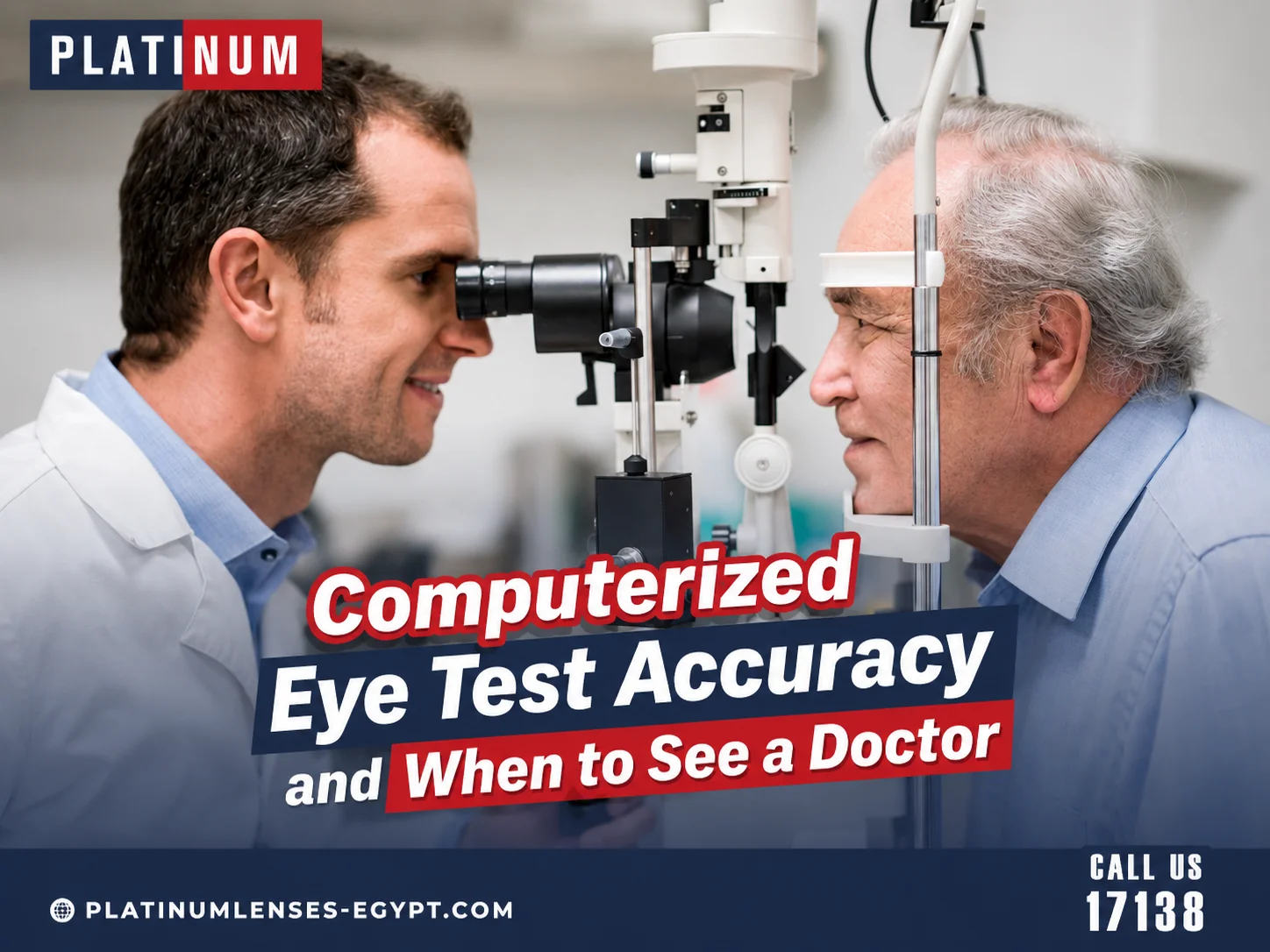
Computerized Eye Test is a fast objective method for estimating myopia hyperopia and astigmatism through an autorefractor and it provides a useful starting point for a glasses prescription However the result should be reviewed through subjective refraction because eye fatigue accommodation fixation problems and some eye conditions can affect the measurement A Computerized Eye Test does not diagnose every eye disease and urgent symptoms such as sudden vision loss severe pain flashes new floaters or persistent redness require examination by an ophthalmologist..
Quick Summary
- A Computerized Eye Test uses an autorefractor to estimate SPH CYL AXIS and sometimes corneal curvature within a few seconds.
- The result is accurate as an initial objective measurement but it should not be treated as the final prescription without professional confirmation.
- The test is especially useful for quick screening and for people who find it difficult to describe which lens looks clearer.
- Accuracy may decrease with poor fixation very high refractive errors cloudy eye media strabismus amblyopia or some retinal conditions.
- Visit an ophthalmologist when symptoms appear suddenly or include severe pain double vision flashes new floaters continuing redness or loss of part of the visual field.
How Does a Computerized Eye Test Work
A Computerized Eye Test is performed with an autorefractor which directs a harmless infrared beam into the eye and measures how light is reflected from the retina The device analyses how the cornea and natural lens focus the incoming light and then estimates the refractive error that prevents the image from forming clearly on the retina.
The process normally takes only a few seconds for each eye and the machine repeats the measurement across horizontal vertical and angled meridians This allows the Computerized Eye Test to calculate the spherical power the cylindrical power and the axis of astigmatism The infrared beam is not usually noticed by the person being examined which helps reduce discomfort blinking and distraction during the measurement.
After the Computerized Eye Test you can use the Eye Prescription Symbols Guide to understand the values printed on the report.
Is a Computerized Eye Test Accurate
Yes a Computerized Eye Test is generally accurate as a fast and objective starting measurement for most cooperative adults It can detect small refractive changes and estimate the direction of astigmatism without depending entirely on the patient response This makes it useful during initial screening and when testing children or people who cannot easily compare many lens options.
The word accurate must be understood correctly because the machine result is not always the exact prescription that will feel most comfortable in daily use The eye may accommodate during the test or the person may be tired dry or unable to maintain stable fixation For this reason the Computerized Eye Test result should be checked with subjective refraction using a phoropter or trial lenses before the final prescription is approved.

What Do Computerized Eye Test Results Mean
The autorefractor normally prints a report containing several symbols and numbers that describe the refractive condition of each eye Understanding these values helps you read the initial Computerized Eye Test result but the professional interpretation remains essential.
| Symbol | Meaning | What It Indicates |
| S or SPH | Sphere | A negative value such as -2.50 usually indicates myopia while a positive value such as +1.25 usually indicates hyperopia. |
| C or CYL | Cylinder | Shows the amount of astigmatism correction required and a value close to zero indicates little or no cylindrical correction. |
| A or AXIS | Axis | Shows the direction of astigmatism and is measured in degrees from 0 to 180. |
| K | K Reading | Measures corneal curvature and can support lens assessment contact lens fitting and evaluation of the corneal shape. |
Strengths of a Computerized Eye Test
A Computerized Eye Test provides several practical advantages during an initial vision assessment.
- Provides fast objective measurements of common refractive errors without relying completely on verbal responses.
- Offers a useful starting point for determining the prescription required for glasses or contact lenses.
- Helps shorten the examination process and reduce waiting time in busy optical centres and clinics.
- Can be useful for children and people who find subjective comparisons difficult although paediatric results may still require cycloplegic examination.
- Detects small differences in spherical power cylindrical power and axis that can guide the professional examination.
- Can be integrated with digital records to make comparison with previous Computerized Eye Test results easier.
Limitations of a Computerized Eye Test
A Computerized Eye Test has important limitations and should be considered one part of a complete assessment rather than an independent diagnosis The printed values require professional review and may need adjustment before the prescription is used to manufacture lenses.
The measurement may be less reliable in the following situations.
- Poor fixation when the eye cannot remain directed toward the target inside the device.
- Very high refractive errors that exceed the reliable measurement range of the machine.
- A very small pupil that limits the amount of light entering and returning from the eye.
- Clouding in the cornea or natural lens including significant cataract.
- Glaucoma or other conditions that affect visual function and require medical assessment.
- Pseudophakic eyes after cataract surgery or eyes with implanted lenses.
- Strabismus amblyopia or difficulty maintaining binocular alignment.
- Age related retinal disease or other retinal conditions that affect the quality of the reflected signal.
The Computerized Eye Test measures refractive error but cannot independently diagnose every disease of the cornea retina optic nerve or internal eye structures A normal machine result does not guarantee that the eye is medically healthy.
Why the Final Prescription May Differ from the Machine Result
The final glasses prescription may differ slightly from the Computerized Eye Test because comfort depends on more than the numerical measurement The professional considers visual acuity accommodation balance between the two eyes previous prescription daily tasks and the person response during subjective refraction.
A small difference between the printed report and the approved prescription is not necessarily an error It may be a deliberate adjustment that provides clearer more stable and more comfortable vision during reading screen use driving or distance viewing.
Read More: How to Read Eye Test Results
When Should You Visit an Ophthalmologist
A Computerized Eye Test is only a starting point and a comprehensive medical eye examination is necessary when symptoms suggest a disease or when vision changes cannot be explained by a simple refractive error Regular examinations are also important for children older adults and people with medical conditions that can affect the eyes.
Symptoms That Require Medical Examination
- Sudden reduction or loss of vision in one eye or both eyes.
- Blurred vision that appears suddenly or continues despite wearing the correct prescription.
- Loss of part of the visual field or a dark curtain like shadow.
- Severe pain in the eye or around the eye.
- Double vision that appears suddenly or continues repeatedly.
- Flashes of light new floaters or sudden black spots.
- Persistent redness severe irritation or unusual discharge.
- Severe sensitivity to light.
- Difficulty with night vision or driving in darkness that is getting worse.
Medical Conditions That Need Regular Follow Up
- Diabetes because it can damage retinal blood vessels and may cause diabetic retinopathy.
- High blood pressure because vascular changes can affect the retina and optic nerve.
- Autoimmune disease especially when it affects nerves joints or blood vessels.
- A family history of glaucoma macular degeneration or inherited eye disease.
- Use of medicines that may affect the retina optic nerve lens or eye pressure.
- Previous eye surgery injury or a diagnosed eye condition that requires monitoring.
Why a Comprehensive Eye Examination Is Important
A comprehensive eye examination goes beyond the Computerized Eye Test and evaluates both vision and eye health It may include several procedures according to age symptoms and medical history.
- Visual acuity measurement to determine how clearly each eye can see.
- Subjective refraction to confirm the most comfortable glasses prescription.
- Examination of the front of the eye including the eyelids cornea iris and natural lens.
- Eye pressure measurement to support glaucoma assessment.
- Dilated retinal examination to evaluate the retina macula blood vessels and optic nerve.
- Additional imaging or visual field tests when the ophthalmologist considers them necessary.

Computerized Eye Test for Children
A Computerized Eye Test can provide useful objective information for children because it does not depend entirely on reading letters or explaining which lens is clearer However children can accommodate strongly and this may make the measured result appear more myopic or less hyperopic than the true refractive error.
When the result is uncertain or when strabismus amblyopia or a significant refractive error is suspected the ophthalmologist may use cycloplegic drops to relax accommodation before repeating the measurement Preventive eye examinations are important because untreated visual problems during childhood can affect visual development and school performance.
Can a Computerized Eye Test Replace a Manual Eye Test
No a Computerized Eye Test should not normally replace subjective refraction The machine estimates the optical error while the manual test confirms what provides the best balance between clarity and comfort A strong examination combines the objective machine reading with visual acuity assessment patient responses and professional judgement.
Choosing Lenses After the Computerized Eye Test
After the Computerized Eye Test and professional confirmation of the prescription the lens should be selected according to the refractive error frame measurements daily use and required protective coatings The same prescription can feel different depending on lens design optical centre placement and fitting accuracy.
- Choose an appropriate refractive index according to the prescription and desired lens thickness.
- Use accurate pupillary distance and fitting height measurements to position the optical centre correctly.
- Consider anti reflective scratch resistant ultraviolet and blue light filtering coatings according to real daily needs.
- Select single vision reading office or progressive designs according to the viewing distances used throughout the day.
- Review continuing blur headache or dizziness because these symptoms may be related to prescription accuracy lens positioning or frame adjustment.
Frequently Asked Questions
Is a Computerized Eye Test at an Optical Store Reliable
A Computerized Eye Test at a reputable optical store can provide a reliable initial estimate when it is performed with an accurate autorefractor and reviewed by a qualified optical professional It does not replace a comprehensive medical eye examination.
Can the Machine Result Be Used Directly to Make Glasses
The machine result should normally be confirmed with visual acuity testing and subjective refraction before lenses are manufactured because the most comfortable prescription may differ slightly from the printed values.
Can a Wrong Glasses Prescription Weaken Vision
A wrong prescription does not normally cause permanent weakening of adult vision but it can cause blurred vision headache dizziness eye strain and difficulty adapting Children are an important exception because some conditions require accurate regular correction to support normal visual development.
Does a Computerized Eye Test Diagnose Eye Disease
No a Computerized Eye Test measures refractive error and cannot diagnose every disease A medical examination is required when symptoms or risk factors suggest a problem involving the cornea lens retina optic nerve or eye pressure.
How Long Does a Computerized Eye Test Take
The machine measurement normally takes only a few seconds for each eye although the complete examination takes longer because the result must be reviewed and confirmed before the final prescription is approved.
A Computerized Eye Test is accurate and useful as an initial objective measurement of myopia hyperopia and astigmatism but it should not be considered a complete diagnosis or an automatically final prescription The best result comes from combining the autorefractor reading with subjective refraction visual acuity assessment and professional evaluation.
Visit an ophthalmologist when you have sudden visual changes severe pain double vision flashes new floaters continuing redness or a medical condition that can affect the eyes After the prescription is confirmed choose lenses according to accurate measurements daily use and the protective coatings that provide real value for your vision and comfort.
Read More
Eye Prescription Symbols Explained
Related Articles
View all articles →
Eyeglasses Store Cairo: How to Get Real Value for Money
Eyeglasses Store Cairo is not simply the shop with the lowest price or the most attractive display but the place […]
Read more ->
Eye Prescription Symbols: How to Read Your Results
Eye Prescription Symbols may seem confusing when you receive an eye prescription from an optometrist or ophthalmologist especially terms such […]
Read more ->
How to Choose the Best Prescription Glasses: A Complete Guide
Choosing prescription glasses is not only about finding a frame that looks good, The lenses must match your prescription, daily […]
Read more ->
Best Prescription Lenses for Poor Eyesight
Prescription lenses are one of the most effective ways to correct blurred vision caused by myopia hyperopia astigmatism or presbyopia, […]
Read more ->
Glasses Removal Dizziness: Why Does It Happen?
Glasses Removal Dizziness can happen when your eyes and brain suddenly move from corrected vision to an unclear image after […]
Read more ->
Platinum Japanese Lenses: Technology and Expertise
Platinum Japanese Lenses combine advanced European optical technology with established Japanese manufacturing expertise and are produced locally in Egypt under […]
Read more ->