
Photochromic Lens Prices: Pros, Cons and Are They Worth It?
أسعار العدسات الفوتوكروميك في مصر تتراوح تقديريًا بين 2000 و3000 جنيه للعدسة، وقد تزيد مع الوصفات الأعلى أو الطلاءات المتقدمة. الفرق في السعر لا يعود لسحر تجاري، بل لتقنية التكيّف مع الضوء، جودة المادة، سرعة تغيّر اللون، الحماية من الأشعة فوق البنفسجية، والطلاءات المضافة كمقاومة الخدش والانعكاس. لذلك المقارنة الصحيحة ليست «الأرخص» بل «الأنسب لروتينك اليومي». للسعر المؤكد الخاص بوصفتك تواصل مع أقرب فرع.
ما هي العدسات الفوتوكروميك ولماذا يختلف سعرها عن العدسات العادية؟
العدسات الفوتوكروميك عدسات طبية بوصفتك، لكنها تحتوي جزيئات حساسة للضوء تجعلها تُعتِم تلقائيًا في الخارج تحت أشعة الشمس، ثم تعود قريبة من الشفافية داخل المكاتب والبيوت. الفكرة الأساسية: نظارة واحدة تعمل نهارًا وليلًا، داخل وخارج المبنى، بدل التبديل بين نظارة طبية ونظارة شمسية.
سعرها الأعلى مقارنة بالعدسة الشفافة العادية سببه:
- طبقة تفاعلية إضافية داخل مادة العدسة.
- تصنيع أدق للحفاظ على وضوح الرؤية أثناء التحوّل.
- حماية مدمجة من الأشعة فوق البنفسجية (UV).
- عادةً تأتي مع طلاء مضاد للانعكاس أو مقاوم للخدش.
إذا كنت جديدًا على النوع نفسه، ابدأ من دليل ما هي العدسات الفوتوكروميك وكيف تعمل؟ قبل أن تقارن الأسعار.
ما العوامل التي تحدّد أسعار العدسات الفوتوكروميك في مصر؟
الرقم النهائي على الفاتورة يتكوّن من عدة طبقات، وليس رقمًا ثابتًا. فهم هذه العوامل يساعدك على معرفة إن كان العرض المقدَّم لك يستحق أم لا.
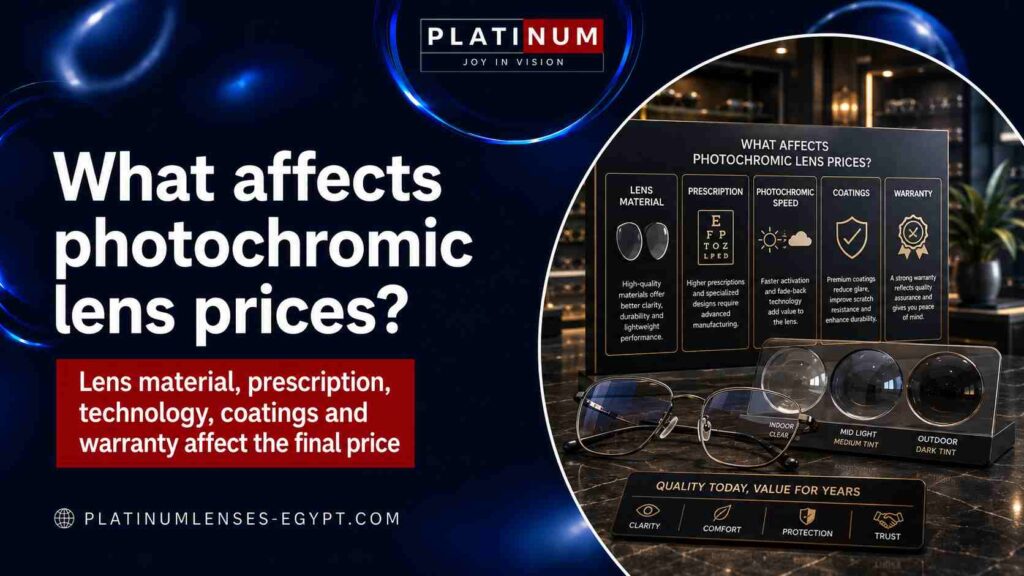
| العامل | ماذا يعني | تأثيره على السعر |
|---|---|---|
| مادة العدسة | بلاستيك قياسي، عالي الكسر (1.6/1.67)، أو بولي كربونات | كلما ارتفع معامل الانكسار، ارتفع السعر لكن العدسة أخف وأنحف |
| قوة الوصفة | خفيفة، متوسطة، أو عالية | الوصفات العالية تحتاج مواد أنحف وسعرًا أعلى |
| سرعة الاستجابة | زمن الإعتام والعودة للشفافية | التقنية الأسرع والأكثر استقرارًا أغلى |
| الطلاءات الإضافية | مضاد للانعكاس، مقاوم للخدش، طارد للماء | كل طلاء يضيف قيمة وسعرًا |
| حماية UV | مستوى الحجب للأشعة فوق البنفسجية | الحماية 100% ضمن معايير معتمدة |
| الضمان وخدمة ما بعد البيع | جهة موثوقة وشروط استبدال واضحة | الضمان لا يظهر في السعر لكنه يوفّر مالك لاحقًا |
السعر الأدنى قد يبدو مغريًا، لكن العدسة التي تتحوّل ببطء، أو تبقى مظلمة داخل المكتب، أو تتخدش بسهولة، ستكلّفك أكثر لاحقًا. هل النظارات الرخيصة تضر بالعين؟ هذا سؤال شائع تجيبه مقالة مستقلة عندنا، لأن جودة العدسة ليست ترفًا بل جزء من صحة عينك.
للمقارنة بين الفوتوكروميك وباقي حلول حماية العين من الشمس، راجع دليل النظارات الشمسية والفوتوكروميك الذي يجمع أدلة الاختيار والأسعار والاستخدام في مكان واحد.
كم يبلغ سعر العدسات الفوتوكروميك في مصر؟
المدى التقديري في السوق المصري وقت كتابة هذا الدليل يبدأ من حوالي 2000 جنيه للعدسة ويصل إلى 3000 جنيه أو أكثر حسب المواصفات. هذا المدى يتحرّك مع سعر الاستيراد والدولار وموردي الخامات، فلا تعتبره ثابتًا.
ما يرفع السعر عن هذا المدى؟
- وصفة نظر عالية (فوق 4.00 ديوبتر) تحتاج مادة عالية الكسر.
- إضافة طلاء متعدد الطبقات (مضاد انعكاس + طارد ماء + مقاوم خدش).
- تقنية فوتوكروميك سريعة الاستجابة أو متعددة الألوان.
- عدسة تقدمية (Progressive) بدل عدسة وصفة أحادية.
بدلًا من السؤال «كم السعر؟» اسأل «ما المكوّنات المُشمَلة في هذا السعر؟». الفرق بين عرضين بنفس الرقم قد يكون هائلًا في الجودة. للسعر المؤكد الخاص بوصفتك تواصل مع أقرب فرع بلاتنيوم واحصل على عرض مبني على قياس بصري فعلي.
هل العدسات الفوتوكروميك تستحق فرق السعر؟
الإجابة تعتمد على أسلوب حياتك، لا على العدسة نفسها.
تستحق السعر الأعلى إن كنت:
- ترتدي نظارة طبية طوال اليوم.
- تنتقل بين مكتب ومواصلات وشارع عدة مرات يوميًا.
- تعمل بالقرب من نوافذ كبيرة أو تخرج للمشي/الجري في النهار.
- لا ترغب في حمل نظارتين وتبديلهما.
- تعاني من حساسية خفيفة تجاه الإضاءة الساطعة.
قد لا تستحق الفرق إن كنت:
- تقضي معظم وقتك داخل مبانٍ ذات إضاءة ثابتة.
- تفضّل مظهر النظارة الشمسية الغامقة الأنيقة، حيث الفوتوكروميك لا تصل عادةً لدرجة تعتيم النظارات الشمسية الكلاسيكية.
- تمتلك نظارة شمسية طبية منفصلة وتشعر بالراحة معها.
- تقود السيارة كثيرًا نهارًا وتعتمد على الفوتوكروميك حصريًا داخل السيارة (كما سنشرح لاحقًا).
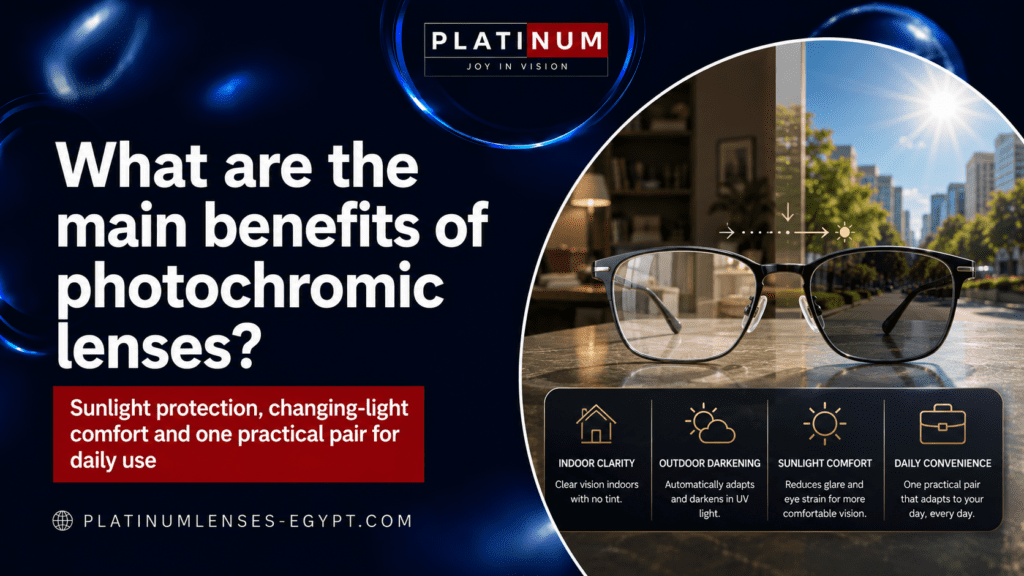
ما فوائد العدسات الفوتوكروميك في الحياة اليومية؟
الفوتوكروميك ليست موضة عابرة، بل حل عملي لمشكلة يعرفها كل من ارتدى نظارة طبية تحت شمس مصر.
راحة العين من وهج الشمس
الأشعة الساطعة تجبر عينك على تضييق الحدقة والحول اللاإرادي. الفوتوكروميك تُعتِم تدريجيًا فتقلل هذا الإجهاد، خاصة أثناء المشي في الشارع أو الوقوف في محطة انتظار.
حماية من الأشعة فوق البنفسجية
معظم العدسات الفوتوكروميك المعتمدة تحجب حتى 100% من UVA وUVB، وهي حماية طويلة الأمد لصحة العدسة الطبيعية داخل عينك. لا تعتبر هذه الحماية بديلًا عن الفحص الدوري؛ راجع أخصائي البصريات أو طبيب العيون كل 6-12 شهرًا.
نظارة واحدة تكفي
بدل حقيبة تحوي نظارة قراءة ونظارة شمسية طبية، تخرج بنظارة واحدة تخدمك في كل السيناريوهات المعتادة.
مناسبة لمن يقود دراجة أو يمشي كثيرًا
راكبو الدراجات والمشاة يكسبون كثيرًا مع الفوتوكروميك لأنهم يمرّون بتغيّرات ضوء متكررة (ظل شجرة → شمس مباشرة → نفق → شارع مفتوح).
ما عيوب العدسات الفوتوكروميك التي يجب معرفتها قبل الشراء؟
المصداقية أهم من التسويق. الفوتوكروميك عدسات ممتازة لكنها ليست مثالية.
الاستجابة داخل السيارة محدودة
معظم زجاج السيارة الأمامي مطلي طبقة تحجب الأشعة فوق البنفسجية، وهي تحديدًا الأشعة التي تُنشِّط الفوتوكروميك. النتيجة: قد لا تُعتِم العدسة بالدرجة المطلوبة أثناء القيادة النهارية. للسائقين المنتظمين نقترح مناقشة الاختيار مع أخصائي البصريات.
حساسية للحرارة
في الأجواء الحارة جدًا قد تصل العدسة لأقصى إعتام أبطأ، وفي البرودة قد يظهر تعتيم كامل بسرعة. هذا التغيّر طبيعي في الفيزياء لكن انتبه إليه.
فرق سعر واضح عن العدسة الشفافة العادية
كما شرحنا، الفارق قد يصل إلى ضعف سعر العدسة القياسية، وهو ما يجعله قرارًا يحتاج تفكيرًا.
خيارات الألوان أقل من النظارات الشمسية
الفوتوكروميك تأتي غالبًا في الرمادي أو البني. إن أردت لون تينت موضة (أزرق، وردي، أخضر) لن تجده هنا.
تحتاج بعض الوقت للعودة للشفافية
عند دخولك مبنى بعد وقت طويل تحت الشمس، قد تحتاج العدسة 30 ثانية إلى دقيقتين لتعود قريبة من الشفافية. الفوتوكروميك عالية الجودة أسرع لكنها ليست فورية.
هل العدسات الفوتوكروميك مناسبة للقيادة؟
هذا أهم سؤال يستحق قسمًا مستقلًا، لأن كثيرًا من الزبائن يشترون الفوتوكروميك ظنًا أنها ستحل مشكلة الوهج داخل السيارة، والحقيقة أدق من ذلك.
نهارًا داخل السيارة: الزجاج الأمامي المُشرَّب بحماية UV يمنع تفعيل معظم العدسات الفوتوكروميك التقليدية. بعض الأنواع الحديثة تستجيب للضوء المرئي بجانب UV فتعمل جزئيًا داخل السيارة، لكن ليس مثل نظارة شمسية حقيقية.
ليلًا: لن تُعتِم العدسة أصلًا (لا يوجد ضوء شمس)، لذا القيادة الليلية مع الفوتوكروميك آمنة. للحصول على راحة أفضل من وهج المصابيح الأمامية للسيارات المقابلة، يُنصح بإضافة طلاء مضاد للانعكاس. اطلع على أفضل عدسات بلو كت + فوتو جراي إن كنت تجلس أمام الشاشات نهارًا وتقود ليلًا.
التوصية العملية: إن كانت القيادة النهارية هي أغلب استخدامك، فكّر في نظارة شمسية طبية منفصلة أو استشر أخصائي البصريات لاختيار فوتوكروميك مصمّم للاستخدام داخل السيارة.
هل العدسات الفوتوكروميك تناسب الشتاء أم فقط الصيف؟
سؤال شائع لأن الناس يربطون العدسات الشمسية بالصيف. الحقيقة أن الأشعة فوق البنفسجية موجودة على مدار السنة، وفي أيام الشتاء المشمسة الوهج على الشوارع الرطبة أو الأسطح البيضاء قد يكون مؤذيًا للعين. راجع دليلنا: هل ترتدي نظارة شمسية في الشتاء؟ للتعمّق أكثر.
الفوتوكروميك تعمل بحسّاسات الضوء لا بالتقويم، لذا هي مناسبة للشتاء والصيف على حد سواء، وميزتها الفعلية تظهر في أيام الطقس المتقلّب.
من واقع تجربتنا في فروع بلاتنيوم
من واقع تجربتنا في فروع بلاتنيوم، الزبون الذي يشتري الفوتوكروميك أول مرة يعود بعد أسبوعين إما ممتنًا للراحة اليومية أو محبَطًا لأنه توقّع تعتيمًا مثل النظارة الشمسية الغامقة.
استقبلنا في فروعنا حالات كثيرة اشترت العدسة بناءً على إعلان أو نصيحة صديق دون تجربة فعلية، ثم شعرت بالفارق بين التوقّع والواقع بعد الاستخدام اليومي.
الحل الذي نتّبعه في المحلات: نطلب من الزبون ارتداء عيّنة تجريبية والمشي بها بضع دقائق قرب واجهة زجاجية مضاءة قبل الشراء، حتى يعرف بالضبط كيف ستبدو الرؤية.
الدرس العملي: الفوتوكروميك عدسة رائعة إذا اشتراها الزبون بتوقّعات صحيحة — اطلب تجربة حقيقية قبل الدفع، ولا تعتمد على وصف البائع فقط.
كل مقالاتنا مراجعة طبيًا بواسطة الفريق الطبي لعدسات بلاتنيوم وفق السياسة التحريرية الخاصة بنا.
ما الذي يميّز عدسات بلاتنيوم الفوتوكروميك؟
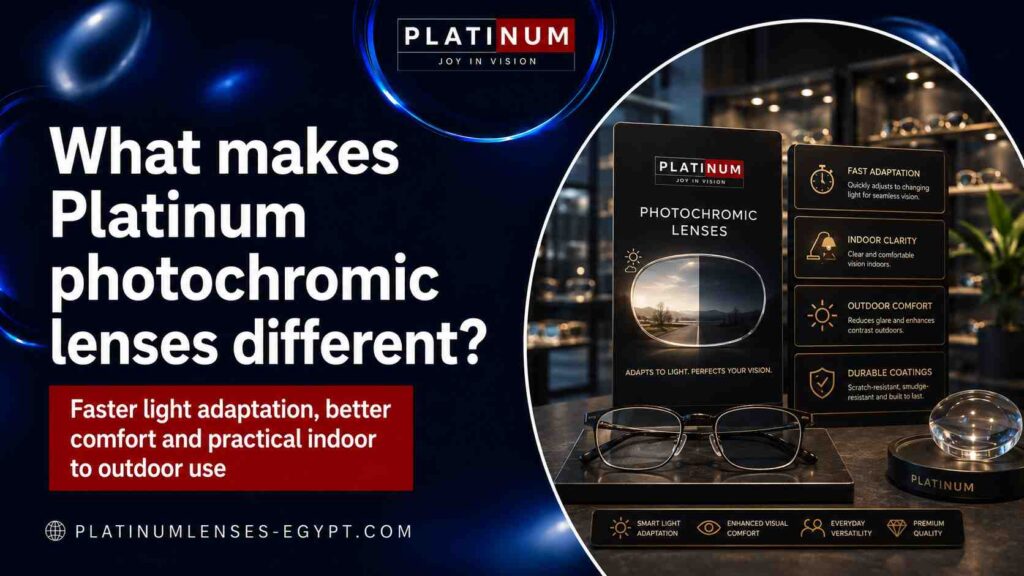
عدسات بلاتنيوم فوتوكروميك (بما فيها فئة Sun Actives) مصمّمة لموازنة عدة عوامل يهتم بها المستخدم المصري:
- سرعة استجابة أعلى للإعتام والعودة للشفافية داخل المباني.
- حماية 100% من الأشعة فوق البنفسجية.
- توافق مع طلاءات إضافية مثل مضاد الانعكاس ومقاوم الخدش.
- متوفرة بمدى واسع من الوصفات (وحيدة البؤرة، ثنائية، تقدمية).
- ضمان واضح وخدمة ما بعد بيع من فروع منتشرة داخل مصر.
يمكنك تصفّح أفضل عدسات بلو كت + فوتو جراي لمقارنة الخيارات المتقاربة، أو زيارة أقرب فرع بلاتنيوم لقياس بصري كامل وعرض سعر دقيق.
كيف تقارن عرضين لأسعار العدسات الفوتوكروميك بذكاء؟
عندما يصلك عرضان مختلفان بأسعار متقاربة، لا تقرّر بالرقم فقط. اطرح هذه الأسئلة على البائع:
- ما مادة العدسة (بلاستيك 1.5، 1.6، 1.67)؟
- ما الشركة المصنّعة لتقنية الفوتوكروميك؟
- هل الحماية من UV مذكورة صراحة (100%)؟
- ما الطلاءات المُشمَلة (مضاد انعكاس، مقاوم خدش)؟
- ما مدة الضمان وشروطه؟
- هل العدسة مناسبة للقيادة النهارية؟
- كم يستغرق تسليم العدسة بعد الطلب؟
- هل يمكن إعادتها أو استبدالها إن لم تناسبك تجريبيًا؟
عرضان بنفس السعر قد يفصلهما ضمان سنة كامل، أو طلاء مضاد انعكاس بقيمة 500 جنيه، أو تقنية أسرع بمرتين. المقارنة الحقيقية بين المكوّنات، لا بين الأرقام.
كيف تحافظ على العدسات الفوتوكروميك أطول فترة ممكنة؟
جودة العدسة لا تنفع إن لم تُعامَل بحذر. العدسة الفوتوكروميك تحتوي مواد كيميائية دقيقة داخل طبقة رقيقة، وأي إهمال في التنظيف أو التخزين ينعكس على أدائها بعد شهور:
- نظّفها بقطعة قماش ميكروفايبر وسائل نظارات مخصّص، لا بقميصك ولا بمنديل ورقي جاف. النسيج الخشن يترك خدوشًا مجهرية تراكمية.
- لا تتركها فوق داشبورد السيارة في شمس الظهيرة. الحرارة العالية (فوق 60 درجة مئوية) قد تُضعف الطبقة التفاعلية وتُبطئ سرعة الاستجابة على المدى الطويل.
- احفظها في علبة صلبة عند عدم الاستخدام، ليس في جيب حقيبة مع مفاتيح أو أقلام.
- اغسلها بماء فاتر قبل مسحها لإزالة الأتربة، حتى لا تصنع خدوشًا صغيرة أثناء التنظيف الجاف.
- افحصها سنويًا عند أخصائي البصريات للتأكد من أن الوصفة ما زالت صحيحة والعدسة ما زالت تعمل بكفاءة.
- تجنّب المواد الكيميائية القاسية كالكحول المركّز أو منظفات المطبخ؛ هذه تُذيب الطلاءات.
بهذه العناية تعيش العدسة الفوتوكروميك عادةً بين سنتين وثلاث سنوات بأداء ممتاز، وقد تصل لأكثر مع الجودة الأعلى. الإهمال قد يقلّص عمرها لأشهر معدودة.
هل يمكن الجمع بين الفوتوكروميك والبلو كت؟
نعم، وهي من الخيارات الشائعة جدًا لمن يجلس أمام الشاشات نهارًا ويحتاج راحة الشمس عند الخروج. مقالتنا التفصيلية عن أفضل عدسات بلو كت + فوتو جراي تشرح متى تكون هذه التوليفة قرارًا موفَّقًا، وكيف تختلف طبقاتها.
هذه التوليفة قد تضيف حوالي 300 إلى 600 جنيه على السعر التقديري للعدسة الفوتوكروميك، لكنها تعوّض قرار شراء نظارتين منفصلتين. للسعر المؤكد تواصل مع أقرب فرع بلاتنيوم.
ما الفرق بين العدسات الفوتوكروميك والعدسات القطبية (Polarized)؟
هذا الفرق يخلط الكثيرين، رغم أنه جوهري في القرار. الفوتوكروميك تتغيّر شفافيتها حسب مستوى الضوء المحيط، بينما القطبية (Polarized) تحجب الوهج الأفقي الناتج من انعكاس الضوء على أسطح مائية أو معدنية.
| السمة | الفوتوكروميك | القطبية (Polarized) |
|---|---|---|
| مبدأ العمل | تفاعل كيميائي مع UV/الضوء المرئي | فلتر فيزيائي يحجب الاستقطاب الأفقي |
| داخل المبنى | شبه شفافة | داكنة ثابتة |
| القيادة النهارية | استجابة محدودة داخل السيارة | ممتازة ضد وهج الطريق |
| تُلائم القراءة على شاشة LCD | نعم | قد تُظهر ألوانًا غريبة على شاشات LCD |
| السعر التقديري | من 2000 جنيه | أقل قليلاً غالبًا لكن غير طبية عادةً |
يمكن جمع الاثنين في نظارة شمسية طبية منفصلة إن أردت الأفضل في كل موقف. للتفاصيل زُر أقرب فرع بلاتنيوم وناقش الخيار المناسب لروتينك.
متى يجب أن تتجنّب العدسات الفوتوكروميك؟
الصراحة جزء من E-E-A-T. الفوتوكروميك ليست الخيار الأمثل لكل الحالات:
- طيّاري الطائرات حيث زجاج قمرة القيادة يحجب UV بالكامل.
- من يقود سيارة معظم يومه ويحتاج تعتيمًا حقيقيًا داخل السيارة.
- من يعمل في بيئة ضوء متغيّر بسرعة قصوى (كإجراءات جراحية أو تصوير احترافي).
- من يريد لونًا موضة محدّدًا (وردي، أزرق، أخضر).
- الأطفال جدًا حيث النظارة الشمسية المخصّصة أفضل.
في هذه الحالات، استشر أخصائي البصريات لخيار أنسب، ولا تشترِ الفوتوكروميك فقط لأنك سمعت عنها.
الخلاصة
أسعار العدسات الفوتوكروميك ليست رقمًا واحدًا بل نطاق يبدأ تقديريًا من 2000 جنيه ويرتفع مع الطلاءات والوصفات. الفارق عن العدسة الشفافة العادية له مبرّر تقني حقيقي: طبقة تفاعلية للضوء، حماية من الأشعة فوق البنفسجية، طلاءات محسّنة، ومادة أدق تصنيعًا. تستحق هذا الفارق إن كنت ترتدي نظارتك طوال اليوم وتتنقل بين داخل وخارج المباني، ولا تستحقّه إن كنت تقود كثيرًا نهارًا أو تفضّل مظهر النظارة الشمسية الغامقة.
قبل الشراء اسأل عن المادة، التقنية، حماية UV، الطلاءات، والضمان — لا عن السعر فقط. وابدأ خطوتك التالية من فحص بصري دقيق في أقرب فرع بلاتنيوم للحصول على وصفة صحيحة وعرض سعر مبني على حالتك الفعلية.
Related Articles
View all articles → النظارات الشمسية والفوتوكروميك
 Best Blue Cut Photochromic Lenses in 2026
Learn how blue cut photochromic lenses work, their benefits, types, indoor outdoor use, coatings and how to choose the right Platinum option
Read more ->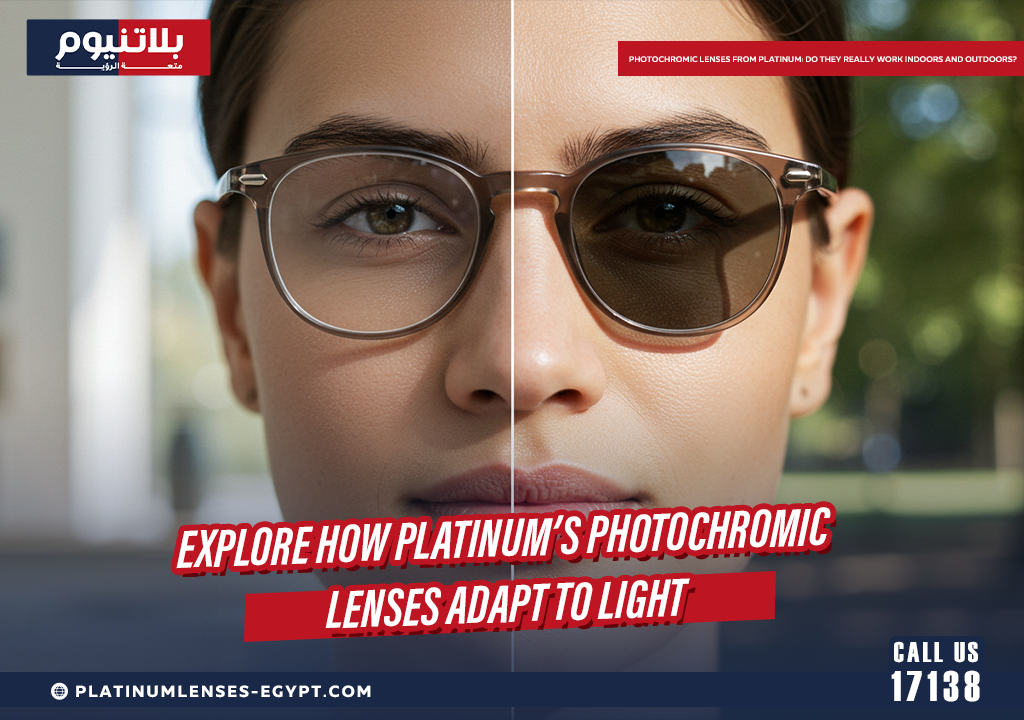 النظارات الشمسية والفوتوكروميك
 Photochromic Lenses from Platinum: Do They Really Work Indoors and Outdoors?
Platinum Sun Actives photochromic lenses adapt instantly to light—clear indoors, dark outdoors. UV protection, no residual tint. Perfect for work, driving & kids!
Read more -> النظارات الشمسية والفوتوكروميك
 Platinum Photochromic Lenses: Benefits, Disadvantages, and Usage
Platinum photochromic lenses offer UV protection, convenience, and smooth light transitions. Learn about their benefits, disadvantages, and ideal uses in this comprehensive guide.
Read more -> أنواع العدسات الطبية
 Prescription Eyeglass Lens Types and Their Prices
Learn the main prescription eyeglass lens types, price factors, lens materials, coatings and how to choose the right option for your vision needs
Read more -> أنواع العدسات الطبية
 Korean vs German vs Japanese Lenses: Which Is Right for You?
Compare Korean, German and Japanese prescription lenses for clarity, coatings, comfort and price to choose the right option for your vision needs
Read more -> أنواع العدسات الطبية
 Best Prescription Eyeglass Lens Brands in 2026
Compare eyeglass lens brands in 2026 and learn how quality, coatings, comfort, warranty and Platinum lens options help you choose better
Read more ->