German vs French Lenses: Which Should You Choose?
العدسات الألمانية مقابل الفرنسية ليست مقارنة اسم بلد، بل مقارنة فلسفتَي تصنيع. العدسات الألمانية معروفة بدقّة القياس الرقمي وثبات الطلاءات وأداء بصري عالٍ للوصفات المُعقّدة، بينما العدسات الفرنسية معروفة براحة الارتداء اليومي وسهولة التنظيف وسعر أكثر توازنًا لغالبية المستخدمين. القرار الصحيح لا يبدأ من الغلاف، بل من وصفتك وعدد ساعات ارتدائك وطبيعة يومك: شاشات، قيادة ليلية، أم استخدام عام؟ في هذا الدليل نوضّح الفروق العملية بلا مبالغة، مع مقارنة عادلة مع العدسات اليابانية وخيار بلاتنيوم كبديل محلي جاد.
ما الفرق الحقيقي بين العدسات الألمانية والفرنسية؟
الفرق لا يظهر على العلبة، بل يظهر بعد ٦ ساعات من ارتداء النظارة على شاشة أو خلف مقود ليلًا. العدسات الألمانية بُنيت تاريخيًا حول دقّة التصنيع الرقمي (Freeform) وتخصيص التصميم على مقاس عين المستخدم، ما ينعكس على وضوح أطراف العدسة وثبات الرؤية مع حركة الرأس. أما العدسات الفرنسية فبنت شهرتها على راحة الاستخدام اليومي: سطح ناعم، طلاءات سهلة التنظيف، وقبول واسع لمعظم الوصفات الشائعة.
عمليًا، فرق الأداء بين الفئتين ضاق كثيرًا خلال آخر خمس سنوات. أغلب المصانع الكبيرة في ألمانيا وفرنسا صارت تستخدم نفس مبادئ Freeform، لكن الاختلاف يظهر في تفاصيل مثل عدد نقاط القياس داخل العدسة، وسمك الحواف، وثبات طلاء الـ AR بعد أشهر من التنظيف اليومي. لذلك لا تقارن الاسم؛ قارن مواصفات العدسة نفسها: معامل الانكسار، الطلاء، التصميم (single vision أم progressive)، ودقّة القياس الرقمي.
خطأ شائع يقع فيه من يفتح مقارنة الألمانية مقابل الفرنسية: يفترض أن السعر الأعلى يعني وضوحًا أفضل تلقائيًا. الحقيقة أن وضعتك -1.75 لن ترى فرقًا محسوسًا بين العدستين، بينما وصفة +3.00 مع استجماتيزم -1.25 قد يظهر معها فرق واضح لصالح التصميم الرقمي الأدق. راجع تصنيف أنواع العدسات الطبية لتعرف أين تقع وصفتك قبل أن تفتح مقارنة الماركات.
بماذا تشتهر العدسات الطبية الألمانية؟
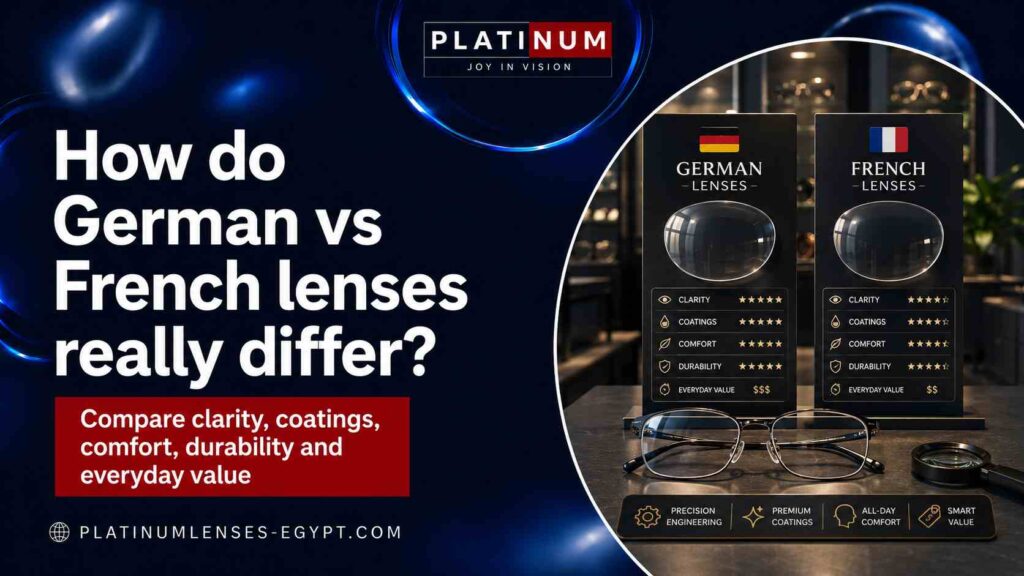
العدسات الألمانية بنَت سُمعتها على أربعة أعمدة: دقّة القياس، جودة الطلاء، متانة المادّة، وضمان ثابت. كل عمود منها يخدم فئة معيّنة من المستخدمين، وليس كل عمود مطلوبًا لكل شخص.
وضوح الرؤية والدقّة البصرية
الوضوح في العدسات الألمانية يعتمد على تخصيص التصميم Freeform الرقمي على مقاس عينك. هذا معناه أن مركز الرؤية الحاد يمتد إلى أطراف العدسة أوسع مما تسمح به العدسة القياسية، ما يقلّل الحاجة إلى تحريك رأسك لمتابعة النص أو الطريق. هذا الفارق يظهر بوضوح مع الوصفات فوق -3.00 أو مع أي استجماتيزم يتجاوز -1.00، ومع من يعمل ساعات طويلة أمام شاشتين.
الطلاءات المتقدّمة
أغلب العدسات الألمانية تُقدَّم مع طلاء مضاد للانعكاس متعدد الطبقات، طبقة مقاومة للخدش، وطبقة نبذ الماء والزيت (Hydrophobic/Oleophobic). الفائدة العملية: أقل انعكاسات على الوجه في المكالمات ومقاطع الصور، وأقل وهج ليلي أثناء القيادة، وسهولة أعلى في التنظيف. لو الانعكاسات على وجهك أو في رؤيتك تزعجك، اقرأ لماذا تظهر انعكاسات حول عدسات النظارة الطبية لتفهم كيف يعالج الطلاء المتعدد الطبقات المشكلة من جذرها.
المتانة وثبات المواصفات
المتانة ليست فقط «العدسة لا تتخدش»، بل ثبات مواصفات الطلاء بعد ستة أشهر من التنظيف. العدسات الألمانية الجيدة تحافظ على شفافية الطلاء وأدائه فترة أطول، وهذا ما تدفع مقابله فعلًا: عمر افتراضي أطول للاستثمار.
السعر ومتى يكون مبرَّرًا
العدسات الألمانية أعلى سعرًا. الفارق مبرَّر إذا كانت وصفتك عالية، أو تعمل ساعات طويلة على الشاشة، أو تقود ليلًا، أو تحتاج تصميمًا متعدّد البؤر (progressive). لكن لو وصفتك بسيطة وارتداؤك محدود، فأنت تدفع مقابل مواصفات لا يستفيد جهازك البصري منها فعليًا. للتقدير الإرشادي لأسعار الفئات المختلفة راجع أنواع العدسات الطبية وأسعارها في مصر، ولمعرفة السعر المؤكد اليوم تواصل مع أقرب فرع.
بماذا تشتهر العدسات الطبية الفرنسية؟
العدسات الفرنسية تلعب على أرض مختلفة: راحة المستخدم اليومي وتوازن السعر. لا تحاول أن تكون الأدق في السوق، بل تحاول أن تكون الأنسب لأكبر شريحة من الناس.
الراحة اليومية
الفلسفة الفرنسية في التصميم تُعطي أولوية لسطح ناعم على العين وطبقة داخلية مريحة للوصفات المتوسطة. لو ترتدي النظارة من الصباح للمساء دون أن تشعر بها، فأنت في الغالب على عدسة تُعطي راحة عالية مقابل السعر — وهذا ما تُجيده العائلة الفرنسية.
سهولة التنظيف
طلاءات الـ Hydrophobic في العدسات الفرنسية جيدة عمومًا في مقاومة قطرات الماء وبصمات الأصابع، ما يقلّل تكرار التنظيف اليومي. هذا فرق عملي مهم في مناخ مصر: غبار، عرق، بصمات، مسح متكرر. عدسة تسهّل عليك التنظيف تعيش أطول بصريًا.
الحماية من الأشعّة والضوء الأزرق
كثير من العدسات الفرنسية تحمل طلاء ضدّ الأشعّة فوق البنفسجية وطبقة تصفية جزئية للضوء الأزرق. الفائدة تعتمد على الفئة السعرية وليس على العَلَم فقط، لذا اسأل عن الطلاءات المشمولة بالاسم قبل الشراء ولا تكتفِ بجملة «حماية شاملة».
حدود العدسات الفرنسية
في الفئات الاقتصادية والمتوسطة، قد لا تصل بعض العدسات الفرنسية إلى مستوى التخصيص الرقمي الدقيق الموجود في نظيراتها الألمانية الفاخرة. هذا لا يعني أنها ضعيفة، لكنه يعني أن الوصفات المُعقّدة أو الحساسة للوهج قد تستفيد أكثر من فئة أعلى — سواء ألمانية أو يابانية.
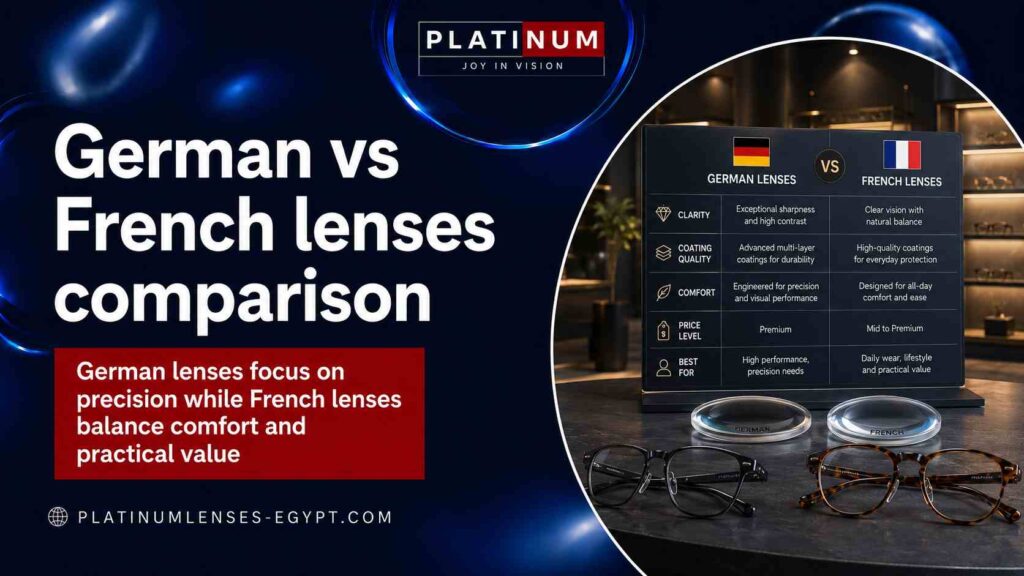
جدول مقارنة: العدسات الألمانية مقابل الفرنسية
الجدول التالي يلخّص الفروق العملية التي نراها في الفروع مع العملاء. اعتبِره خريطة تفكير، لا حكمًا نهائيًا؛ الوصفة والاستخدام يبقيان الفيصل.
| نقطة المقارنة | العدسات الألمانية | العدسات الفرنسية |
|---|---|---|
| دقّة الرؤية والتخصيص | عالية جدًا مع Freeform الرقمي | جيدة ومناسبة للوصفات الشائعة |
| جودة الطلاء | طبقات متقدّمة وثبات طويل | طلاء عملي وسهل التنظيف |
| مقاومة الخدش | مرتفعة في الفئات المتقدّمة | جيدة حسب الفئة السعرية |
| راحة الارتداء الطويل | مرتفعة خاصة في التصاميم المخصصة | مريحة ومرنة لليوم العادي |
| المستوى السعري | أعلى | متوازن وأخفّ |
| الأنسب لـ | وصفات عالية، شاشات كثيفة، قيادة ليلية | استخدام يومي عام، طلاب، مكاتب |
| التوفّر في مصر | متوفّر عبر مستوردين محدّدين | متوفّر مع تنوّع أوسع |
| الضمان المحلي | يعتمد على المستورد | يعتمد على المستورد |
القراءة الصحيحة للجدول: اختر السطر الذي يصف يومك أنت، لا السطر الذي يبدو «الأفخم». وصفة عالية + قيادة ليلية = ابحث عن التصميم الرقمي المخصّص، سواء ألمانيًا أو يابانيًا. استخدام مكتبي + وصفة متوسطة = التوازن الفرنسي أو الياباني كافٍ في الغالب.
هل العدسات الألمانية أفضل دائمًا؟
لا. «الأفضل دائمًا» جملة تسويقية لا تصف الواقع البصري. العدسة الألمانية تتفوّق عندما تكون الوصفة مُعقّدة، أو الإطار كبيرًا يُظهر مشاكل الأطراف، أو المستخدم حسّاسًا للوهج والانعكاسات. أما للوصفة البسيطة الثابتة والاستخدام العادي، فأنت تدفع فرقًا سعريًا كبيرًا مقابل مواصفات لن تشعر بها.
مثال عملي نراه كثيرًا في فروع بلاتنيوم: طالبة جامعية بوصفة -1.50 دون استجماتيزم اختارت عدسة ألمانية فاخرة بضغط من زميل. بعد شهر عادت لتسأل: هل أشعر بفرق؟ لا. المشكلة ليست في العدسة، بل في التوقع. جهازها البصري لا يحتاج تلك الدقّة الإضافية، لأن المشكلة الأصلية بسيطة. الفارق كان سيكون واضحًا لو كانت الوصفة -5.00 مع استجماتيزم أو لو كانت تعمل ست ساعات على الشاشة.
اقلب المعادلة: المحاسب الذي يمضي ثماني ساعات أمام شاشتين ثم يقود ليلًا سيلمس فرقًا حقيقيًا في وضوح الأطراف وثبات الرؤية مع التصميم الرقمي المخصّص، سواء ألمانيًا أو يابانيًا عالي الفئة. القاعدة: كلّما زادت أعباء الرؤية، ازدادت قيمة التصميم الدقيق.
هل العدسات الفرنسية خيار جيد للاستخدام اليومي؟
نعم في أغلب الحالات. الفرنسية تُقدّم توازنًا يناسب طالبًا يحضر محاضرات، موظفًا في مكتب، أو أمًا تلاحق أطفالها في البيت والسوق. طالما الوصفة معقولة (تحت -3.00 غالبًا) والاستخدام متنوع لا مُركّز، فالنتيجة راضية غالبًا مع سعر أقل من الفاخر الألماني.
الشرط الجوهري: افهم الطلاءات المشمولة بالاسم. اسأل بالتحديد: هل هناك AR متعدد الطبقات؟ هل طبقة نبذ الماء (Hydrophobic) موجودة؟ ما مستوى مقاومة الخدش؟ عدسة فرنسية أساسية بلا طلاء متطوّر قد لا تُقنعك بعد شهرين، بينما عدسة فرنسية من الفئة المتوسطة بطلاء كامل تفي بكل احتياجاتك اليومية. للاطّلاع على معايير اختيار العدسة اليومية الصحيحة راجع دليل اختيار النظارة الطبية المناسبة لعينك.
لماذا نُدخل العدسات اليابانية في المقارنة؟
لأنها في السوق المصري تُقدّم توازنًا فعليًا بين الدقّة الألمانية والسعر الفرنسي. اليابانية تعتمد نفس مبادئ التصنيع الرقمي، مع تقاليد صناعية تركّز على ثبات الجودة وتفاصيل الطلاء. بلاتنيوم مثال محلي عملي: عدسات يابانية المنشأ بمواصفات رقمية، طلاءات MIRA بعائلاتها المختلفة (SP/UV/UP/UPS/GP)، وضمان معتمد داخل مصر مع فروع للمتابعة.
الفارق الذي يهم القارئ المصري: العدسة الألمانية المستوردة تعتمد على وسيط، وضمانها يعتمد على مدى التزام هذا الوسيط. اليابانية عبر بلاتنيوم تصلك بضمان محلي مباشر يمكنك تفعيله والمتابعة عليه في فروع بلاتنيوم. هذا لا يعني أن اليابانية «أفضل من الألمانية»، بل يعني أن مقارنة عادلة لا تكتفي بحرفَي D و F.
ما مادة العدسة التي يجب أن تفكّر فيها؟
اسم البلد يحدّد سمعة المصنع، لكن مادة العدسة نفسها تحدّد الوزن، السمك، السلامة، والراحة. اختيارك للمادة يسبق منطقيًا اختيارك للماركة، لأن المادة الخاطئة تُفسد أفضل عدسة ألمانية أو فرنسية.
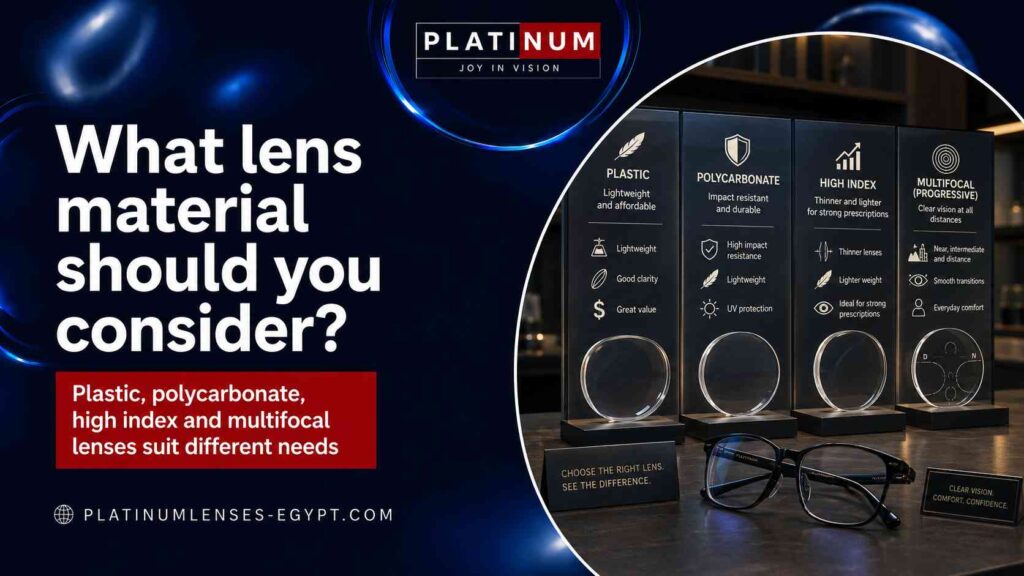
العدسات البلاستيكية (CR-39) — معامل انكسار 1.50
الخيار الأشهر لأغلب الوصفات البسيطة. أخف من الزجاج بمقدار النصف تقريبًا، وسعرها منخفض، وطلاؤها يتقبّل الـ AR جيدًا. عيبها: تصير سميكة مع الوصفات فوق -3.00.
عدسات البولي كربونات (Polycarbonate) — معامل 1.59
أخفّ وأقوى مقاومة للصدمات. الخيار المفضّل للأطفال، الرياضيين، والنظارات المستخدمة في بيئات فيها مخاطر (ورشة، معمل). تحمي العين من ضربات مفاجئة أفضل من CR-39.
عدسات High Index — معامل 1.60 / 1.67 / 1.74
الحلّ الحقيقي للوصفات العالية. كل زيادة في معامل الانكسار تعني عدسة أرقّ وأخفّ. وصفة -5.00 تُصنع عدسة سميكة قبيحة مع 1.50، لكنها تظهر رقيقة أنيقة مع 1.67 أو 1.74. للفهم العملي لاختيار الـ index الصحيح راجع دليل سمك العدسات الطبية قبل أن تدفع فرقًا سعريًا لا تحتاجه فعلًا.
العدسات متعدّدة البؤر (Progressive/Multifocal)
مصمّمة للعين التي تحتاج أكثر من مسافة رؤية — قريبة، متوسطة، بعيدة — دون تغيير النظارة. تحتاج قياسات دقيقة (ارتفاع البؤبؤ، مسافة PD، ميل الإطار) وتصميمًا رقميًا جيدًا حتى تنتقل العين بسلاسة بين المناطق. هنا يظهر فرق واضح بين العدسة الرقمية المخصّصة والعدسة القياسية، وهنا تحديدًا يبدأ الاستثمار في الفئة الأعلى منطقيًا.
من واقع تجربتنا في فروع بلاتنيوم
من واقع تجربتنا في فروع بلاتنيوم، نستقبل يوميًا من يسأل «الألمانية أفضل أم الفرنسية؟» وأول ما نطلبه: الوصفة، عدد ساعات ارتداء النظارة، طبيعة العمل، وهل يقود ليلًا. لاحظنا في تجربتنا مع العملاء أن ٦ من كل ١٠ يدخلون طالبين «الأفخم» ثم يخرجون بعدسة متوسطة الفئة مناسبة لاحتياجهم الفعلي بعد أن نشرح لهم الفرق العملي — ووفّروا فارقًا سعريًا محترمًا. الحالات التي نصحنا فيها بالفئة العليا كانت غالبًا وصفات فوق -4.00، أو استجماتيزم فوق -1.50، أو عمل مكثّف على شاشتين مع قيادة ليلية.
الدرس العملي: لا تختر العدسة باسم بلدها، اخترها بمطابقة الوصفة على استخدامك اليومي الفعلي — وشاور أخصائي البصريات قبل الدفع.
كيف تُؤثّر الألمانية مقابل الفرنسية على السعر؟
الفارق السعري بين الفئتين حقيقي، لكنه ليس ثابتًا. عدسة ألمانية اقتصادية قد تلامس سعر عدسة فرنسية متوسطة، وعدسة فرنسية فاخرة قد تتخطى عدسة ألمانية أساسية. لذلك السؤال الصحيح: ما الذي أحصل عليه مقابل هذا الفرق؟ إن كان الفرق يعني تصميمًا رقميًا مخصّصًا + طلاء AR متعدد الطبقات + مقاومة خدش متقدّمة، فالفرق مبرَّر لمن يستخدم النظارة بكثافة. إن كان الفرق مجرد اسم على الغلاف، فأنت تدفع مقابل التسويق.
لتقدير حقيقي لفئات الأسعار في السوق المصري راجع أنواع العدسات الطبية وأسعارها في مصر؛ الأرقام هناك تقديرية وقابلة للتغيّر، وللسعر المؤكد اليوم مع نوع الإطار والوصفة تحديدًا تواصل مع أقرب فرع.
كيف تختار العدسات الصحيحة خطوة بخطوة؟
اتّبع الترتيب التالي بدل أن تبدأ من اسم الماركة:
- افهم وصفتك أولًا: قوّة القريب/البعيد، وجود استجماتيزم، محور الاستجماتيزم. الوصفة تُخبرك بالحدّ الأدنى من التقنية المطلوب.
- حدّد الاستخدام السائد: شاشات، قيادة، رياضة، قراءة، مكتب. الاستخدام يحكم نوع الطلاء والتصميم.
- اختر معامل الانكسار المناسب (1.50 / 1.59 / 1.60 / 1.67 / 1.74) حسب قوة الوصفة وحجم الإطار.
- اختر التصميم: single vision للوصفة الثابتة، progressive لمن يحتاج مسافات مختلفة، office لمن يعمل معظم اليوم على شاشات.
- اختر الطلاءات: AR متعدد الطبقات، مقاوم خدش، Hydrophobic، طبقة الأزرق إن كنت أمام شاشة طويلًا.
- قارن الماركات ضمن الفئة نفسها: بعد كل ما سبق، افتح مقارنة ألماني مقابل فرنسي مقابل ياباني، لا قبله.
- تأكّد من الضمان المحلي: كيف يُفعَّل؟ ما الذي يُغطّيه؟ ما مدّته؟ الضمان القوي جزء أساسي من قيمة العدسة.
للتوسّع في اختيار تصميمات الإطار مع العدسة راجع أفضل تصميمات النظارة الطبية 2025 لتعرف كيف يؤثّر شكل الإطار على أداء العدسة نفسها.
أين تقع عدسات بلاتنيوم من هذه المقارنة؟
بلاتنيوم عدسات يابانية بمواصفات رقمية Freeform، وطلاءات MIRA بعائلاتها (SP للأساسي، UV/UP للأزرق، UPS مقاومة الماء والغبار، GP للحماية القصوى)، وتصاميم تغطّي single vision، bifocal، progressive، ولحلول رقمية للشاشات. الفارق الذي يهم القارئ في مصر: ضمان محلي معتمد قابل للتفعيل في الفروع، ومتابعة عملية بعد البيع، وسعر أخف من الفاخر الألماني المستورد.
لا نروّج بلاتنيوم بوصفها «الأفضل مطلقًا»؛ نروّجها كخيار عملي يستحقّ الدخول في المقارنة إلى جانب الألمانية والفرنسية، خصوصًا لمن يريد وضوحًا رقميًا دون دفع كامل السعر الفاخر. القرار في النهاية يعود لوصفتك ولنمط استخدامك.
متى تختار الألمانية، ومتى تختار الفرنسية، ومتى تختار اليابانية؟
- اختر الألمانية إذا كانت وصفتك عالية (فوق -4.00 أو استجماتيزم فوق -1.50)، أو تعتمد على القيادة الليلية بكثرة، أو تحتاج تصميمًا مخصّصًا لعمل مكثّف على شاشتين، أو تريد أقصى ثبات للطلاء لسنوات.
- اختر الفرنسية إذا كانت وصفتك متوسطة أو بسيطة، وتستخدم النظارة بشكل عام (دراسة، مكتب، حياة يومية)، وتبحث عن راحة يومية وسعر متوازن مع طلاء عملي.
- اختر اليابانية (بلاتنيوم) إذا أردت الجمع بين التقنية الرقمية وضمان محلي وسعر منطقي داخل مصر، مع تنوّع طلاءات يغطّي الشاشات والقيادة والاستخدام اليومي.
في الحالات الحدّية بين فئتين، الفيصل هو الوصفة والاستخدام لا الشعار. اسأل نفسك: ماذا سأفعل بالنظارة ٨٠٪ من وقتي؟ من هذه الإجابة يبدأ القرار.
أخطاء شائعة نراها عند مقارنة الألمانية والفرنسية
- الحكم بالاسم فقط: «سمعت أن الألمانية أفضل» ليست وصفة طبية. اطلب تفاصيل الطلاء والتصميم والمعامل.
- دفع فرق سعر بلا حاجة: 1.74 لوصفة -1.50 مبالغة سعرية. 1.50 لوصفة -6.00 خطأ في السمك.
- إهمال دور الإطار: إطار كبير مع عدسة رقيقة يحتاج معامل أعلى؛ إطار صغير مرن يسامح على السمك.
- تجاهل الطلاءات: عدسة فاخرة بلا AR جيّد تُنتج وهجًا ليليًا مزعجًا. اطلب الطلاءات صراحة.
- تجاهل الضمان: عدسة مستوردة بلا ضمان محلي واضح مخاطرة على المدى الطويل.
- الخلط بين الراحة والوضوح: الراحة تعني عدم شعور بالنظارة، الوضوح يعني حدّة رؤية. الاثنان مختلفان وقد لا يجتمعان في كل عدسة.
كل قرار طبي يخص عينَيك يمرّ من عند أخصائي البصريات أو طبيب العيون، خاصة إذا لاحظت تغيّرًا في الرؤية، صداعًا متكررًا، أو عدم راحة بعد ارتداء العدسة لأسبوعين.
الخلاصة
المقارنة بين العدسات الألمانية والفرنسية مقارنة بين فلسفتَي تصنيع، لا بين قصص شهرة. الألمانية تخدم من يحتاج دقّة قصوى ومتانة طويلة الأمد، والفرنسية تخدم من يريد راحة يومية وسعرًا متوازنًا. القرار الذكي لا يبدأ من اسم البلد، بل من وصفتك، إطارك، عدد ساعات ارتدائك، وطبيعة يومك. أضف إلى المقارنة العدسات اليابانية عبر بلاتنيوم لتحصل على توازن التصنيع الرقمي مع الضمان المحلي داخل مصر.
قبل أن تدفع، افتح وصفتك على الطاولة، اسأل عن الطلاءات باسمها، قارن معامل الانكسار بحجم إطارك، واطلب توضيحًا لشروط الضمان. الفريق الطبي لبلاتنيوم متاح في الفروع لمساعدتك في مطابقة العدسة على استخدامك الفعلي بلا تسويق زائد. تذكّر دومًا: العدسة تصحّح الرؤية وتحسّن جودة حياتك اليومية، لكنها لا تعالج ضعف النظر — أي تغيّر بصري يستدعي مراجعة أخصائي البصريات أو طبيب العيون.
Related Articles
View all articles → أنواع العدسات الطبية
 Korean vs German vs Japanese Lenses: Which Is Right for You?
Compare Korean, German and Japanese prescription lenses for clarity, coatings, comfort and price to choose the right option for your vision needs
Read more -> أنواع العدسات الطبية
 Best Prescription Eyeglass Lens Brands in 2026
Compare eyeglass lens brands in 2026 and learn how quality, coatings, comfort, warranty and Platinum lens options help you choose better
Read more -> أنواع العدسات الطبية
 Men’s Glasses Styles for 2026: Every Personality
Discover men’s glasses styles for 2026, from classic and modern frames to face shape tips, lens comfort, screen protection and personality based choices
Read more -> أنواع العدسات الطبية
 Eye Prescription Symbols: How to Understand Test Codes?
Understand eye prescription symbols like SPH CYL Axis PD ADD and 6/6 so you can read test codes and choose the right lenses with more confidence
Read more -> أنواع العدسات الطبية
 Best Face Shape Detection Website for Choosing Glasses
Find the best face shape detection website to choose glasses that match your face shape frame style lens needs and daily comfort before buying online
Read more -> أنواع العدسات الطبية
 Prescription Eyeglass Lens Types and Their Prices
Learn the main prescription eyeglass lens types, price factors, lens materials, coatings and how to choose the right option for your vision needs
Read more ->