
Eye Test Symbols: What Do They Mean in a Prescription?
حين تستلم ورقة فحص النظر لأول مرة، قد تبدو رموز فحص النظر مثل SPH وCYL وAxis وPD وADD وPrism غامضة ومربكة. هذه الرموز ليست تعقيدًا طبيًا بلا معنى، بل هي لغة مختصرة يستخدمها الأخصائي والمعمل البصري لوصف احتياج عينك بدقة. عندما تفهم كل رمز، تعرف كيف تختار العدسة المناسبة، تكتشف تغيّر نظرك مع الوقت، وتطرح أسئلة أذكى عند شراء نظارة جديدة أو مقارنة الخيارات.
ماذا تعني رموز فحص النظر في وصفة النظارة؟
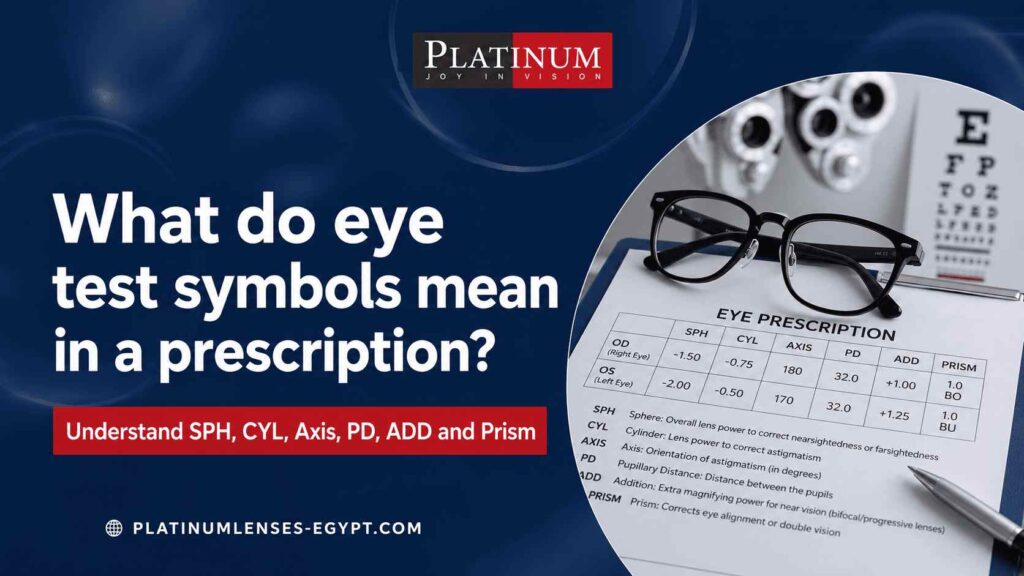
رموز فحص النظر هي اختصارات قياسية يستخدمها العالم البصري بأكمله لوصف احتياجك البصري بشكل منظّم. كل رمز يشرح جانبًا مختلفًا: قوة العدسة الأساسية، مقدار الاستجماتيزم واتجاهه، دعم القراءة، أو محاذاة العينين. المهم ليس حفظ الاسم اللاتيني لكل رمز، بل معرفة ما يعنيه في حياتك اليومية.
مثلًا SPH يخبرك هل مشكلتك في رؤية البعيد أم القريب. CYL وAxis يعملان معًا لتصحيح الاستجماتيزم الذي يجعل الصورة تبدو مشوّشة أو مظلّلة. PD يحدد أين تجلس العدسة أمام عينيك. ADD يظهر عندما تحتاج قوة إضافية للقراءة، غالبًا بعد الأربعين. Prism يظهر في حالات خاصة فقط عند وجود مشكلة في تعاون العينين.
هذا الترتيب يُقرأ كوحدة واحدة — لا يمكن اختيار عدسة صحيحة إلا بفهم الوصفة كاملة، لا رمزًا واحدًا معزولًا.
لماذا يهم أن تفهم رموز فحص النظر قبل شراء العدسة؟
فهم الرموز يعطيك ثقة عند اختيار العدسة، ويحميك من أخطاء صغيرة قد تُفسد راحة الرؤية لأشهر. وصفتك ليست مجرد أرقام؛ إنها خريطة يستخدمها المعمل لتصنيع عدسة تطابق عينك تمامًا، وأي انحراف يُترجم إلى إرهاق أو صداع في الاستخدام اليومي.
دقة أعلى في تصنيع العدسة
عندما تعرف معنى SPH وCYL وAxis، تدرك لماذا يصرّ الأخصائي على القياس الدقيق. فارق نصف ديوبتر لا يبدو كبيرًا على الورق، لكنه يمكن أن يجعل العدسة مريحة أو مُتعبة. الفرق يزداد وضوحًا مع الوصفات القوية أو الإطارات الكبيرة أو الأنشطة التي تتطلب تركيزًا طويلًا كالسواقة الليلية.
شراء أونلاين أكثر أمانًا
عند طلب النظارة من الإنترنت أنت من يُدخل الأرقام يدويًا. رقم PD خاطئ أو Axis منسي يجعل الشكل مثاليًا والإحساس متعبًا. تعلّم الرموز يُقلّل احتمال هذا الخطأ ويوفّر عليك رحلة استرجاع وإعادة تصنيع. لمزيد من التفاصيل حول اختيار الوصفة الصحيحة، راجع دليل النظارات الطبية الشامل.
متابعة أفضل لتطور نظرك مع الوقت
المقارنة بين وصفتين قديمة وحديثة تكشف مبكرًا أي تدهور. لو الأرقام قفزت بشكل ملحوظ خلال أشهر — خاصة عند الأطفال أو مرضى السكر — فهذا مؤشر لعمل فحص شامل بدل مجرد تبديل النظارة. ننصح بحفظ نسخة رقمية من كل وصفة قديمة في هاتفك.
ماذا تعني SPH في رموز فحص النظر؟
SPH اختصار لكلمة Sphere أي القوة الكروية، وهي القيمة الأساسية التي تُصحّح قصر النظر أو طول النظر. غالبًا هي أول ما يلفت انتباهك على ورقة الفحص لأنها تكتب مسبوقة بإشارة الجمع (+) أو الطرح (−). قوة SPH تُقاس بالديوبتر (D)، وقد تتراوح من قيم صغيرة جدًا مثل −0.25 إلى قيم مرتفعة تتجاوز −8.00 في الحالات القوية.
SPH بالسالب وقصر النظر (Myopia)
قيمة SPH سالبة تعني عادة قصر نظر: الأشياء القريبة تبدو واضحة، بينما البعيدة مثل لوحات الطريق أو السبورة تكون ضبابية. شخص يحمل −2.50 قد يجد صعوبة في قراءة رقم أوتوبيس من على بُعد بضعة أمتار. هذه الحالة شائعة جدًا وتزيد مع كثرة استخدام الشاشات في سن مبكرة.
SPH بالموجب وطول النظر (Hyperopia)
قيمة SPH موجبة تعني عادة طول نظر: المهام القريبة كالقراءة أو النظر في الشاشات تصبح متعبة، وقد يشعر البعض بألم في العين أو صداع بعد ساعات القراءة قبل أن يلاحظوا التشوّش نفسه. الأطفال يعوّضون طول النظر البسيط تلقائيًا لكن هذا يُنهك عضلات العين.
علاقة SPH بسُمك العدسة
كلما زادت قيمة SPH زاد سُمك العدسة المطلوب. الوصفات فوق ±4.00 قد تُنتج عدسة مرئية السُمك في الحواف. هنا يقترح الأخصائي مادة عالية معامل الانكسار مثل 1.60 أو 1.67 أو حتى 1.74 لتقليل السماكة. لتفاصيل أعمق راجع دليل سُمك العدسات الذي يشرح متى تحتاج ترقية المادة بحسب قوة وصفتك.
ماذا تعني CYL في رموز فحص النظر؟
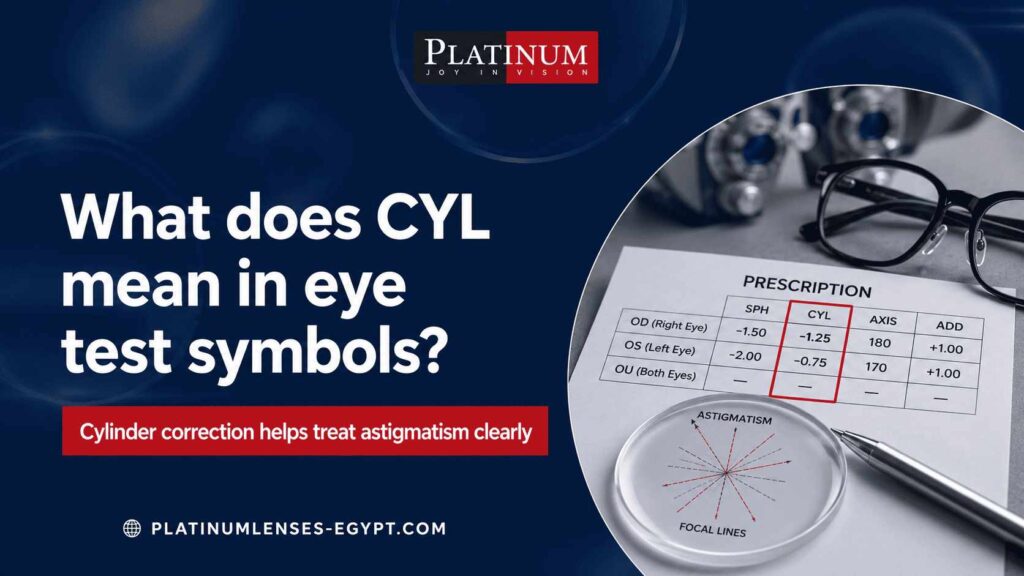
CYL اختصار Cylinder أي القوة الأسطوانية، ويظهر في الوصفة عند وجود استجماتيزم. الاستجماتيزم يحدث حين لا يكون سطح القرنية أو العدسة الطبيعية للعين كرويًا تمامًا، فيقع الضوء على أكثر من نقطة تركيز داخل العين وتخرج الصورة مشوّهة قليلًا في اتجاه معين.
لو خانة CYL فارغة أو مكتوب فيها Plano أو صفر، فأنت غالبًا لا تحتاج تصحيحًا أسطوانيًا. أما إذا كان هناك رقم — مثلًا −0.75 أو −1.50 — فالعدسة يجب أن تصنّع بقوة أسطوانية دقيقة، وتُقرأ دائمًا مع Axis معًا كوحدة واحدة.
إشارات CYL: هل السالب أفضل من الموجب؟
CYL قد يُكتب بإشارة سالبة أو موجبة حسب صيغة الطبيب (المعمل يحوّل بينهما بلا فارق في النتيجة). لا تنشغل بالإشارة وحدها — العدسة النهائية تُصنّع من الوصفة كوحدة. المهم أن كل الرقم قد نُقل بدقة إلى المعمل.
CYL وضبابية الرؤية
قيمة CYL أعلى تعني رؤية مظلّلة أو ممتدة أو غير حادة، خصوصًا ليلًا أو أمام الأنوار القوية للسيارات. كثيرون من أصحاب الاستجماتيزم يشعرون أن الصورة “ليست حادة” حتى لو لم يكونوا قصيري أو طويلي النظر بشكل ملحوظ. هذا الشعور بالضبابية الخفيفة المستمرة إشارة لطلب فحص.
ماذا يعني Axis في رموز فحص النظر؟
Axis هو زاوية مكمّلة لـ CYL. يُكتب كرقم بين 0 و180 درجة ويخبر المعمل بالاتجاه الذي يجب أن يوضع فيه التصحيح الأسطواني داخل العدسة. Axis ليس قوة — لا يقول إن الوصفة أقوى أو أضعف — لكنه يحدّد أين توضع القوة التي عبّر عنها CYL.
Axis والراحة اليومية
انحراف بسيط في Axis — درجات قليلة فقط — قد يجعل النظارة تبدو “مائلة” أو غير مستقرة، حتى لو كانت قوة CYL صحيحة تمامًا. مع الاستجماتيزم القوي يصبح دقة Axis أكثر حساسية، وقد يشعر مرتدي النظارة بتوتر عيني أو رغبة في تحريك الإطار طوال الوقت.
Axis يظهر مع CYL دائمًا
Axis لا يظهر بمفرده. لو كان CYL صفرًا فلا معنى لـ Axis. ولو ظهر Axis بلا CYL في وصفتك فهذا خطأ كتابي يستوجب مراجعة الأخصائي قبل تصنيع العدسة.
ماذا يعني PD في وصفة النظارة الطبية؟
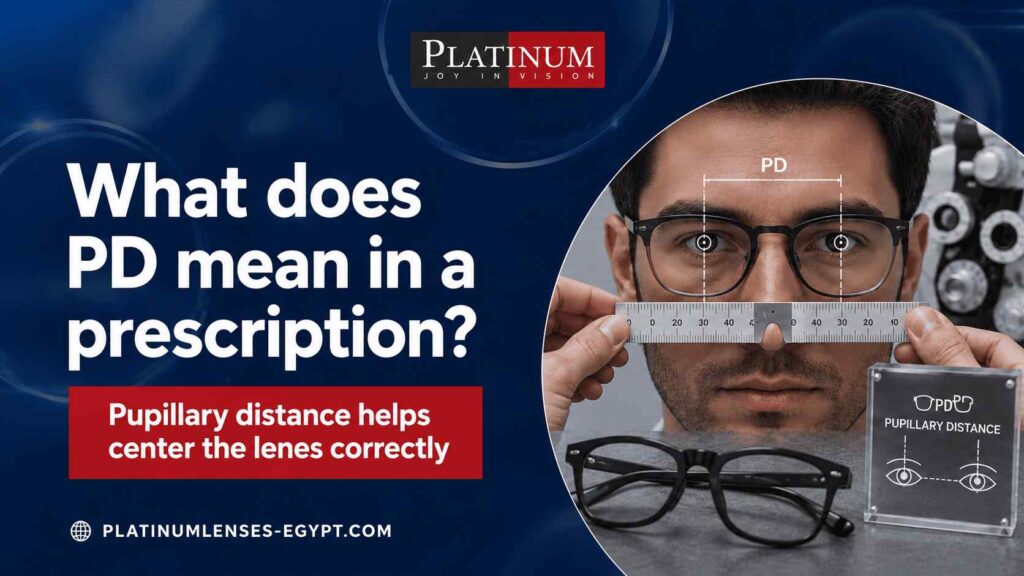
PD اختصار Pupillary Distance أي المسافة بين مركز البؤبؤين، وتُقاس بالمليمتر. القيم الشائعة للبالغين تتراوح بين 58 و68 مم. هذا الرقم يخبر المعمل أين يجب أن يقع “قلب” العدسة أمام عينك بالضبط داخل الإطار.
قد يبدو PD تفصيلًا صغيرًا لكنه واحد من أكثر الأرقام تأثيرًا على الراحة. عندما لا يتطابق مركز العدسة مع مركز بؤبؤك تعمل عيناك بجهد إضافي للتركيز، وتتحوّل النظارة إلى مصدر إرهاق بدلًا من أن تكون أداة راحة.
دور PD في مركزة العدسة
المنطقة الأوضح والأصفى داخل العدسة الطبية هي مركزها البصري. PD الصحيح يضع هذه المنطقة أمام بؤبؤ عينك مباشرة، وهذا يزداد أهمية في:
- الوصفات القوية فوق ±3.00 حيث يُلاحظ أي انحراف فورًا.
- العدسات التقدمية (Progressive) حيث القنوات المتدرجة تحتاج مركزة عمودية وأفقية دقيقة.
- الطلبات الأونلاين لأنك لا تجد أخصائيًا يعدّل الإطار على وجهك.
أعراض PD الخاطئ
PD غير الدقيق قد يسبّب صداعًا فوق الحاجب، دوخة خفيفة عند تحريك النظر، رؤية مزدوجة عابرة، أو الشعور المستمر أن النظارة “تجذب” العين للجانب. لو ظهرت هذه الأعراض بعد نظارة جديدة، اطلب مراجعة PD قبل إتلاف الوصفة الطبية. القياس الدقيق يتم بأداة مخصصة داخل الفرع، وننصح دائمًا بأخذه من أقرب فرع بلاتنيوم بدلًا من تقديره ذاتيًا.
ماذا تعني كلمة Cylinder إن ظهرت بلا اختصار؟
بعض الوصفات تكتب “Cylinder” بدل CYL، وكلاهما يعني الشيء نفسه: قوة تصحيح الاستجماتيزم. لا تخف من اختلاف الشكل — الفكرة واحدة. لتجنّب اللبس، عند مقارنة وصفتين قديمة وحديثة تأكد أنك تقرأ الحقلين على نفس النمط (كل السالب أو كل الموجب) لتظهر الفروقات الحقيقية بلا خداع بصري.
ماذا يعني ADD في رموز فحص النظر؟
ADD اختصار Addition أي قوة إضافية تُضاف على قوة البُعد لدعم رؤية القراءة والمهام القريبة. تُكتب دائمًا بإشارة موجبة، مثل +1.00 أو +1.50 أو +2.00، ولا تظهر عادة قبل الأربعين لأن مرونة العدسة الطبيعية للعين تبدأ في التراجع مع تقدم العمر (Presbyopia أو “طول نظر الشيخوخة”).
متى تحتاج ADD؟
المؤشرات الشائعة: تُبعد هاتفك عن عينك لتقرأ، تحس أن الإضاءة “لا تكفي” لقراءة القوائم في المطاعم، تشعر بإرهاق سريع بعد نصف ساعة كتابة. هذا لا يعني بالضرورة أن وصفة البُعد لديك خاطئة، بل يعني أن العين تحتاج دعمًا إضافيًا للقريب. في أي أعراض مفاجئة بعد سن الأربعين، استشر أخصائي البصريات أو طبيب العيون قبل شراء نظارة قراءة عشوائية من الصيدلية.
ADD مع العدسات التقدمية والمكتبية
ADD هو حجر أساس تصميم العدسات التقدمية (Progressive) التي تُنتقل بسلاسة من البُعد إلى المتوسط إلى القريب في عدسة واحدة بلا خط ظاهر. القيمة كذلك تُستخدم في العدسات المكتبية (Office) المصمّمة للشاشة والمسافات القريبة فقط. لتفاصيل أعمق حول العدسات المناسبة لكل عمر واحتياج، راجع أفضل تصميمات النظارات الطبية 2025.
ماذا يعني Prism في رموز فحص النظر؟
Prism (بريزم) لا يظهر في كل الوصفات — إنه تصحيح خاص يُستخدم عندما لا تتعاون العينان بشكل طبيعي لتكوّن صورة واحدة. قد يحدث ذلك في بعض حالات ازدواج الرؤية (Diplopia) أو مشاكل انحراف العينين (Strabismus) الخفيفة. البريزم يغيّر مسار الضوء داخل العدسة ليساعد العينين على الالتقاء على نفس النقطة.
اتجاه Prism وقاعدة Base
البريزم يُكتب مع كلمة Base التي تحدد اتجاهه: Base In أي القاعدة نحو الأنف، Base Out أي نحو الصدغ، Base Up أي لأعلى، Base Down أي لأسفل. هذا الاتجاه يخبر المعمل كيف يوجّه شعاع الضوء داخل العدسة، وأي خطأ فيه يجعل التصحيح عكسيًا تمامًا.
متى يستخدم Prism؟
Prism ليس إضافة “اختيارية” أو تحسينًا للراحة — لا يُضاف إلا بتعليمات طبيب عيون بعد فحص متخصص لحركة العينين ومحاور الرؤية. لو لم يذكر الطبيب Prism في وصفتك، لا تطلبه من المعمل، ولو ظهر لك ازدواج رؤية جديد استشر طبيب العيون فورًا.
جدول مرجعي سريع لكل رموز فحص النظر
اطبع هذا الجدول أو احفظه في هاتفك، وارجع له كلما تصفّحت وصفة جديدة أو قارنت وصفتين:
| الرمز | معناه الكامل | ما يصحّحه | مدى شائع |
|---|---|---|---|
| SPH | Sphere / القوة الكروية | قصر أو طول النظر | −10.00 إلى +8.00 D |
| CYL | Cylinder / القوة الأسطوانية | الاستجماتيزم (المقدار) | 0 إلى ±6.00 D |
| Axis | زاوية التصحيح الأسطواني | اتجاه الاستجماتيزم | 0 إلى 180 درجة |
| PD | Pupillary Distance | مركزة العدسة أمام البؤبؤ | 58 إلى 68 مم للبالغين |
| ADD | Addition | قوة إضافية للقراءة | +0.75 إلى +3.00 D |
| Prism | البريزم | محاذاة العينين معًا | 0.5 إلى 10 Δ (نادر) |
| Base | اتجاه البريزم | مسار الضوء داخل العدسة | In / Out / Up / Down |
| OD | Oculus Dexter | العين اليمنى | — |
| OS | Oculus Sinister | العين اليسرى | — |
| OU | Oculus Uterque | كلتا العينين | — |
الأرقام في العمود الأخير مدى شائع تقديري فقط للتوضيح؛ وصفتك الفعلية قد تخرج عن هذا المدى في الحالات الخاصة، وذلك أمر طبيعي يقيّمه أخصائي البصريات.
من واقع تجربتنا في فروع بلاتنيوم
من واقع تجربتنا في فروع بلاتنيوم، استقبلنا في فروعنا مئات العملاء الذين اشتروا نظارات جاهزة من الإنترنت بأرقام SPH وCYL صحيحة، لكن الشكوى نفسها تتكرر: صداع خفيف بعد ساعتين وشعور بعدم استقرار الرؤية. لاحظنا في تجربتنا مع هؤلاء العملاء أن المشكلة في 8 من كل 10 حالات ليست في قوة العدسة بل في PD مقدَّر بصريًا بدلًا من قياسه بأداة دقيقة، أو في Axis محوّل يدويًا بخطأ درجة أو درجتين. حين نُعيد تصنيع العدسة بنفس وصفة الطبيب مع قياس PD وAxis الدقيق داخل الفرع، تختفي الأعراض غالبًا خلال يومين. الدرس العملي: الوصفة على الورق ليست كل شيء — التصنيع الدقيق داخل الفرع هو ما يترجم الأرقام إلى راحة بصر حقيقية. جميع محتوانا يخضع لمراجعة الفريق الطبي وفق السياسة التحريرية الخاصة بنا.
أي عدسة بلاتنيوم تناسب الرموز في وصفتك؟
بعد أن فهمت وصفتك، تختلف التوصية بحسب مزيج الرموز عندك، لا رقم واحد فقط. تصفّح أنواع عدسات النظارة الطبية وأسعارها للاطلاع على الفروقات الكاملة، أو راجع الجدول التالي كنقطة بداية:
| احتياج الوصفة | خيار بلاتنيوم المناسب | لماذا قد يفيدك |
|---|---|---|
| SPH خفيف أو متوسط بلا استجماتيزم | HD UT | عدسة رفيعة خفيفة لراحة يومية |
| CYL مرتفع مع Axis حساس | X Perience T | تقنية Digital Ray Path 2 لرؤية طرفية أوضح |
| ساعات طويلة أمام الشاشة | Office Lens مع MIRA Blu | مسافة متوسطة وحماية من الضوء الأزرق |
| ADD موجب بعد الأربعين | X Tend Progressive | انتقال ناعم بين البُعد والقريب |
| قصر نظر متزايد عند الأطفال | Myo D | تصميم لإدارة تطور قصر النظر |
الاختيار الصحيح يعتمد على الوصفة كاملة مع مقاس الإطار وطبيعة الاستخدام اليومي، لا رمزًا منفردًا. الأخصائي في الفرع يستطيع مقارنة أكثر من خيار بعينيك مباشرة قبل التصنيع.
هل هناك رموز أقل شهرة قد تظهر في وصفتك؟
نعم، إلى جانب الرموز الأساسية قد تجد اختصارات مثل DV (Distance Vision – رؤية بعيدة)، NV (Near Vision – رؤية قريبة)، BCVA (أفضل حدة رؤية مصححة)، أو VA بجانب كسر مثل 6/6 يعبّر عن حدة النظر. لا تنشغل بها كثيرًا — الأربعة الأساسية (SPH, CYL, Axis, PD) هي ما يبني عليه المعمل العدسة. أما الملاحظات الجانبية فتخص الطبيب لمتابعة حالتك الصحية عبر السنوات.
قد تجد أيضًا رمزًا مثل IPD يستخدم أحيانًا بمعنى قريب من PD لكن للمسافة بين مركزي العين لا البؤبؤين، أو SEG Height في العدسات ثنائية البؤرة والتقدمية ليحدد ارتفاع منطقة القراءة داخل الإطار. لو رأيت رمزًا غير مألوف على وصفتك لا تخمّن معناه بنفسك، اسأل الأخصائي بوضوح قبل تصنيع العدسة لتفادي أي التباس مع اختصار مشابه.
كما قد تلاحظ توهجات أو انعكاسات على العدسة نفسها بعد الاستلام، وهذه ظاهرة منفصلة لها علاقة بالطلاء لا بالوصفة — راجع تفاصيلها في مقالة الانعكاسات حول عدسات النظارة.
كيف يساعدك خبير بلاتنيوم على قراءة وصفتك؟
فريق عدسات بلاتنيوم يستطيع مراجعة وصفتك معك خطوة بخطوة، وشرح كيف يترجم كل رمز إلى خيار عملي على وجهك. الهدف ليس بيعك أغلى عدسة، بل تصنيع العدسة الأنسب لأرقامك ونمط يومك، سواء كنت طالبًا يستخدم اللابتوب لساعات، أمًا تعمل من البيت، أو سائقًا يواجه إبهار الأنوار ليلًا.
يمكنك تصوير الوصفة وإرسالها لأخصائيينا للحصول على استشارة أولية قبل الحضور، أو زيارة أي فرع بلاتنيوم لقياس PD الدقيق وتجربة نماذج العدسات على وجهك.
الخلاصة
رموز فحص النظر لغة قصيرة لكنها دقيقة: SPH يحدد قوة قصر أو طول النظر، CYL وAxis يعالجان الاستجماتيزم، PD يضع العدسة أمام بؤبؤك بالضبط، ADD يدعم القراءة بعد الأربعين، وPrism يُصلح تعاون العينين في حالات خاصة. حين تفهم كل رمز، لا تكون مجرد مستهلك بل شريكًا واعيًا في اختيار عدستك.
القاعدة الأهم: النظارة تصحّح الرؤية ولا تعالج مسببات ضعف النظر جذريًا. أي تغيّر مفاجئ في وصفتك، أو صداع مستمر بعد نظارة جديدة، أو ازدواج رؤية طارئ، يستوجب مراجعة أخصائي البصريات أو طبيب العيون بلا تأجيل. ولمزيد من العمق في اختيار العدسة والإطار، تصفّح دليل النظارات الطبية الشامل ودليل سُمك العدسات ثم قرّر بثقة.
Related Articles
View all articles → أنواع العدسات الطبية
 Eye Prescription Symbols: How to Understand Test Codes?
Understand eye prescription symbols like SPH CYL Axis PD ADD and 6/6 so you can read test codes and choose the right lenses with more confidence
Read more -> أنواع العدسات الطبية
 Korean vs German vs Japanese Lenses: Which Is Right for You?
Compare Korean, German and Japanese prescription lenses for clarity, coatings, comfort and price to choose the right option for your vision needs
Read more -> أنواع العدسات الطبية
 Best Prescription Eyeglass Lens Brands in 2026
Compare eyeglass lens brands in 2026 and learn how quality, coatings, comfort, warranty and Platinum lens options help you choose better
Read more -> أنواع العدسات الطبية
 Men’s Glasses Styles for 2026: Every Personality
Discover men’s glasses styles for 2026, from classic and modern frames to face shape tips, lens comfort, screen protection and personality based choices
Read more -> أنواع العدسات الطبية
 Best Face Shape Detection Website for Choosing Glasses
Find the best face shape detection website to choose glasses that match your face shape frame style lens needs and daily comfort before buying online
Read more -> أنواع العدسات الطبية
 Prescription Eyeglass Lens Types and Their Prices
Learn the main prescription eyeglass lens types, price factors, lens materials, coatings and how to choose the right option for your vision needs
Read more ->