
Photochromic lens prices can feel higher than regular prescription lenses at first, but the extra cost usually comes from the light adaptive technology, UV support, lens quality and daily convenience they offer These lenses are made for people who move between indoor and outdoor spaces and want one pair of glasses that stays clear inside and darkens outside When comparing Photochromic lens prices, it is better to look at lens quality, coating, prescription needs and daily use together This guide explains Photochromic lens prices in a practical way so you can understand what you are paying for and whether this type of lens really fits your routine
What affects photochromic lens prices?
Photochromic lens prices are affected by more than the basic lens power The final cost depends on the lens material, prescription strength, coating quality, how fast the lens changes color and whether the lens comes with extra protection such as anti reflective coating or scratch resistance
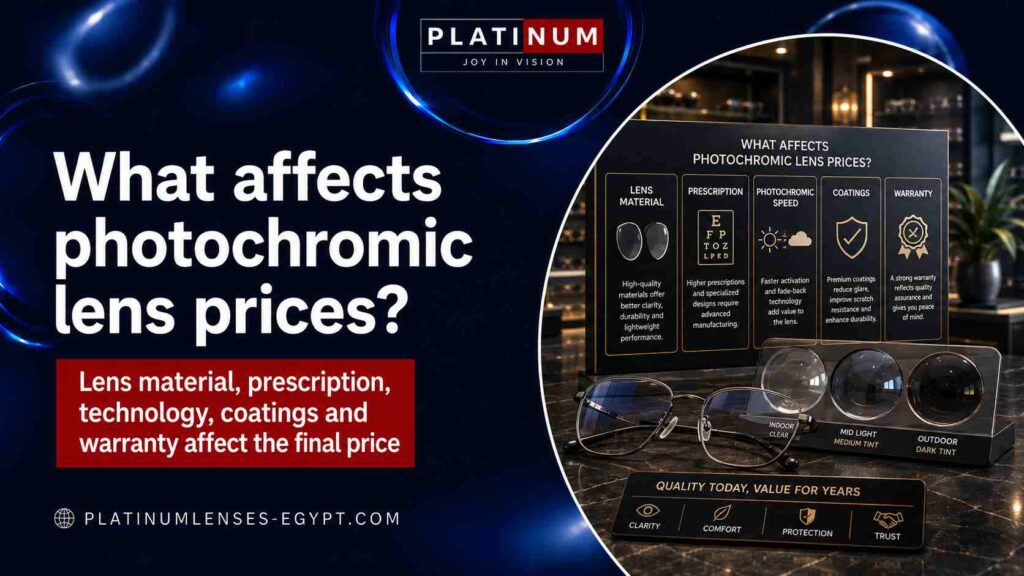
| Price factor | What it means | How it affects the price |
|---|---|---|
| Lens material | Standard, thinner or premium material | Higher quality materials can cost more |
| Prescription strength | Mild, medium or high prescription | Stronger prescriptions may need thinner lenses |
| Photochromic technology | How fast the lens darkens and clears | Faster and more stable technology can raise the price |
| Coatings | Anti reflection, scratch resistance and UV support | Better coatings improve comfort and durability |
| Brand and warranty | Trusted source and clear after sale support | Warranty can add confidence to the purchase |
A lower price may look attractive, but low photochromic lens prices do not always mean better value If the lens changes slowly, scratches easily or stays too tinted indoors, the saving may not feel worth it after a few weeks of use
What are photochromic lenses?
Photochromic lenses are prescription lenses that react to light They usually stay clearer indoors and become darker outdoors when exposed to stronger light, especially sunlight This makes them useful for people who do not want to switch between normal glasses and sunglasses several times a day
The main idea is convenience You wear one pair for work, errands, walking outside and moving between different lighting conditions This is why photochromic lens prices should be judged by daily use, not by comparing them with basic clear lenses only
How do photochromic lenses work?
Photochromic lenses contain light sensitive technology that reacts when the lens is exposed to outdoor light The lens darkens to reduce brightness, then gradually returns closer to clear when the light exposure drops indoors
The speed and quality of this reaction can differ from one lens to another Better photochromic lenses usually respond faster, darken more evenly and return to indoor clarity more comfortably This is one reason photochromic lens prices can vary between basic and premium options
How much do photochromic lenses cost?
Photochromic lens prices in Egypt can vary depending on the lens type, quality, prescription, coating package and optical store The source article mentions a market range around 2000 to 3000 EGP, but the final price should still be checked based on your exact prescription and lens choice
In real buying situations, the price can change if you need a thinner lens, stronger coating, anti reflective support or a better photochromic technology Instead of asking for one fixed number, it is better to ask what is included in the lens and whether it suits your daily use
Why can photochromic lenses cost more?
Photochromic lens prices are often higher because these lenses do more than correct vision They adapt to light, reduce brightness outdoors and help you use one pair of glasses in more situations
Light adaptive technology
The main reason for the higher price is the technology that allows the lens to change tint in different lighting conditions This feature needs better materials and more precise production than a simple clear lens
UV and outdoor comfort
Photochromic lenses can support outdoor comfort by reducing brightness and helping protect the eyes from strong sunlight This is useful for people who walk outdoors, commute daily or move between buildings and open spaces
Daily convenience
Many people see the value in not needing two separate pairs of glasses One pair can handle normal indoor use and many outdoor situations, which can make photochromic lens prices feel more reasonable over time
What are the main benefits of photochromic lenses?
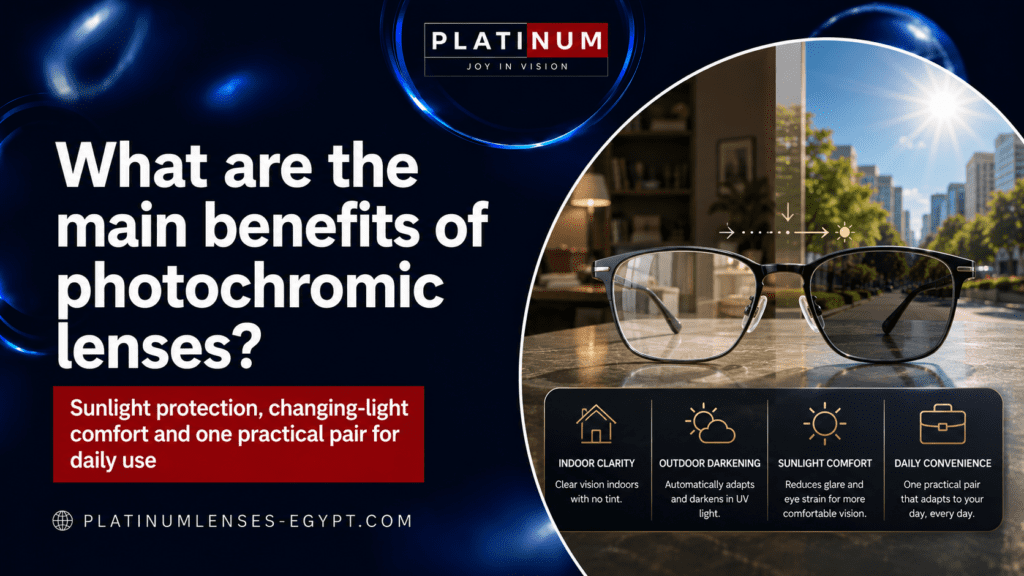
Photochromic lenses are useful because they fit a normal day better than many people expect They are not only for people who spend hours outside, but also for anyone who moves repeatedly between indoor and outdoor light
Sunlight protection
Photochromic lenses darken outdoors and help make bright light easier on the eyes This can reduce squinting and make walking or commuting in daylight more comfortable
Better comfort in changing light
If you move from an office to the street, then back indoors again, photochromic lenses can adapt without forcing you to change glasses This is one of the strongest reasons people consider photochromic lens prices worth paying
One practical pair
For many users, the biggest benefit is simplicity You do not need to carry sunglasses every time you leave the house, and you do not need to keep switching between pairs during the day
Useful for prescription wearers
Photochromic lenses are especially practical for people who wear prescription glasses all day They give you visual correction indoors and added outdoor comfort in one lens
What are the drawbacks of photochromic lenses?
Photochromic lenses are practical, but they are not perfect Knowing their limits before buying helps you decide if they really suit your routine Photochromic lens prices should be balanced with these drawbacks before you choose the final lens
They may react differently in cold weather
Some photochromic lenses can behave differently depending on temperature In very cold conditions, the tint behavior may not feel the same as it does in normal or warm weather
Color options may be limited
Photochromic lenses usually come in fewer tint colors than regular sunglasses If you want a very specific fashion tint or a very dark sunglasses look, normal sunglasses may still be better
Replacement can cost more
Because photochromic lenses are usually more expensive than basic lenses, replacing them after scratches or damage can cost more This makes lens care and coating quality important
Some lenses need time to change
A common complaint with lower quality photochromic lenses is that they may take time to darken or return to clear Better technology can reduce this issue, but it is still worth asking about before buying
Are photochromic lenses good for driving?
Photochromic lenses can be useful for general daily wear, but driving needs a careful question Some lenses may not darken strongly inside the car because many windshields reduce the UV light that activates the lens
That does not mean photochromic lenses are useless for drivers, but you should ask if the exact lens you are buying is suitable for driving conditions If you drive at night or face strong headlight glare, anti reflective or driving focused coatings may also matter Photochromic lens prices should not be the only factor if driving comfort is part of your daily routine
Learn More
The Role of Anti-Glare Lenses in Safe Night Driving
What makes Platinum photochromic lenses different?
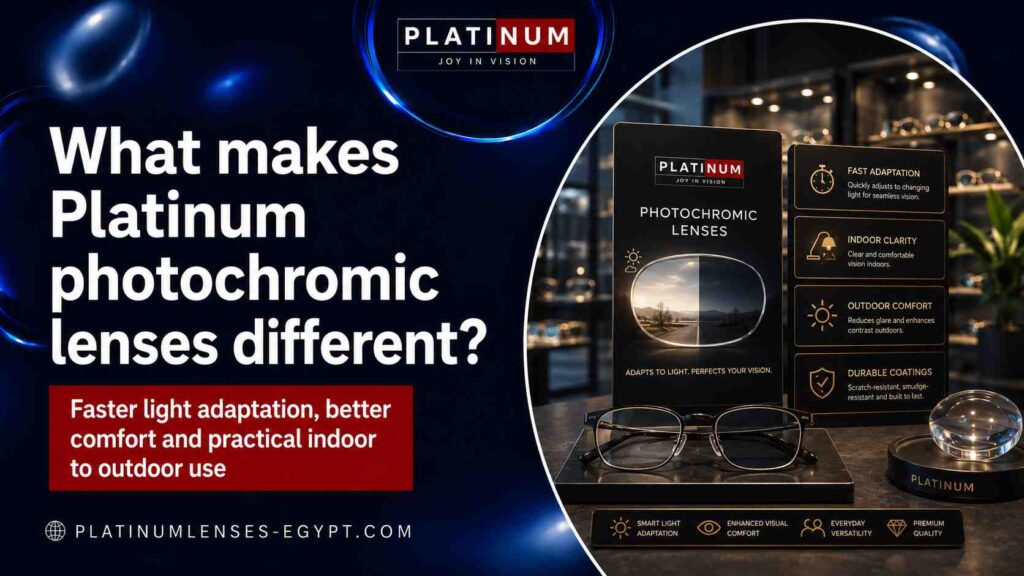
Platinum photochromic options are designed for people who want faster light adaptation and better daily comfort compared with basic photochromic lenses Platinum’s English blog describes Sun Actives as photochromic lenses that adapt to light and are made for indoor and outdoor use, and the site also lists Sun Actives within its ready made lens solutions
Photochromic lens prices make more sense when you look at the real daily details How fast the lens changes outdoors, how comfortable it feels indoors, how clear it remains and how well the coating handles daily use can all affect whether the higher price feels justified
Are photochromic lenses worth it?
Photochromic lenses can be worth it if you wear prescription glasses daily and move between indoor and outdoor spaces often They are useful for people who want comfort in sunlight without carrying another pair of glasses every day
Photochromic lens prices may not be worth the extra cost if you stay indoors most of the time, already use separate prescription sunglasses comfortably or want a very dark fashion sunglasses look The best choice depends on your routine, not only on the lens name
How do you choose the right photochromic lenses?
Choosing the right photochromic lens is easier when you look at your real day Do you move outdoors often, drive a lot, work under strong light or need a thinner lens because your prescription is high
Ask how fast the lens darkens outdoors and how clear it becomes indoors Then check whether the lens is suitable for driving, whether anti reflective coating is included, whether scratch resistance is available and whether the warranty is clear Comparing photochromic lens prices this way is better than choosing only by the lowest number
How can Platinum Lenses help?
Platinum Lenses can help you compare photochromic options based on your prescription, daily movement and comfort needs Instead of choosing only by price, it is better to ask which lens gives you the right balance between indoor clarity, outdoor tint, coating quality and warranty
If you want one practical pair for work, sunlight and daily movement, Platinum photochromic lenses can be a strong option to consider The final choice should still depend on your prescription and how you actually use your glasses during the day Photochromic lens prices become easier to judge when you compare comfort, coating and real use together
FAQs
Are photochromic lenses worth the extra price?
They can be worth it if you wear glasses daily and move between indoor and outdoor light often The value comes from convenience, UV support and reducing the need to switch between clear glasses and sunglasses
Do photochromic lenses work indoors?
Photochromic lenses are designed to stay mostly clear indoors and darken outdoors The exact indoor clarity depends on lens quality and the lighting conditions around you
Do photochromic lenses work while driving?
Some photochromic lenses may not darken strongly behind car windshields because the glass can block part of the UV light that activates them If driving is important, ask the optician about driving suitability before buying
How long do photochromic lenses last?
Photochromic lenses can last for years with proper care, but performance depends on lens quality, coating, cleaning habits and daily exposure Scratches or poor handling can shorten their useful life
Learn More
Platinum Photochromic Lenses: Benefits, Disadvantages, and Usage
Types of Prescription Lenses and Their Prices in Egypt
Glass vs Plastic Lenses: Which Prescription Lenses Are Better?
