
Anti reflection lenses are one of the most useful upgrades you can add to prescription glasses, especially if you drive at night, work under strong lights, attend video calls or spend long hours in front of screens They are not a fancy extra made only for looks, because glare and reflections can make vision feel tiring even when the prescription itself is correct In this guide, you will understand what anti reflection lenses do, their real benefits, their limits and when they are worth paying for
Are anti reflection lenses worth it?
Anti reflection lenses are worth it for many people because they reduce annoying light reflections on the lens surface and allow more light to pass through the lens clearly This can make vision feel cleaner, especially at night, under office lights or while looking at screens
They are not always the only coating you need, and they do not automatically protect from blue light unless that feature is added separately The best way to judge them is to look at your daily routine If glare bothers you while driving, reading, studying or working on a laptop, anti reflection lenses can make a real difference
What are anti reflection lenses?
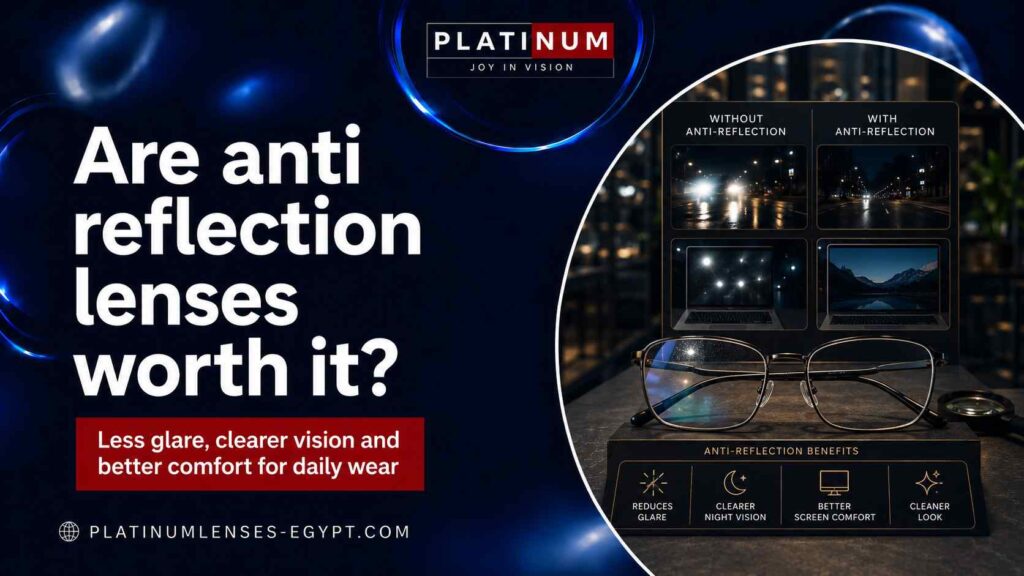
Anti reflection lenses are prescription lenses with a special coating that reduces reflections from the front and back surfaces of the lens These reflections often appear when light hits the lens from screens, lamps, car headlights or strong indoor lighting
The coating helps the lens look more transparent and makes your eyes more visible behind the glasses This is useful in normal conversations, work meetings, photography and video calls, because the lens does not keep reflecting light back toward the person looking at you
What are the main benefits of anti reflection lenses?
Anti reflection lenses are useful because they solve small problems that become annoying when repeated every day The benefit is usually felt most by people who wear glasses for long hours
Clearer vision under bright light
Anti reflection lenses reduce glare from strong lighting, which can make the view feel cleaner and less distracting This is helpful in offices, classrooms, shops and any place where bright artificial light reflects on the lenses
Better comfort while driving at night
Night driving can become harder when headlights and street lights reflect on the lens Anti reflection lenses can reduce part of this glare and make the visual experience more comfortable, especially for people who already feel halos or light scatter at night
Cleaner appearance in photos and meetings
Because the lens reflects less light, your eyes appear clearer behind the glasses This matters during video calls, professional photos and face to face meetings, where strong lens reflections can hide the eyes and make the glasses look heavier
Better screen experience
Anti reflection lenses can help reduce reflections from computers, phones and indoor lighting around screens They do not replace blue cut lenses, but they can make screen use feel clearer when glare is the main issue
Can be combined with other coatings
Anti reflection coating can be combined with scratch resistance, water resistance, UV protection or blue light filtering This is often the best option for people who want one lens that feels practical for daily life
What are the drawbacks of anti reflection lenses?
Anti reflection lenses are helpful, but they still have a few drawbacks that you should know before buying them
They show fingerprints more easily
Some anti reflection coatings can make fingerprints, dust and smudges more visible on the lens This does not mean the lens is poor, but it means you need to clean it properly with a microfiber cloth and lens cleaner
Low quality coatings may peel
The quality of the coating matters a lot Cheap or poorly applied coatings may start to peel, scratch or lose clarity with time This is why buying from a trusted source and asking about warranty is important
They do not block blue light by default
Anti reflection lenses reduce reflections, but they do not necessarily block blue light from screens If you want screen protection, you need a blue cut coating or a lens that combines both anti reflection and blue light filtering
They may cost more than basic lenses
Anti reflection coating adds to the final lens price The extra cost can be worth it if you use your glasses daily, but if you only wear them occasionally, you may need to compare the benefit with your actual use
What is the difference between green and blue anti reflection coating?
Many people notice a slight green or blue reflection on the lens surface and wonder what it means The color usually comes from the remaining reflection of the coating, not from the lens power itself
Green anti reflection coating
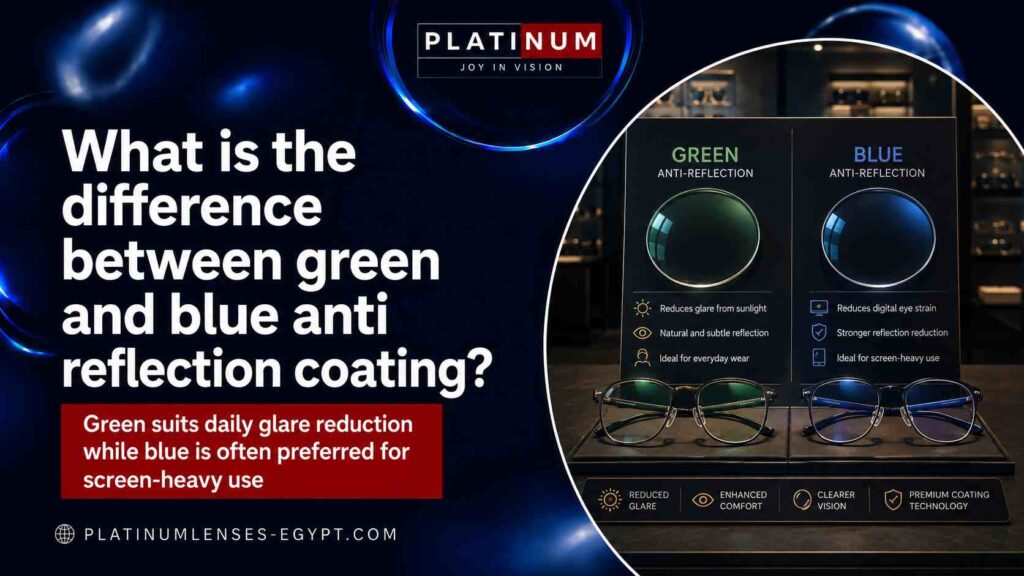
Green anti reflection coating is common and often used for general glare reduction It gives a balanced look and can be suitable for daily glasses, reading, night driving and normal office use
Blue anti reflection coating
Blue reflection is often seen in lenses that include blue light filtering or screen related protection It may be more suitable for people who spend long hours in front of computers, phones or digital devices
Which color should you choose?
The color alone should not be the main reason for choosing a lens Ask about what the coating actually does, whether it reduces glare only, blocks blue light, resists scratches or includes UV protection
Anti reflection lenses vs blue cut lenses
Anti reflection lenses and blue cut lenses are often confused, but they are not the same thing Anti reflection lenses mainly reduce glare and reflections, while blue cut lenses reduce part of the blue light from digital screens
| Comparison point | Anti reflection lenses | Blue cut lenses |
|---|---|---|
| Main function | Reduce glare and surface reflections | Reduce part of blue light from screens |
| Best for | Night driving, photos, meetings and daily clarity | Long screen use, studying and digital work |
| Visible reflection | Often green or light blue | Often blue or purple |
| Blue light protection | Only if added separately | Yes, depending on coating quality |
| Best option for many users | Combine with other coatings | Combine with anti reflection for better comfort |
If you mainly struggle with glare, anti reflection lenses may be enough If your problem is long screen exposure, blue cut lenses may be more suitable If you deal with both, a combined coating is usually the better option
Can anti reflection and blue cut be combined?
Yes, anti reflection and blue cut can be combined in one lens, and this is often the practical choice for people who work on screens and also want clearer lenses with less glare
This combination can help reduce reflections from screens and lights while also supporting better comfort during digital device use MIRA Blu from Platinum is an example of a lens coating direction built for screen users, because it combines blue light support with comfort focused coating features
Learn More
MIRA Blu vs Regular Lenses: Which One to Choose?
What affects anti reflection lens prices?
Anti reflection lens prices are not fixed because the coating is only one part of the final lens cost The price can change depending on the lens material, prescription strength, brand, extra coatings and whether the lens is single vision, progressive or another design
| Price factor | What it means | Why it matters |
|---|---|---|
| Lens material | Plastic, polycarbonate or high index | Affects weight, thickness and comfort |
| Coating quality | Basic or advanced anti reflection | Better coatings usually last longer |
| Extra protection | Scratch, water, oil or blue light support | Adds comfort and durability |
| Prescription strength | Mild or high prescription | Stronger powers may need better material |
| Lens design | Single vision, office or progressive | More advanced designs usually cost more |
Instead of asking for the cheapest anti reflection lens, it is better to ask what coating is included, how durable it is and whether it suits your daily use
Who should choose anti reflection lenses?
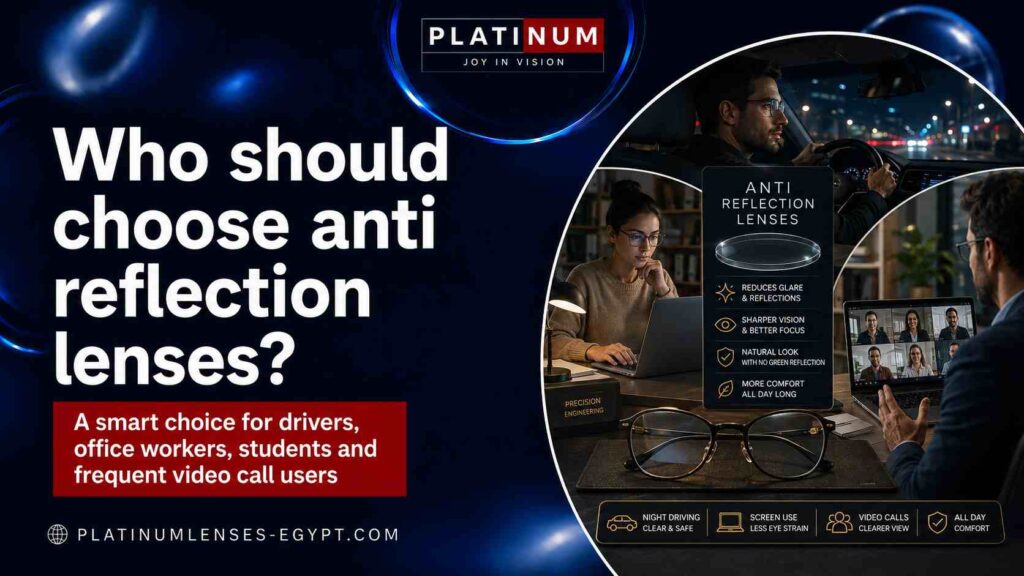
Anti reflection lenses are a good choice for people who wear glasses every day and want clearer vision with less glare They are especially useful for drivers, students, office workers, teachers, designers, photographers and anyone who appears often on camera or video calls
They may also suit people who feel that their glasses look too reflective in photos or under strong lights If the lens keeps catching light and hiding your eyes, anti reflection coating can make the glasses look cleaner and more natural
When should you choose blue cut instead?
Choose blue cut lenses if your main issue is long screen use, especially if you spend many hours on a laptop, phone or tablet Blue cut lenses are designed to reduce part of the blue light from screens, while anti reflection coating mainly reduces glare
That said, many screen users need both features together A lens with blue cut support but weak anti reflection may still feel reflective under office lights, while an anti reflection lens without blue cut may not be enough for heavy screen exposure
How can Platinum Lenses help?
Platinum Lenses can help you choose between anti reflection, blue cut or a combined coating based on your prescription and daily routine If you drive at night, work on screens, attend video calls or wear glasses all day, the right coating can make a noticeable difference in comfort
Options such as MIRA Plus, MIRA Blu and MIRA Drive are built around different needs, so the better choice depends on whether glare, screen exposure, night driving or easy cleaning is your biggest concern
How do you choose the right coating?
Choosing the right coating starts with one simple question, where do you feel the most discomfort with your current glasses If the answer is night lights, reflections or video calls, anti reflection coating should be a priority If the answer is screens, blue cut support should be considered If the answer is both, ask for a lens that combines both features
A good optician should explain the difference clearly and show you what is included in the lens, because names can be confusing The goal is not to buy the most expensive coating, but to choose the one that solves the problem you actually feel every day
FAQs
What are anti reflection lenses?
Anti reflection lenses are lenses with a coating that reduces glare and reflections on the lens surface, making vision clearer and the lenses look more transparent
Are anti reflection lenses worth it?
Yes, they are worth it for many daily glasses users, especially for night driving, screen use, reading, video calls and working under strong lights
What is the difference between anti reflection and blue cut lenses?
Anti reflection lenses reduce glare and reflections, while blue cut lenses reduce part of the blue light from screens They can also be combined in one lens
Do anti reflection lenses protect from blue light?
Not always Anti reflection coating does not block blue light by default, so you need a blue cut feature if screen protection is your main concern
What are the disadvantages of anti reflection lenses?
They may show fingerprints more easily, need regular cleaning, cost more than basic lenses and low quality coatings may peel or wear out over time
Learn More
How MIRA Plus Coating Enhances Vision Clarity
Blue Cut Lenses: Do You Really Need Them?
The Role of Anti-Glare Lenses in Safe Night Driving
