
Blue cut photochromic lenses are a practical choice for people who move all day between screens, sunlight, indoor lighting and outdoor spaces Instead of wearing one pair for work and another for the sun, these lenses try to give you both screen comfort and light adaptation in one pair This makes them useful for students, office workers, drivers and anyone who wants glasses that feel easier in daily life without thinking too much about changing lenses
What are blue cut photochromic lenses?
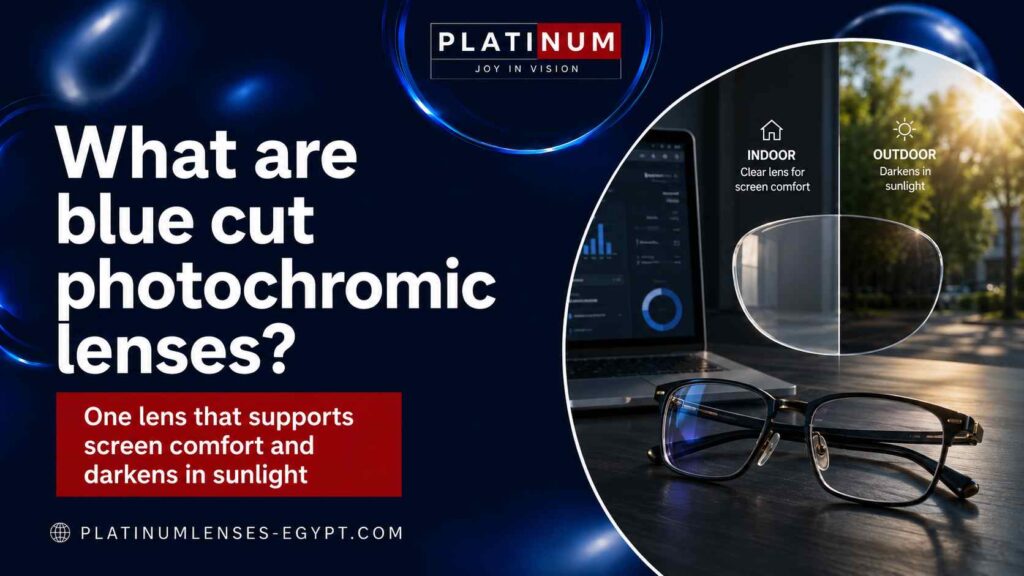
Blue cut photochromic lenses are prescription lenses that combine two helpful ideas in one design The blue cut part helps reduce part of the blue light coming from digital screens, while the photochromic part helps the lens darken in sunlight and return closer to clear indoors
This combination can be useful if your day is not fixed in one place You may work on a laptop in the morning, go outside in the afternoon, use your phone during the day and return to indoor lighting at night In that kind of routine, a normal lens may feel limited, while a blue cut photochromic lens can feel more practical
How do blue cut photochromic lenses work?
Blue cut photochromic lenses work by reducing some screen related glare and adapting to changing light conditions The blue cut filter helps make screen use feel easier, while the photochromic treatment reacts to outdoor light and becomes darker when needed
The result is not meant to replace every type of eyewear for every situation, but it can reduce the need to switch between different pairs during a normal day If you use screens often and go outdoors regularly, this type of lens can make your glasses feel more useful in more than one environment
Why are blue cut photochromic lenses useful in 2026?
Blue cut photochromic lenses are becoming more relevant because most people now spend long hours between digital devices and outdoor movement Work, study, online meetings, phones and commuting all happen in the same day, so one simple lens is not always enough for comfort
The main value is convenience A person who works indoors all morning and moves outside several times a day may not want to carry sunglasses everywhere A student who studies on a laptop and walks outdoors between classes may also prefer a lens that supports both screen time and sunlight exposure
What are the main benefits?
Blue cut photochromic lenses can help in several daily situations, especially when the lens quality and coating are chosen properly
Better screen comfort
The blue cut part can help reduce discomfort from long screen exposure, especially if you use a laptop, phone or tablet for work or study It may make reading and screen tasks feel less tiring when combined with a correct prescription and good screen habits
Easier indoor and outdoor movement
The photochromic part helps the lens react to outdoor light, which makes it useful for people who move between offices, streets, cars, campuses or shops during the day You get a lens that feels more flexible than a standard clear lens
Less need for switching glasses
Many people forget their sunglasses or do not like carrying two pairs all the time Blue cut photochromic lenses can reduce that problem because they work as everyday prescription lenses with extra outdoor adaptation
More visual comfort in bright light
When the lens darkens outdoors, it can reduce squinting and make bright daylight feel easier on the eyes This can be useful during walking, commuting, outdoor meetings or daily errands
Practical support for digital lifestyles
A lens that supports screen use and outdoor light adaptation fits how many people live now It is not only for office workers, because students, designers, drivers and heavy phone users can also benefit from this combination
What types of blue cut photochromic lenses are available?
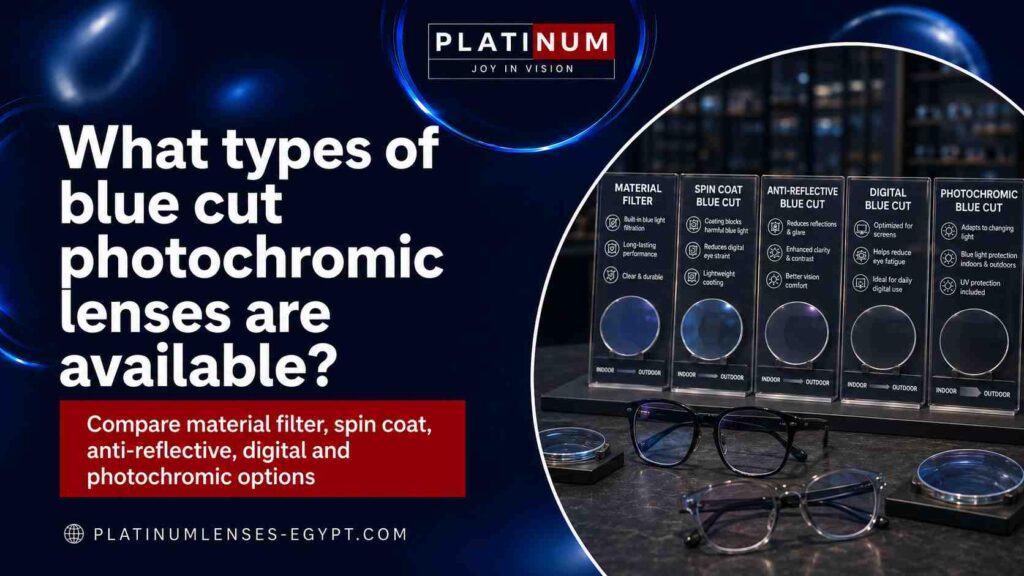
Not all blue cut photochromic lenses work the same way The difference is usually in how blue light is filtered, how fast the lens changes color and what extra coating is added to the surface
| Lens type | How it works | Best for |
|---|---|---|
| Material filter blue light lenses | The filter is built into the lens material | People who want steady blue light support during daily screen use |
| Spin coat blue light lenses | A blue light filter is added to the lens surface | Users who want screen comfort with coating based protection |
| Anti reflective blue cut lenses | Blue cut support is combined with glare reduction | Office work, reading, screen use and indoor lighting |
| Digital blue light blocking lenses | Designed for heavier screen use and clearer contrast | Students, designers, programmers and long computer sessions |
| Photochromic blue cut lenses | Blue cut support with light adaptive tint | People who move between screens and outdoor light often |
This table gives you a quick way to compare the options, but the final choice should still depend on your prescription, screen time, outdoor exposure and coating quality
What is the difference between blue cut and blue cut
Blue cut lenses mainly focus on reducing part of the blue light that comes from screens and digital devices They are usually clear lenses made for indoor use, screen work and everyday visual comfort
Blue cut photochromic lenses add another layer of usefulness because they can also change tint when exposed to outdoor light This makes them more suitable for people who want one pair of glasses for both screens and outdoor movement
Do these lenses stay clear indoors?
Good photochromic lenses are designed to stay mostly clear indoors and darken outdoors when exposed to stronger light The exact result depends on lens technology, lighting conditions and the quality of the photochromic treatment
If you spend most of your time indoors, ask the optician how clear the lens stays inside and how fast it fades after returning from sunlight This matters because low quality photochromic lenses may leave a tint that some people find annoying indoors
Are they good for driving?
Blue cut photochromic lenses can be comfortable for daily use, but driving needs a little more attention Some photochromic lenses do not darken strongly inside cars because many windshields block part of the UV light that activates the lens
If you drive often, especially in strong daylight or at night, ask specifically about driving suitability, glare control and whether you need a separate driving lens or a coating made for night glare
Who should choose blue cut photochromic lenses?
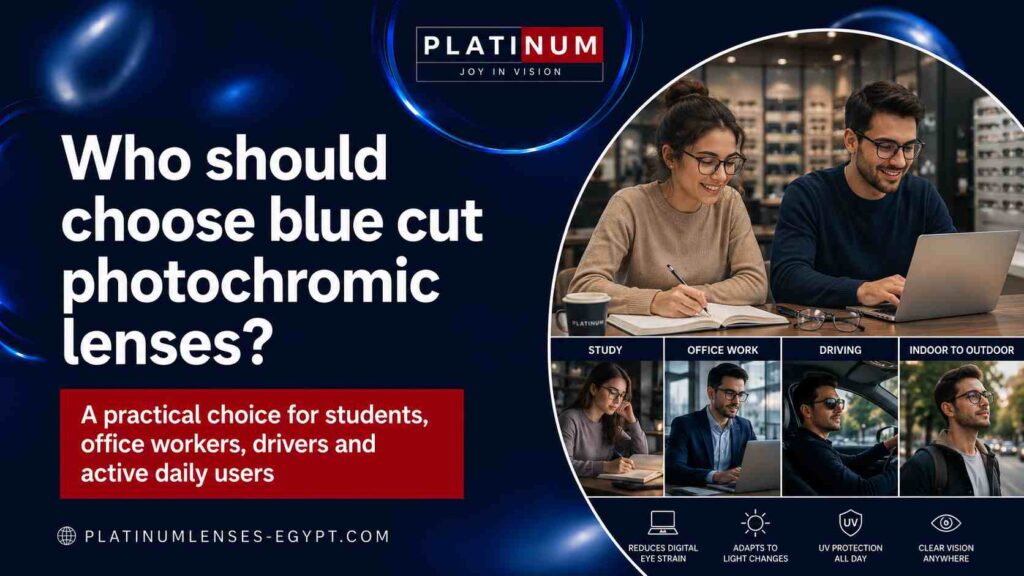
Blue cut photochromic lenses are usually suitable for people who want one practical pair for screens and daily outdoor movement They can be useful for office workers, students, freelancers, drivers who move in and out of buildings, and anyone who wants more comfort without carrying multiple pairs
They may not be the best option for someone who stays indoors most of the day and rarely goes outside In that case, a normal blue cut lens or MIRA Blu style coating may be enough The best choice should follow your real routine, not only the lens name
Learn More
MIRA Blu vs Regular Lenses: Which One to Choose?
How do you choose the right lens?
Choosing the right blue cut photochromic lens should start with your prescription and daily use A high prescription may need a thinner lens material, while heavy screen use may need better coating quality, and frequent outdoor movement may need stronger photochromic performance
• Check your full prescription before choosing the lens
• Ask how fast the lens darkens and fades
• Ask if the lens stays clear enough indoors
• Choose anti reflective coating if you work under strong lights
• Ask whether the lens is suitable for driving
• Compare warranty and coating details before buying
These steps help you avoid choosing a lens that sounds good but does not match the way you actually use your glasses
How can Platinum Lenses help?
Platinum Lenses can help you choose between blue cut lenses, photochromic lenses and combined options based on your prescription and lifestyle If your day includes screens, sunlight, indoor lighting and regular movement, a blue cut photochromic option may be worth comparing with normal clear lenses and standard photochromic lenses
The better choice is the one that gives you comfortable vision in the places where you spend most of your time A lens for a student may not be the same as a lens for someone who drives daily or works outdoors, so the final decision should always be matched to your real routine
FAQs
What are blue cut photochromic lenses?
Blue cut photochromic lenses combine blue light filtering support with light adaptive tint, so they can help with screen comfort indoors and darken outdoors in bright light
Are blue cut photochromic lenses good for screen use?
Yes, they can be useful for screen users when the blue cut coating is good and the prescription is accurate They should still be used with healthy screen habits and proper lighting
Do blue cut photochromic lenses work indoors?
They are designed to stay mostly clear indoors, but the exact clarity depends on lens quality and lighting conditions You should ask the optician how clear the lens remains inside
Are blue cut photochromic lenses better than normal blue cut lenses?
They are better if you need both screen comfort and outdoor light adaptation If you only work indoors, normal blue cut lenses may be enough
Can I use blue cut photochromic lenses for driving?
They may be useful for general daily wear, but driving needs special attention because some photochromic lenses may not darken fully behind car windshields Ask your optician before choosing them for driving
Learn More
Blue Cut Lenses: Do You Really Need Them?
Platinum Photochromic Lenses: Benefits, Disadvantages, and Usage
How to protect your eyes from blue light while working
