
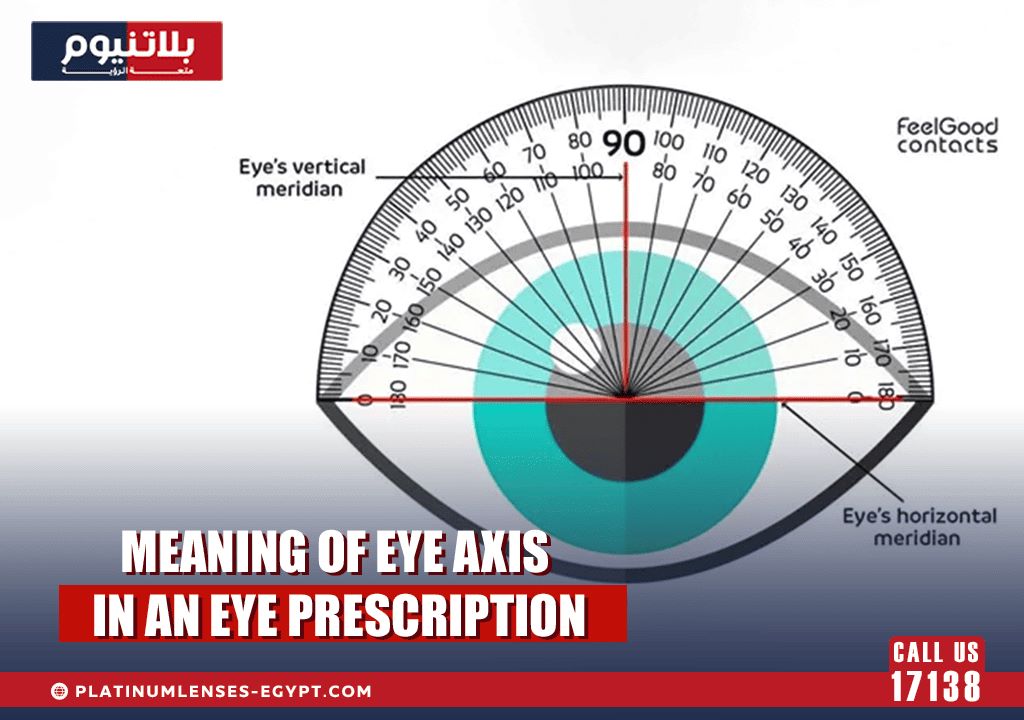
Eye axis prescription can feel confusing when you see a number between 0 and 180 written beside CYL on your eye test chart, but this number has a very practical job It tells the optical lab where the astigmatism correction should sit inside the lens, so your glasses can correct the direction of the blur, not only its strength Understanding eye axis prescription helps you know why accurate measurements matter, especially if you have astigmatism and your new glasses do not feel stable
What does eye axis prescription mean?
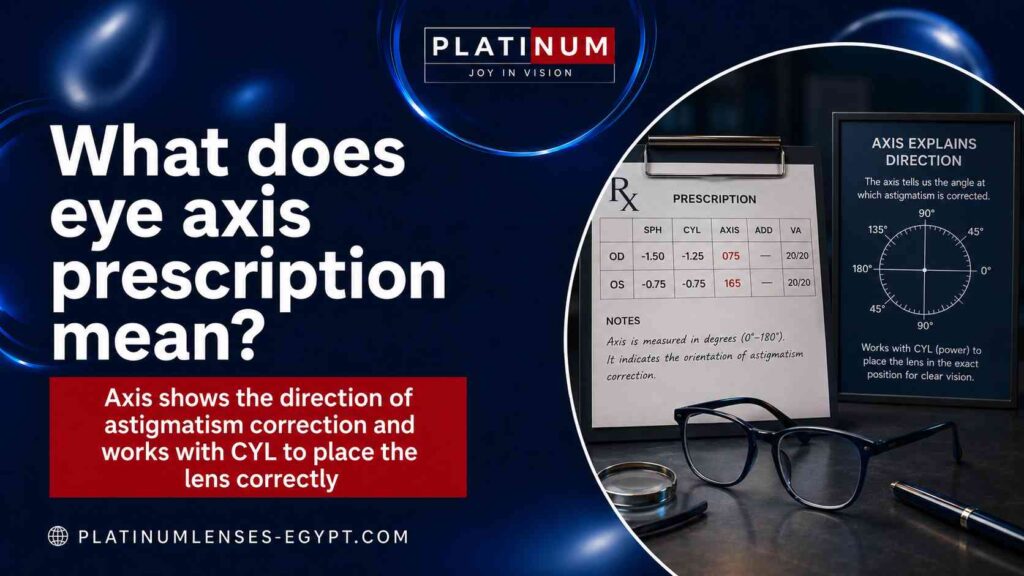
Eye axis prescription means the direction of astigmatism correction in your glasses prescription It is written as a number from 0 to 180 degrees and it works with CYL, which is the cylinder power used to correct astigmatism
Eye axis prescription is not the strength of the lens itself It does not mean your eyesight is stronger or weaker because of this number alone It simply tells the lens where to place the cylindrical correction, because astigmatism does not affect every direction of the eye in the same way
The easiest way to understand eye axis prescription is to think of it as a direction guide for the lens CYL tells the lab how much astigmatism correction is needed, while Axis tells the lab where that correction should sit
Why is eye axis prescription important?
Eye axis prescription is important because astigmatism needs correction in a specific direction If the CYL value tells the lens how much correction is needed, Axis tells the lens where that correction should go
This is why two people can have the same CYL value but different Axis numbers and still need different lenses A lens made with the wrong Axis may feel uncomfortable even if the SPH and CYL values look correct, because the correction is not sitting in the right direction for that eye
For people with moderate or high astigmatism, eye axis prescription can strongly affect how natural the glasses feel A small mistake may lead to blur, eye strain or a feeling that the image is slightly tilted or unstable
What is the normal Axis range?
Axis is usually written between 0 and 180 degrees This range does not mean that 90 is better than 180 or that one number is more normal than another Every eye has its own corneal shape, so the Axis value depends on the direction of astigmatism in that specific eye
Axis 90 and Axis 180
Axis 90 usually points to a vertical direction, while Axis 180 usually points to a horizontal direction These numbers are simply directions used by the lab, not levels of weakness
No fixed normal Axis
There is no single normal Axis number for everyone Some people have Axis values near 90, others near 180 and others anywhere in between The important thing is that the eye axis prescription matches your real eye measurement, not a number that looks more common on paper
What is the difference between Axis and CYL?
CYL and Axis are connected, but they do different jobs CYL explains the strength of astigmatism correction, while Axis explains the direction where that correction should sit inside the lens
If CYL is missing, Axis usually does not matter because there is no cylinder correction to place If CYL has a value, Axis becomes important because the lens must correct astigmatism in the correct direction
CYL shows the amount
CYL tells the lens how much astigmatism correction is needed A higher CYL value usually means the correction is stronger and the lens needs more accuracy
Axis shows the direction
Axis tells the lens where that correction should be placed This is why even a small Axis mistake can be noticeable for some people, especially when the CYL value is moderate or high
What happens if eye axis prescription is wrong?
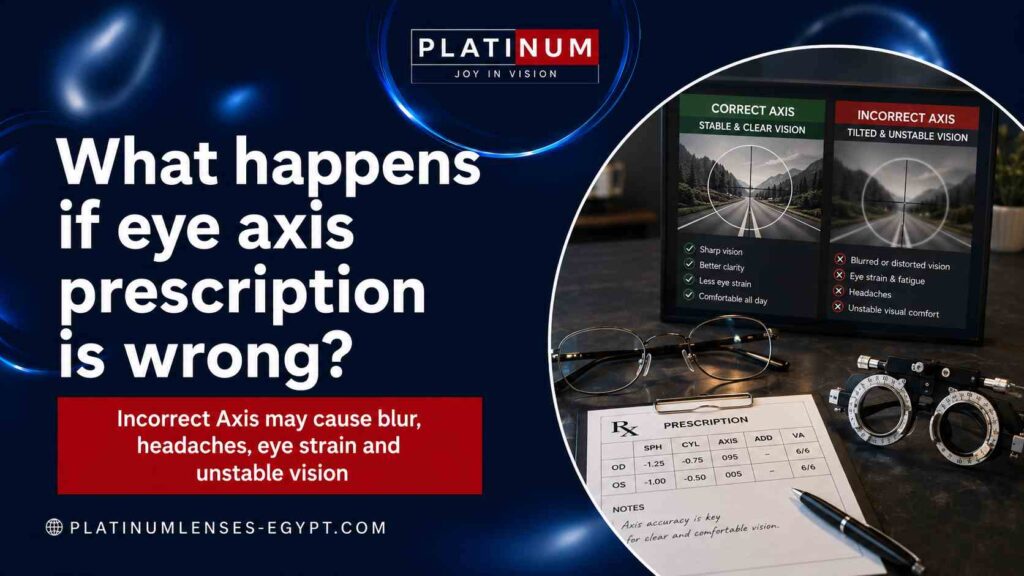
If eye axis prescription is wrong, the glasses may not feel right even if the lens is new You may notice blurry vision, eye strain, headaches or a strange feeling that the image is not stable
This can be more obvious while reading, using screens, driving at night or looking at lights A small difference may not bother everyone, but for people with higher astigmatism, eye axis prescription accuracy becomes very important
If your new glasses feel strange for more than the normal adaptation period, do not assume the frame is the only reason The prescription values, especially CYL and Axis, should be checked again
How do you read Axis on your prescription?
You will usually find Axis written beside CYL in the same row for each eye The right eye may have one Axis value and the left eye may have another, and this is completely normal Eye axis prescription should always be read with the full chart, not as one isolated number
| Field | What it means | Why it matters |
|---|---|---|
| SPH | Main lens power | Corrects nearsightedness or farsightedness |
| CYL | Cylinder power | Corrects astigmatism strength |
| Axis | Direction from 0 to 180 | Places CYL correction in the right angle |
| PD | Pupillary distance | Centers the lens in front of your eyes |
| ADD | Near vision support | Helps with reading or close work |
Reading Axis alone is not enough It should always be read with CYL, SPH, PD and the full prescription because the lens is made from all these values together
What eye tests may include Axis?
Axis is usually found after a full refraction test, but the eye exam may start with other basic visual tests first These tests help the specialist understand visual clarity before writing the final prescription
Snellen chart
The Snellen chart uses letters or symbols in different sizes to measure visual acuity It gives an early idea of how clearly you see from a distance
Random E chart
The Random E chart uses the letter E in different directions It is useful when the person cannot read letters easily or when the test needs a simpler response
Landolt C chart
The Landolt C chart uses a broken ring shape, and the person identifies the direction of the opening It works in a similar way to the Random E test and helps measure visual acuity
These tests do not replace eye axis prescription values, but they help build the full picture before the final lens numbers are written
How does eye axis prescription affect lens comfort?
Eye axis prescription affects comfort because the lens must match the way your eye bends light If the cylindrical correction is placed in the wrong direction, your eyes may work harder to understand the image
A correct eye axis prescription can make the lens feel clearer, especially in detailed tasks like reading small text, using a laptop or driving at night This is why accurate measurement matters more than just choosing a strong lens or expensive coating
Comfort also depends on the frame A frame that sits too low, too high or tilted on the face can make the lens feel less accurate, especially when the prescription includes astigmatism
Which Platinum lenses can support accurate Axis correction?
Platinum Lenses offers options that can help people who need accurate correction, especially when astigmatism, progressive vision or long screen use are part of the prescription The right choice depends on the full prescription, not only Axis
| Platinum option | Best for | Why it may help |
|---|---|---|
| X Perience T | Advanced progressive needs and visual stability | Helps reduce side distortion and supports clearer movement between distances |
| X Plore | Entry progressive users | Offers a balanced design for near and distance use |
| X Tend | Users who need wider visual fields | Supports smoother vision across different distances |
| Best prescription lens options | General correction needs | Helps match the lens type to SPH, CYL, Axis and daily use |

Learn More
Understanding Progressive Lenses: When to Recommend X-Tend or X-Perience
These options should be chosen after checking the full prescription and frame fit A lens can be technically
advanced, but it still needs accurate measurements to feel comfortable in real life
How do you choose lenses based on Axis?
Choosing lenses based on Axis should start with a proper eye exam If you have CYL and Axis in your prescription, ask the optician to explain how the lens will be made and whether your frame is suitable for your astigmatism correction
The frame also matters A poorly fitted frame can sit too low or tilt incorrectly, which may affect how the lens feels even when the prescription is correct This is especially important for progressive lenses, high CYL values and people who wear glasses for long hours
When should you recheck your Axis value?
You should recheck your Axis value if your new glasses feel uncomfortable for more than a normal adaptation period, or if you notice blur, dizziness, headaches or unstable vision
It is also useful to compare your new prescription with older ones If Axis changes slightly, that can happen, but if your vision changes suddenly or the discomfort is strong, it is better to return to the specialist and check the measurement again
How can Platinum help you understand your prescription?
Platinum Lenses can help you understand how Axis works with CYL and how the full prescription affects lens choice Instead of choosing a lens based on one number, you can match the lens design, coating and frame with your actual visual needs
This is helpful for people with astigmatism, screen use, progressive lenses or high prescriptions The goal is not just to make the lens, but to make glasses that feel clear, stable and comfortable during real daily use
FAQs
What does Axis mean in an eye prescription?
Axis is a number from 0 to 180 degrees that shows the direction of astigmatism correction in your lens It works with CYL and helps the lab place the cylindrical power correctly
Is Axis a sign of weak eyesight?
No, Axis is not a strength number It only shows the direction of correction The strength of astigmatism is shown by CYL, while SPH shows nearsightedness or farsightedness
Can Axis be different in each eye?
Yes, Axis can be different in the right and left eye because each eye can have a different astigmatism direction This is normal and the lab uses each value separately when making the lenses
What happens if Axis is not accurate?
If Axis is not accurate, the glasses may cause blur, headaches, eye strain or unstable vision This is more noticeable when astigmatism is moderate or high
Do I need Axis if I do not have CYL?
Usually no If there is no CYL value, Axis is often not needed because there is no astigmatism correction to position inside the lens
Learn More
How to Read Your Eye Prescription Step by Step
What Does SPH Mean in an Eye Test?
Best Prescription Lenses for Vision Correction
