
Prescription lenses are not only about correcting vision, they also affect comfort, lens thickness, glare,Prescription lenses are not only about correcting vision, because they also affect comfort, lens thickness, glare, scratch resistance and how clearly you see during the day When people compare Korean, German and Japanese prescription lenses, the question is not which country is always better, but which lens type fits your prescription, budget and daily use This guide compares the three options and explains why Japanese lens technology, including Platinum Lenses, can be a strong choice for many users
How do you compare prescription lenses by country?
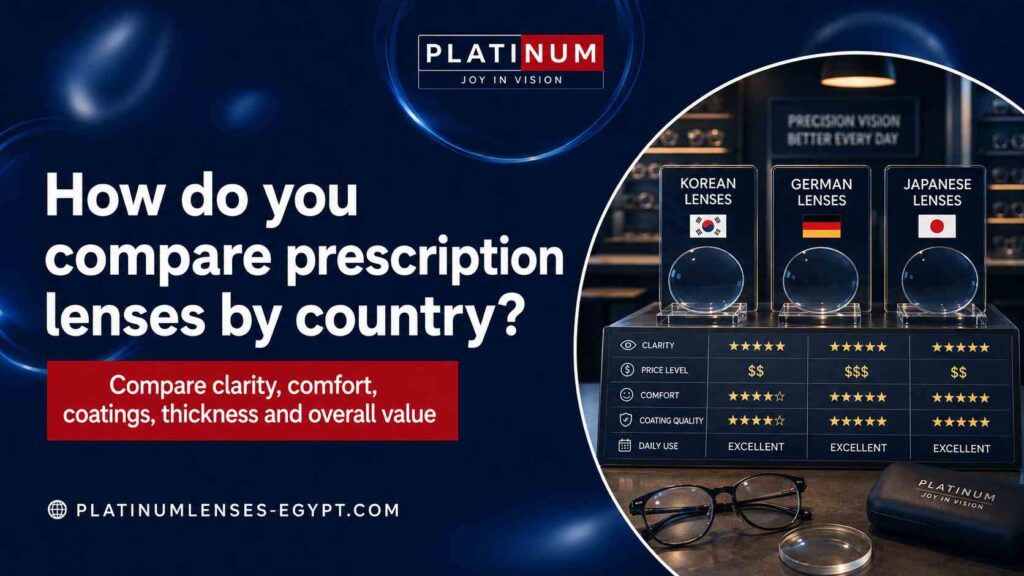
Prescription lenses are often compared by country because each market is known for a different strength Korean lenses are usually seen as a practical and affordable option, German lenses are known for premium optical precision, while Japanese lenses are often chosen for their balance between clarity, comfort, coating quality and value
The best way to compare prescription lenses is not by the country name alone You need to look at the lens material, coating quality, scratch resistance, blue light support, lens thickness and how long you wear your glasses every day A person who wears glasses for short use will not always need the same lens as someone who works on screens for eight hours or needs a high prescription lens
What are Korean prescription lenses?
Korean prescription lenses are popular because they usually offer a practical balance between acceptable quality and a more affordable price They can be suitable for people who need simple daily glasses and do not want to pay for premium lens categories
Korean lens features
Korean lenses often come with modern designs, light materials and basic coating options such as UV protection and scratch resistance They can be comfortable for daily use, especially when the prescription is not high and the user does not need advanced coating performance
Korean lens limits
The main limitation is that some Korean prescription lenses may not offer the same level of advanced coating durability, glare control or long wear comfort as premium German or Japanese options This does not make them a bad choice, but it means they may be better for simple use rather than demanding visual needs
What are German prescription lenses?
German prescription lenses are usually associated with high precision, strong optical performance and advanced coating technology They are often chosen by people who care about sharp vision, premium lens design and long term durability
German lens features
German lenses can offer strong clarity, excellent coating options and good performance for people with more demanding prescriptions They may also be useful for users who spend long hours wearing glasses and want a premium visual experience
German lens limits
The biggest drawback is usually the price German prescription lenses can be more expensive than Korean and Japanese options, which makes them less suitable for buyers who want good performance without a high budget The value depends on whether your prescription and lifestyle really need that premium level
What are Japanese prescription lenses?
Japanese prescription lenses are known for combining technology, comfort and practical daily use They often focus on clear vision, lightweight design and useful protection for people who use glasses for work, study, driving or screens
Japanese lens features
Japanese lenses can offer strong optical clarity, good coating quality, comfortable materials and practical designs for different lifestyles They are often seen as a balanced choice because they can provide high performance without always reaching the highest imported premium price
Japanese lens limits
Japanese prescription lenses may cost more than basic Korean options, especially when they include advanced coatings or digital designs Still, many users see them as a better long term choice when they need comfort, durability and clearer vision for daily wear
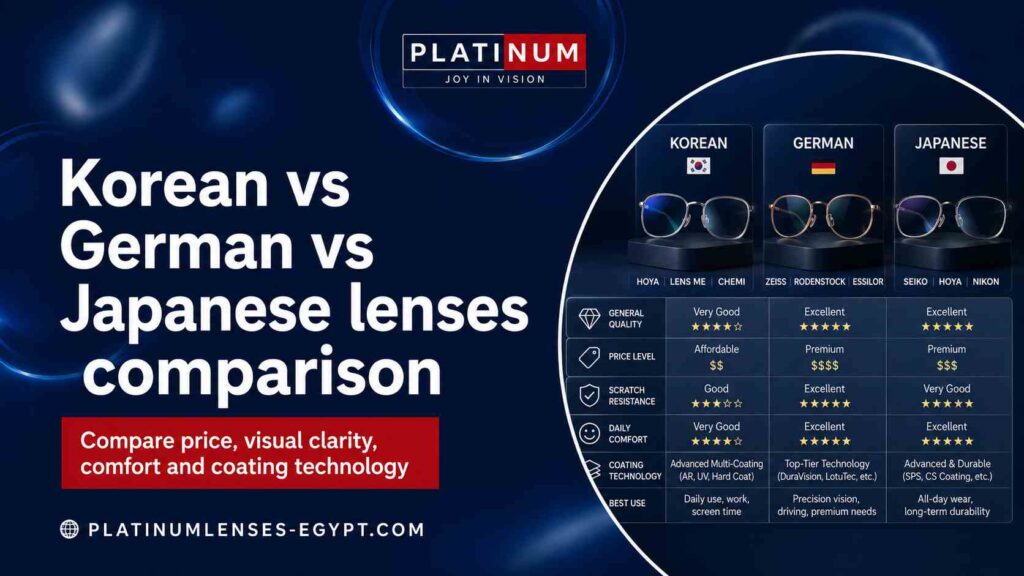
Korean vs German vs Japanese lenses comparison
The table below gives you a quick overview before choosing your prescription lenses It does not replace an optician’s advice, but it helps you understand the main differences in a simple way
| Comparison point | Korean lenses | German lenses | Japanese lenses |
|---|---|---|---|
| General quality | Good for basic daily use | Premium and highly precise | High quality with balanced value |
| Price level | Usually lower | Usually higher | Usually medium to high |
| Scratch resistance | Moderate to good | High | High to very high |
| Daily comfort | Good | Very good | Very comfortable |
| Coating technology | Basic to good | Advanced | Advanced and practical |
| Visual clarity | Good | Excellent | Very strong |
| Best for | Simple daily use | Premium performance | Comfort, clarity and value |
A comparison like this is useful when you are choosing prescription lenses, but the final decision should still depend on your actual eye prescription, frame choice and how you use your glasses every day
Which prescription lenses are better for daily use?
For daily use, Japanese prescription lenses often offer a strong balance because they can combine comfort, good coatings and clear vision without always being as expensive as premium German options Korean lenses can still be enough for simple needs, while German lenses may be preferred when someone wants the highest level of precision and does not mind the higher cost
If you wear your glasses all day, do not choose prescription lenses only by price Long wear needs better coating quality, lighter lens materials and stable visual comfort A lens that feels fine for one hour may not feel the same after a full workday
Which prescription lenses are better for screen use?
For screen use, coating quality becomes very important Students, employees, designers and anyone who spends hours on a laptop may benefit from prescription lenses that reduce glare and support visual comfort under artificial lighting and digital screens
Japanese lenses can be a good option here because they often focus on practical comfort and modern coating solutions This is where options like MIRA Blu from Platinum can be useful for users who want lens support for long screen exposure without choosing blindly based on brand name only
Which prescription lenses are better for high prescriptions?
High prescriptions need more care because lens thickness, weight and distortion become more noticeable A high minus prescription may make the lens edges thicker, while a high plus prescription can make the center thicker This is why material choice and lens design matter
German and Japanese prescription lenses can both be strong options for high prescriptions, especially when thinner lens materials and accurate digital design are available Korean lenses may still work for some cases, but users with high prescriptions should ask about thickness, coating quality and frame suitability before deciding
Why are Japanese lenses a strong middle choice?
Japanese lenses often stand out because they sit between affordability and premium performance They can offer better comfort and coating quality than many basic options, while still being more practical in price than some high end German lenses
This makes Japanese prescription lenses a smart choice for many people who want dependable daily performance without paying only for a famous imported name The real value appears when the lens gives clear vision, resists scratches, feels light and stays comfortable during long use
How do Platinum Lenses fit this comparison?
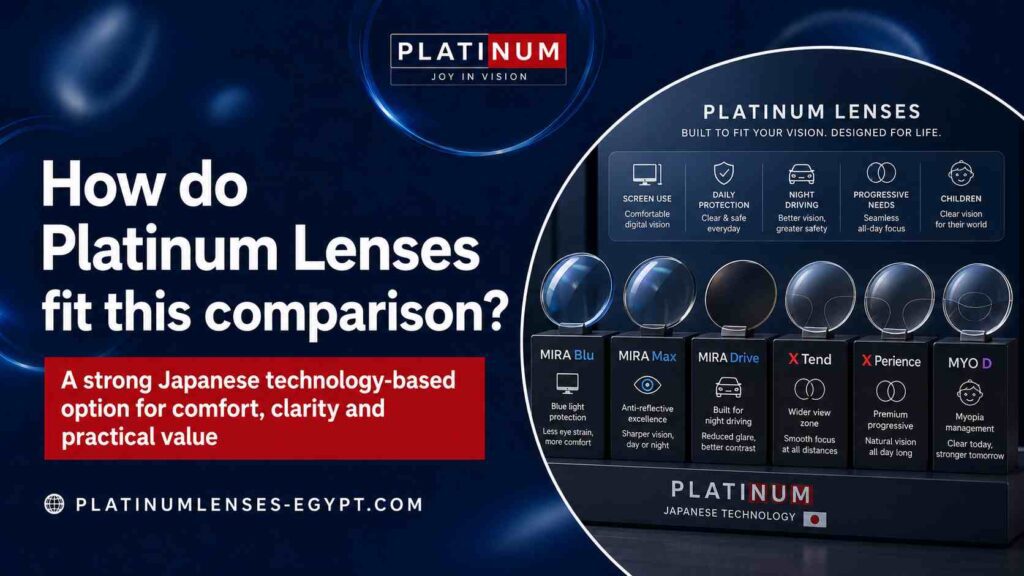
Platinum Lenses can be considered a strong Japanese technology based option for users in Egypt who want quality, comfort and practical coating choices The brand offers different solutions for screen use, progressive vision, children’s myopia management, night driving and daily prescription needs
This matters because choosing the right lens is not only about saying Korean, German or Japanese It is about matching the lens to your eye prescription, your frame, your routine and the level of protection you need during the day
Learn More
Platinum Lenses vs Imported Brands: What Makes the Difference?
What Platinum lens features should you compare?
Platinum offers different lens and coating options that can help users choose based on real needs instead of choosing one general lens for everyone
MIRA Blu for screen comfort
MIRA Blu is useful for people who spend long hours on digital screens and want better visual comfort during work or study It can be a practical choice for students, office workers and heavy screen users
MIRA Max for daily protection
MIRA Max is suitable for users who want better resistance against fingerprints, water, dust and scratches This type of coating can be useful if you wear your glasses all day and want easier cleaning
MIRA Drive for night driving
MIRA Drive is made for people who need more comfort during night driving It can help reduce glare from headlights and road lights, which is important for drivers who spend long hours on the road
X Tend and X Perience for progressive needs
X Tend and X Perience are suitable for users who need more than one viewing distance in the same lens They can help people who need distance, intermediate and near vision support without changing glasses during the day
MYO D for children
MYO D is designed for children with myopia management needs This type should always be chosen with professional follow up because children’s vision can change and needs regular monitoring
How do you choose the right lens for you?
The right lens should match your prescription, your frame and your lifestyle If you only need simple daily glasses and have a limited budget, Korean lenses may be enough If you want a premium imported option and cost is not a problem, German lenses can be a strong choice If you want comfort, quality and practical value, Japanese lenses such as Platinum can be very suitable
The safest approach is to show your prescription to an optical specialist and explain how you use your glasses Do you drive at night, work on screens, need progressive lenses, have high astigmatism or want thinner lenses These details decide the right lens more than the country name alone
FAQs
Are Japanese prescription lenses better than Korean lenses?
Japanese prescription lenses usually offer stronger coating quality, comfort and visual clarity than many basic Korean options, but Korean lenses can still be suitable for simple daily use and lower budgets
Are German lenses worth the higher price?
German lenses can be worth it for users who want premium optical performance and advanced coating quality The higher price makes more sense when the prescription or daily use truly needs that level of precision
Are Korean lenses good for daily glasses?
Korean lenses can be good for daily glasses if your prescription is simple and you need an affordable option They may not be the best choice for heavy screen use, high prescriptions or users who need advanced coatings
Why choose Platinum Japanese lenses?
Platinum Japanese lenses can be a good choice because they combine comfort, coating options, digital lens solutions and practical support for different needs such as screens, progressive vision and children’s myopia management
What matters more, lens country or lens quality?
Lens quality matters more than the country name A good lens should match your prescription, offer suitable coatings and feel comfortable with your frame and daily routine
Learn More
Best Prescription Lenses for Vision Correction
Types of Prescription Lenses and Their Prices in Egypt
Understanding Progressive Lenses: When to Recommend X-Tend or X-Perience
